What it means
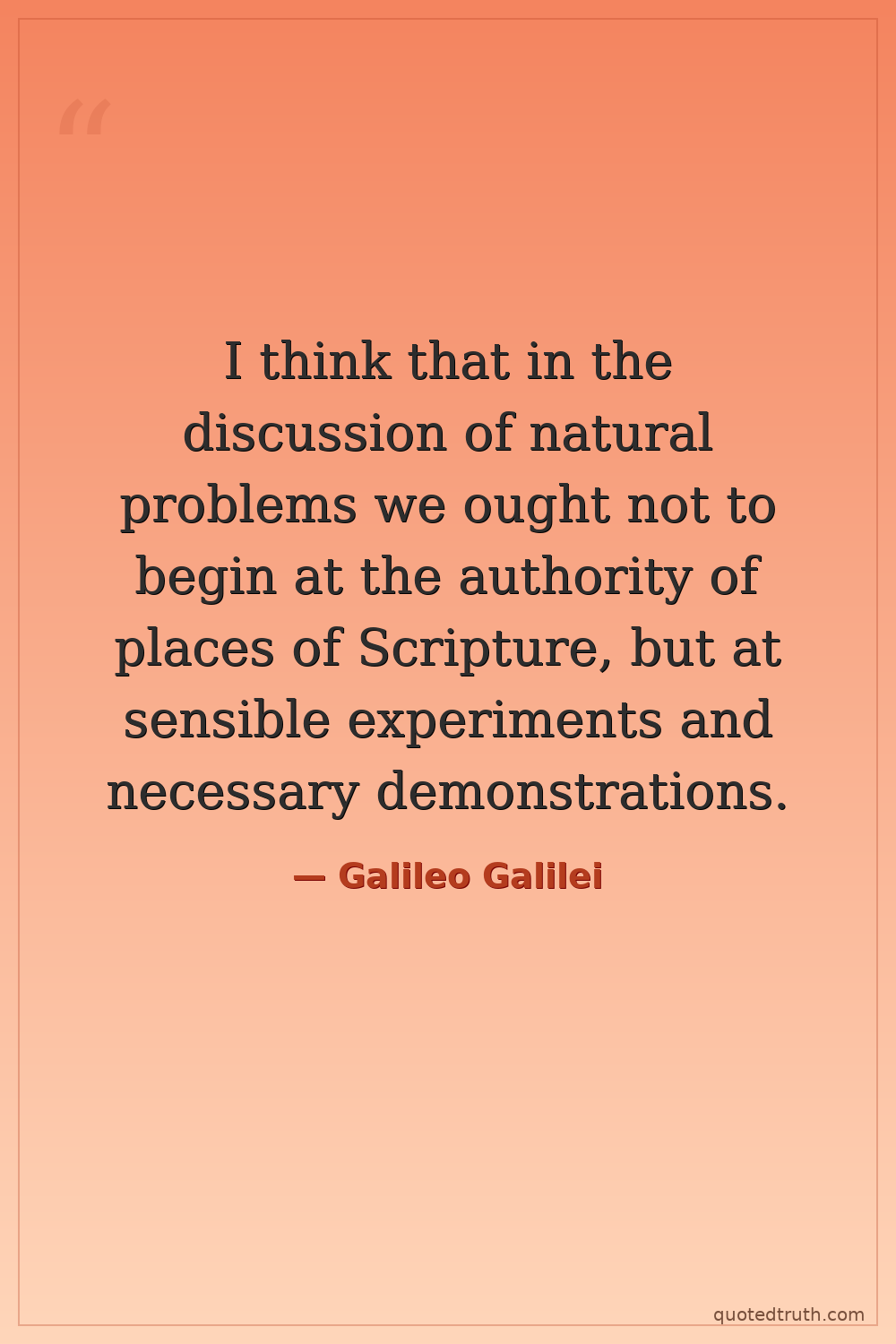
When investigating how nature works, we should start with hands-on experiments and logical proof, not by quoting religious texts. Evidence and reason must drive scientific inquiry. Authority and tradition cannot substitute for what we can actually observe and demonstrate. Truth about the physical world must be established through testing and rigorous argument, regardless of what any written doctrine claims.
Relevance to Galileo Galilei
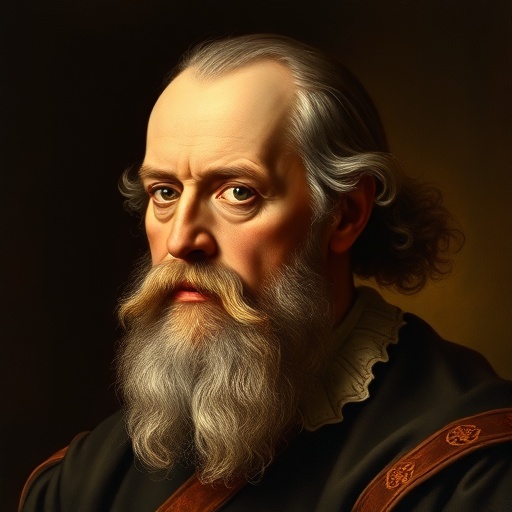
Galileo lived this principle dangerously. His telescopic observations confirmed heliocentrism, directly contradicting Church-endorsed Ptolemaic cosmology. The Inquisition tried and convicted him in 1633 for exactly this stance—prioritizing empirical observation over scriptural authority. He spent his final years under house arrest for refusing to fully subordinate natural philosophy to theological decree.
The era
The early modern period saw fierce tension between emerging empirical science and entrenched Church authority over all knowledge. Scripture was treated as the ultimate arbiter of natural truth. Galileo wrote during the Counter-Reformation, when the Church aggressively policed intellectual boundaries. His position challenged a millennium-old epistemic order where theology outranked observation in every domain of human understanding.
AI-generated insights based on extensive research and information for context. Factual errors? Email [email protected].