What it means
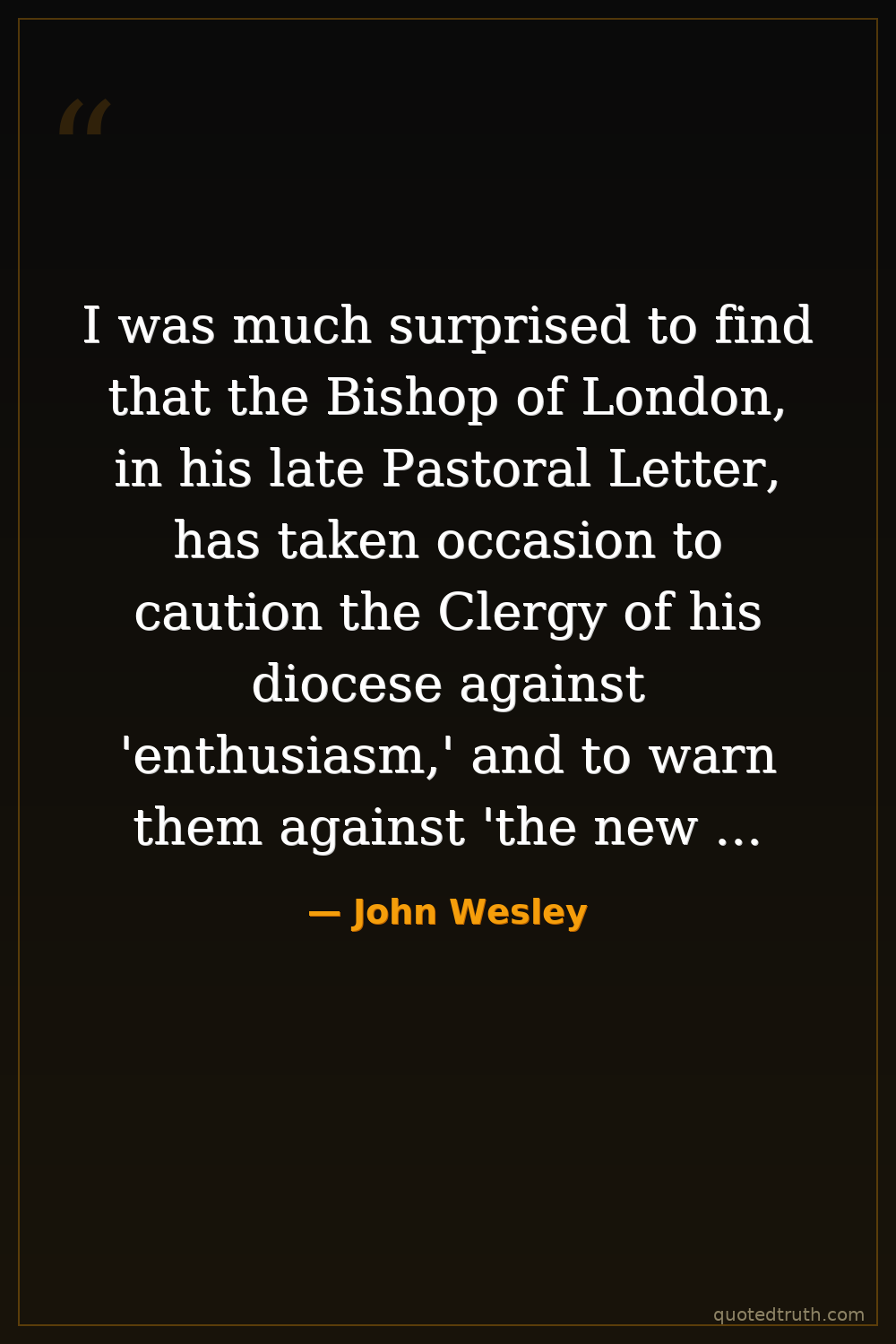
Wesley expresses surprise that a senior Church of England bishop officially warned clergy against 'enthusiasm' — the era's dismissive label for fervent spiritual experience — and against teaching that the Holy Spirit genuinely transforms believers inwardly. He is essentially flagging that the institutional church was rejecting what he considered core Christianity: not ritual observance, but real spiritual conversion confirmed by inner change. The tone is pointed; Wesley treats this as a revealing admission by the establishment.
Relevance to John Wesley
Wesley's entire ministry was built on regeneration — the conviction that genuine conversion transforms a person's inner life, not just their outward behavior. His 1738 Aldersgate experience, where his heart was 'strangely warmed,' became his template for authentic faith. He preached the Holy Spirit as actively present in believers. The Bishop's letter directly targeted this emphasis, placing Wesley's core theological claims under official censure and confirming his quarrel with a cold, formal Church of England.
The era
Eighteenth-century England's Church of England had grown rationalistic and ceremonially stiff. 'Enthusiasm' was a term of abuse applied to those claiming direct spiritual experience, associated with social disorder and sectarian excess dating to the Civil War. Wesley and Whitefield's evangelical revival — open-air preaching, mass conversions, emotional services — alarmed church authorities who feared it would destabilize religious hierarchy and public order. The Bishop's pastoral letter was the establishment's formal pushback against this popular spiritual awakening.
AI-generated insights based on extensive research and information for context. Factual errors? Email [email protected].