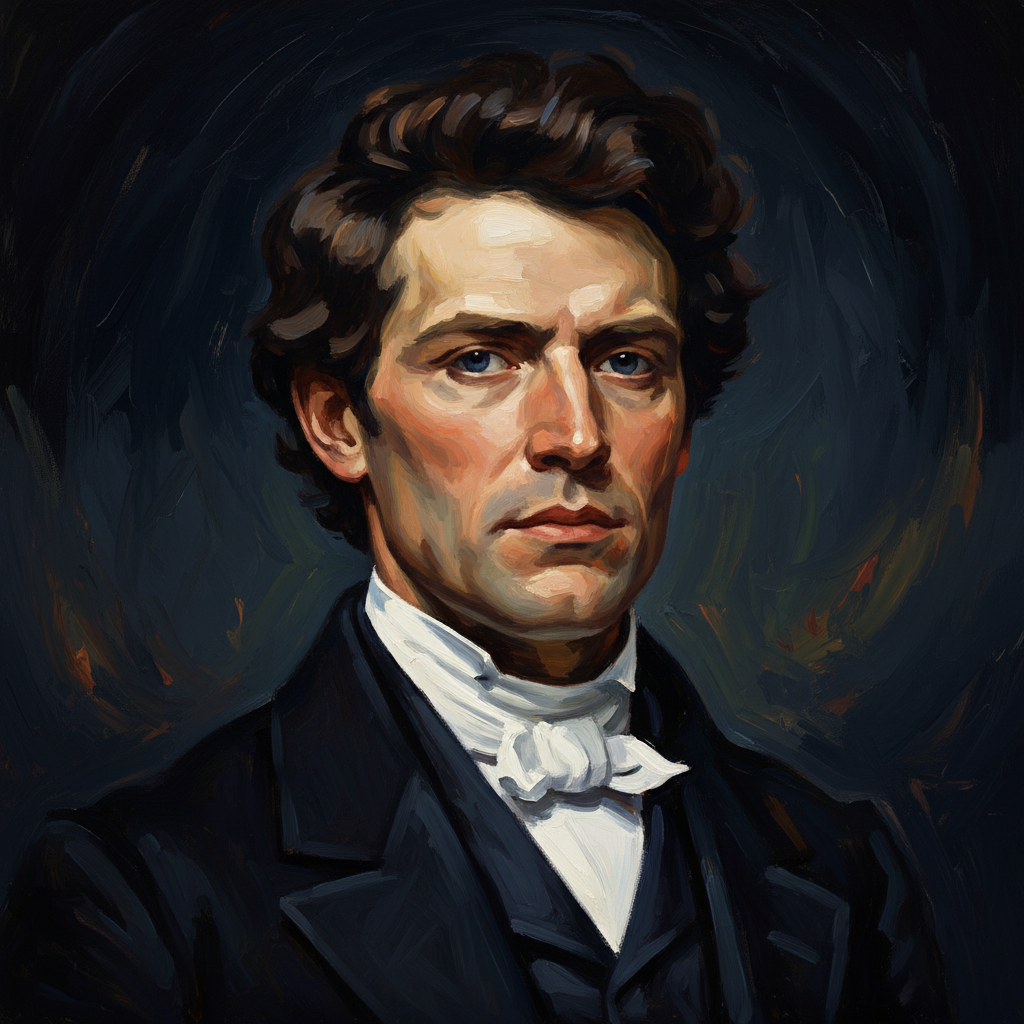
Joseph Smith — "The standard of truth has been erected; no unhallowed hand can stop the work fro…"
The standard of truth has been erected; no unhallowed hand can stop the work from progressing.
The standard of truth has been erected; no unhallowed hand can stop the work from progressing.
Click any product to generate a realistic preview. Up to 3 at a time.
* Initial load can take up to 90 seconds — revising the preview in another color is nearly instant.
"The simple doctrine of the Christian Godhead, set forth in the New Testament is corrupted by the meaningless jargon of these creeds, and their explanations; and the learned who profess a belief in the…"
"I was born to introduce the kingdom of God to the earth."
"I am not afraid to die. I have done nothing to merit death or condemnation."
"I have seen many things that no eye has seen, and heard many things that no ear has heard."
"I am not afraid to die. I shall die a martyr for the cause of Christ."
Found in 1 providers: grok
1 source checked
Truth, once revealed, becomes unstoppable — no corrupt or opposing force can reverse its course. 'Unhallowed hand' means those lacking divine sanction or moral purity. A sacred mission launched with divine authority carries forward regardless of human resistance. Progress is inevitable and divinely protected — persecution, doubt, or enemies may slow but never defeat something rooted in absolute, revealed truth. Confidence in that foundation makes opposition irrelevant.
Joseph Smith wrote this amid relentless persecution — mobs, legal battles, expulsion from Missouri, and imprisonment. He founded the LDS Church in 1830 against fierce opposition and died by mob violence in 1844 at Carthage Jail. His core belief: God personally called him to restore primitive Christianity. This unwavering certainty defined every decision he made — the defiance here is the voice of a man who staked his life on divine mandate.
Early 19th-century America was ablaze with religious revivalism — the Second Great Awakening sparked competing denominations, camp meetings, and prophetic claims. Frontier communities were volatile; religious minorities faced real violence. Anti-Mormon sentiment ran so high that Missouri's governor issued an extermination order against Latter-day Saints in 1838. Smith's declaration came from within this storm — a nation expanding westward, religiously fractured, and deeply suspicious of new movements claiming divine authority.
AI-generated insights based on extensive research and information for context. Factual errors? Email [email protected].
Your cart is empty