Martin Luther — "I would not give my faith for all the world's goods."
I would not give my faith for all the world's goods.
I would not give my faith for all the world's goods.
Click any product to generate a realistic preview. Up to 3 at a time.
* Initial load can take up to 90 seconds — revising the preview in another color is nearly instant.
"I would have all Christians educated enough to be able to read the Bible. It is not for priests alone, but for all."
"I would rather be a swineherd than a Pope."
"I am a peasant's son; my father, grandfather, and great-grandfather were genuine peasants."
"Reason is the Devil's greatest whore."
"Be a sinner and SIN BOLDLY, but believe more boldly still."
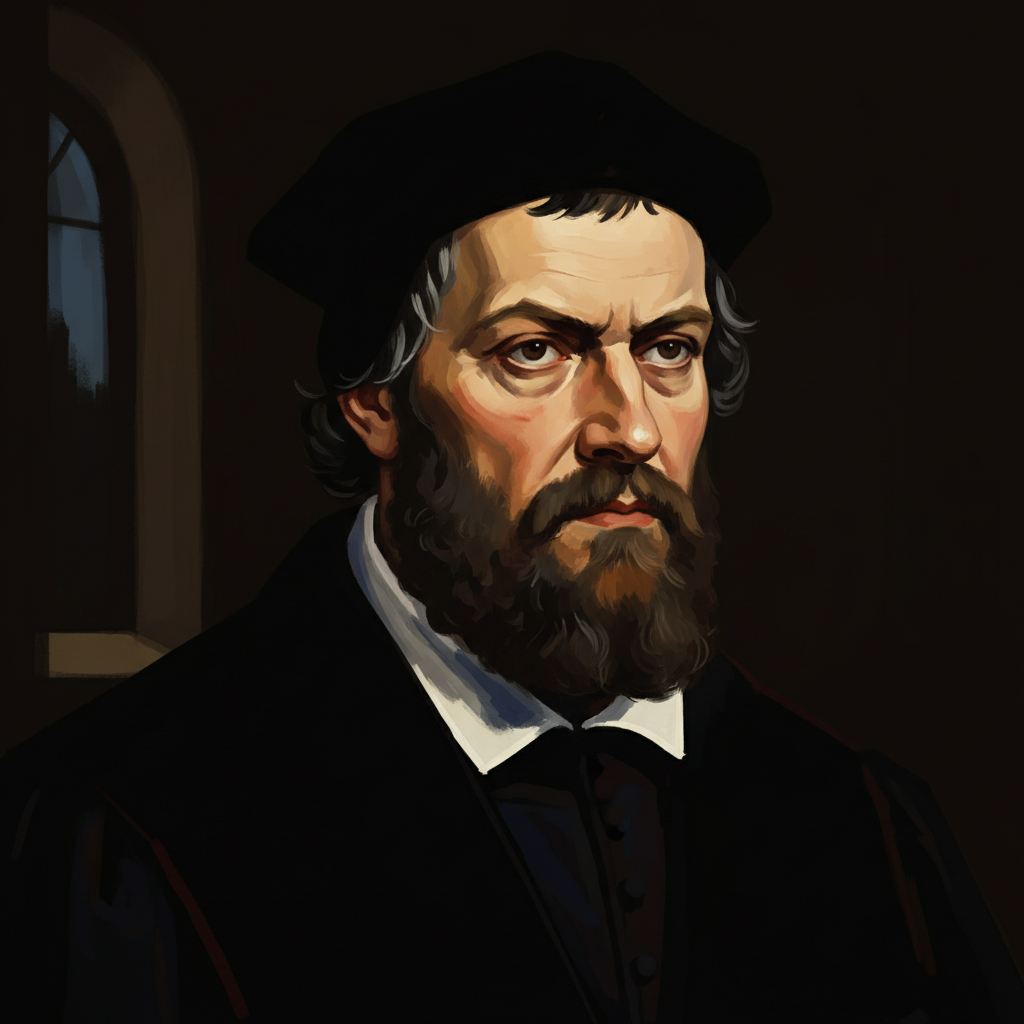
German theologian whose 95 Theses (1517) launched the Protestant Reformation and broke the Catholic Church's monopoly on Western Christianity. Closely associated with Philipp Melanchthon (Lutheran systematizer) and John Calvin (later Reformer who built on Luther's break). For an intellectual contrast, see Pope Leo X, Renaissance pope (1513-1521) — Leo X's indulgence sales triggered Luther's break and Leo excommunicated him in 1521 — Luther's entire Reformation is structured as a direct answer to the indulgence-funded Vatican Leo represented.
Found in 1 providers: grok
1 source checked
This statement declares that personal religious conviction outweighs every material treasure combined. The speaker insists no amount of wealth, property, or worldly success could tempt him to abandon what he believes. Faith, in this view, is not a possession to be traded but the deepest foundation of identity and meaning. It frames trust in God as infinitely more valuable than anything money, power, or status could ever purchase or provide.
Luther lived this claim when he refused to recant at the Diet of Worms in 1521, knowing defiance could cost his life and all security. Excommunicated by Pope Leo X and outlawed by Emperor Charles V, he forfeited institutional protection, income, and safety for his convictions. As a former Augustinian monk turned reformer, his doctrine of sola fide, justification by faith alone, made personal belief the supreme treasure worth any earthly sacrifice.
In early sixteenth-century Europe, the Catholic Church sold indulgences, promising reduced purgatory time for cash, which sparked Luther's 1517 Ninety-Five Theses. Wealth and salvation were openly transacted, and heresy charges could mean burning at the stake, as Jan Hus learned in 1415. The printing press spread Luther's writings across German lands, fueling the Reformation while rulers weighed whether to protect reformers or surrender them for political and financial gain.
AI-generated insights based on extensive research and information for context. Factual errors? Email [email protected].
Your cart is empty