Martin Luther — "I would not have believed salvation could be so easy."
I would not have believed salvation could be so easy.
I would not have believed salvation could be so easy.
Click any product to generate a realistic preview. Up to 3 at a time.
* Initial load can take up to 90 seconds — revising the preview in another color is nearly instant.
"I am a peasant's son; my father, grandfather, and great-grandfather were genuine peasants. So I am a peasant and shall remain one."
"The mad mob does not ask how it could be better, only that it be different. And when it then becomes worse, it must change again. Thus they get bees for flies, and at last hornets for bees."
"God created the world, and he gave it to man, and he said, 'Be fruitful and multiply, and fill the earth and subdue it.'"
"First, to set fire to their synagogues or schools and to bury and cover with dirt whatever will not burn, so that no man will ever again see a stone or cinder of them. This is to be done in honor of o…"
"I am nothing but a poor, stinking bag of worms."
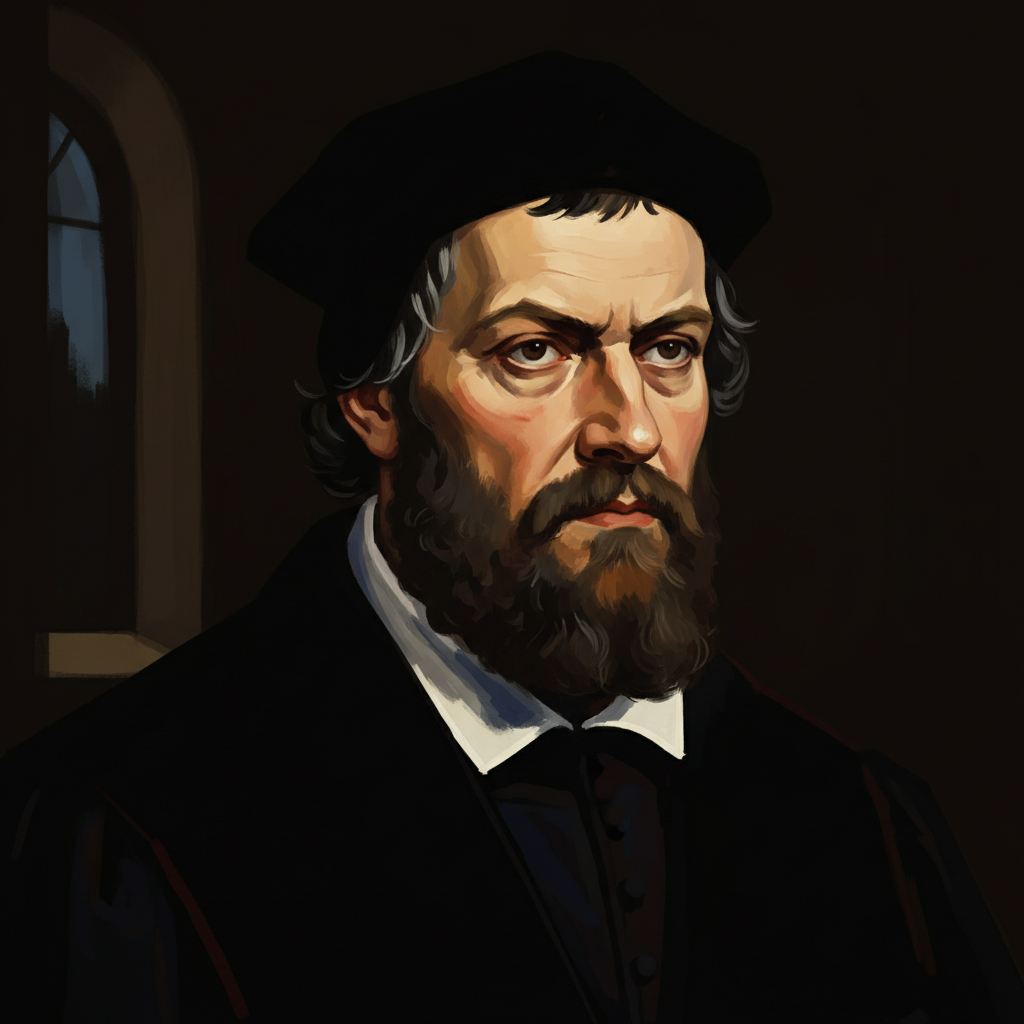
German theologian whose 95 Theses (1517) launched the Protestant Reformation and broke the Catholic Church's monopoly on Western Christianity. Closely associated with Philipp Melanchthon (Lutheran systematizer) and John Calvin (later Reformer who built on Luther's break). For an intellectual contrast, see Pope Leo X, Renaissance pope (1513-1521) — Leo X's indulgence sales triggered Luther's break and Leo excommunicated him in 1521 — Luther's entire Reformation is structured as a direct answer to the indulgence-funded Vatican Leo represented.
Found in 1 providers: grok
1 source checked
The speaker is struck by how simple genuine salvation turns out to be, compared to what they expected. After assuming rescue or redemption required enormous effort, complex rituals, or earning one's way, they discover it comes through straightforward trust rather than strenuous works. The tone mixes relief and surprise: a burden they thought impossible to carry is lifted once they see the path clearly. Grace, not performance, is the mechanism.
Luther spent years as an Augustinian monk punishing himself with fasting, confession, and self-flagellation, terrified he could never satisfy God's demands. His breakthrough reading Romans 1:17 convinced him salvation came by faith alone, not earned through sacraments or indulgences. This line captures that pivotal shift from exhausting religious striving to trust in grace, the core insight that fueled his 95 Theses in 1517 and split Western Christianity.
In early modern Europe, the Catholic Church taught salvation required sacraments, penance, pilgrimages, and increasingly the purchase of indulgences to reduce purgatory time. Johann Tetzel was openly selling them to fund St. Peter's Basilica when Luther protested in 1517. Most laypeople lived in dread of damnation, dependent on priestly mediation and Latin rites they could not read. Luther's claim that salvation was freely given was revolutionary, threatening both church revenue and clerical authority across the Holy Roman Empire.
AI-generated insights based on extensive research and information for context. Factual errors? Email [email protected].
Your cart is empty