What it means
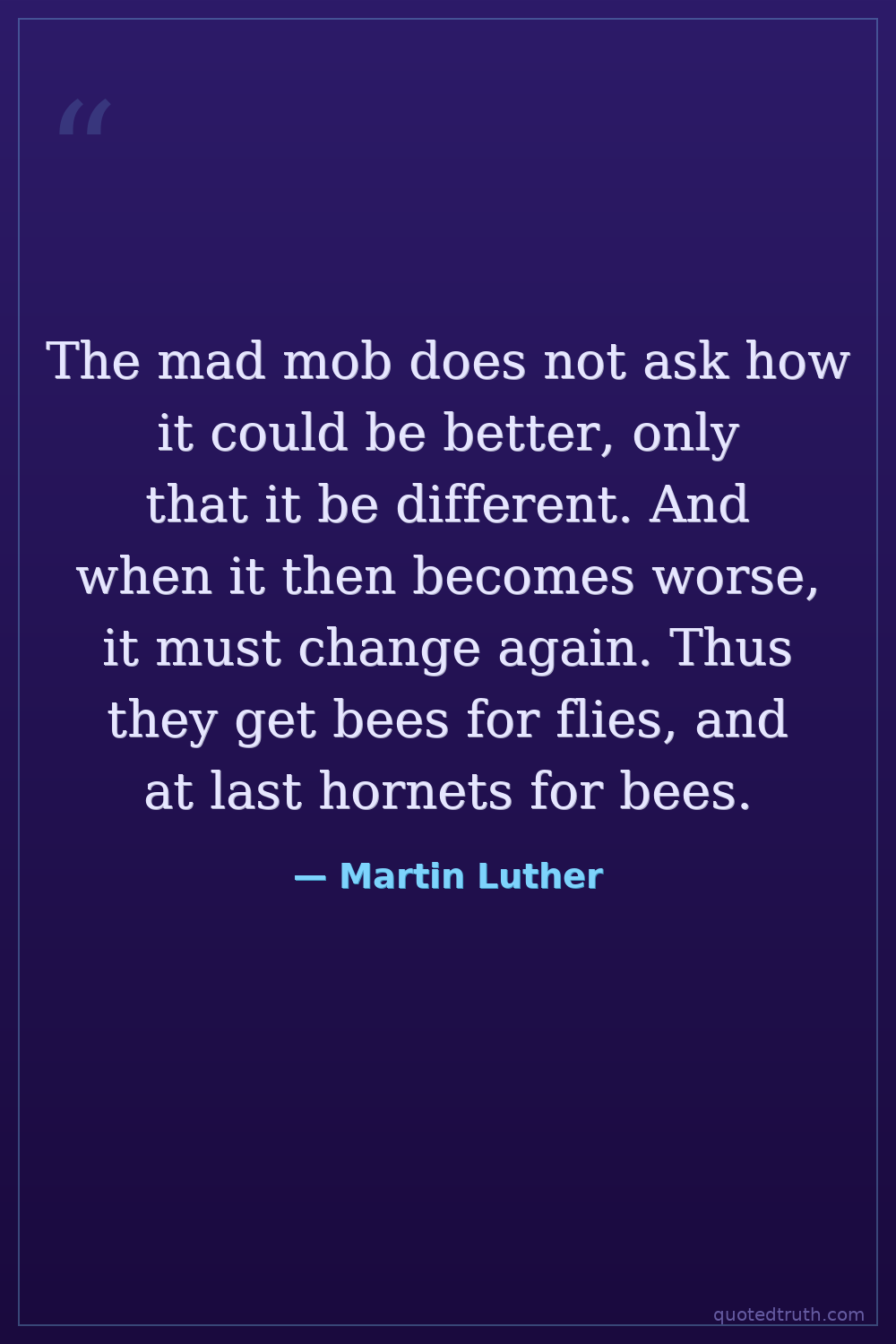
People caught up in crowd frenzy rarely think about whether change will actually improve things; they just want something different. When the new situation turns out worse, they demand another change, and another. Each swap brings a bigger problem than the last, trading minor annoyances for serious threats. Restless dissatisfaction without clear goals leads to progressively harsher outcomes, not reform.
Relevance to Martin Luther
Luther watched his Reformation get hijacked by radicals like Thomas Muntzer and the Peasants' War rebels who pushed beyond his theological reforms into violent upheaval. Though he challenged papal authority, he feared mob-driven social revolution and urged obedience to civil princes. This quote captures his disillusionment with followers who turned spiritual reform into chaotic political revolt, confirming his conservative instinct that disciplined change beats populist fervor.
The era
Luther's early modern era (1483-1546) seethed with upheaval: the 1525 German Peasants' War killed roughly 100,000, Anabaptist radicals seized Munster in 1534, and princes warred over religion culminating in the Schmalkaldic conflicts. Printing presses spread pamphlets that inflamed crowds faster than authorities could respond. Luther wrote amid genuine fear that reform movements he sparked would collapse into anarchy, making his warnings about volatile mobs deeply personal.
AI-generated insights based on extensive research and information for context. Factual errors? Email [email protected].