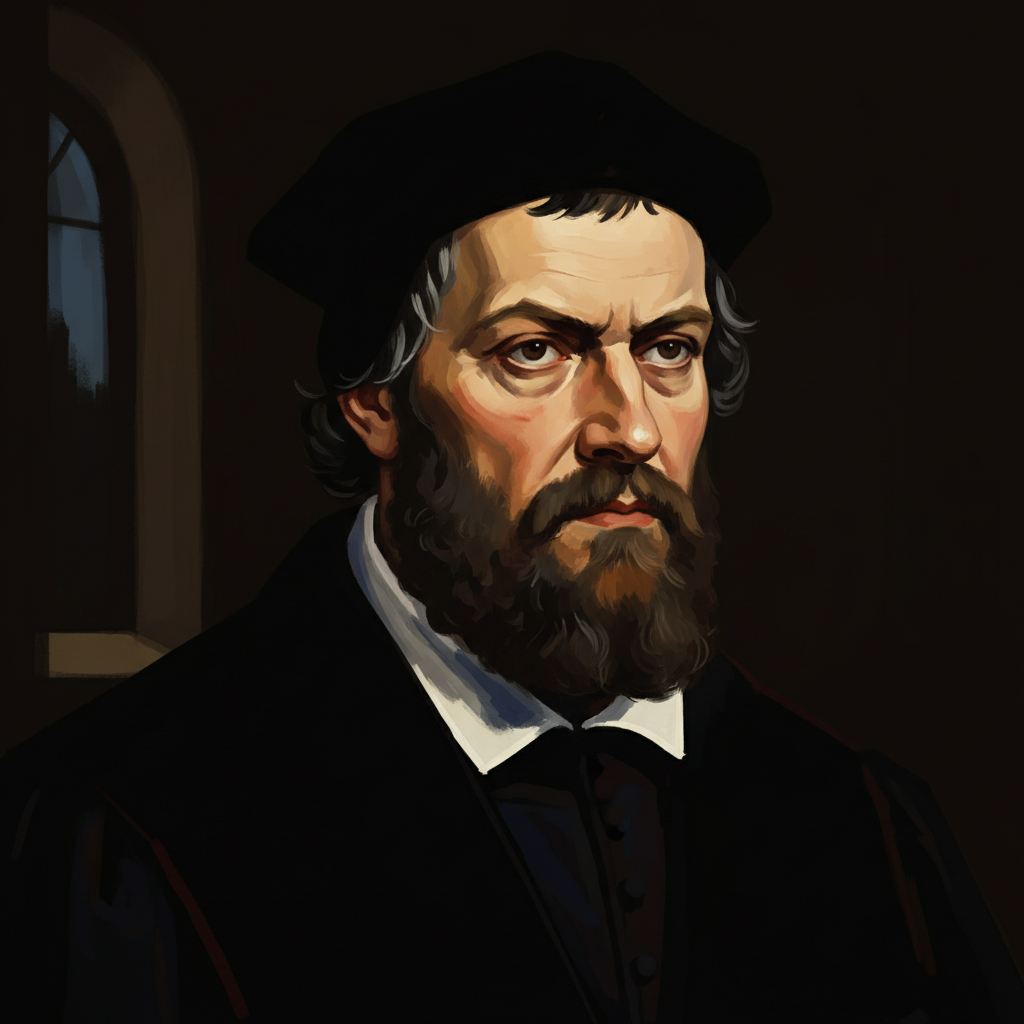
Martin Luther — "If the earth is fit for laughter, then surely heaven is filled with it. Heaven i…"
If the earth is fit for laughter, then surely heaven is filled with it. Heaven is the birthplace of laughter.
If the earth is fit for laughter, then surely heaven is filled with it. Heaven is the birthplace of laughter.
Click any product to generate a realistic preview. Up to 3 at a time.
* Initial load can take up to 90 seconds — revising the preview in another color is nearly instant.
"A man must have a good mind, and a strong body, and a pure heart, to be a good preacher."
"I am a peasant, a son of a peasant; my father, grandfather, all my ancestors were genuine peasants."
"Kill them all, God will know his own."
"I am a worm and no man."
"Sixthly, they ought to be deprived of the opportunity to practice usury, and all their cash and treasure of silver and gold should be taken from them and put aside for safekeeping."
German theologian whose 95 Theses (1517) launched the Protestant Reformation and broke the Catholic Church's monopoly on Western Christianity. Closely associated with Philipp Melanchthon (Lutheran systematizer) and John Calvin (later Reformer who built on Luther's break). For an intellectual contrast, see Pope Leo X, Renaissance pope (1513-1521) — Leo X's indulgence sales triggered Luther's break and Leo excommunicated him in 1521 — Luther's entire Reformation is structured as a direct answer to the indulgence-funded Vatican Leo represented.
Found in 1 providers: gemini
1 source checked
Laughter is not a guilty pleasure to be hidden from God but a sign of a healthy soul. If even this broken world gives us countless reasons to laugh, then the perfected world beyond must overflow with joy. Joy, humor, and delight are not distractions from holiness; they originate in the divine. Heaven is where laughter comes from in the first place, so embracing it here is a taste of what is promised there.
Luther was famously earthy, blunt, and quick with a joke, pushing back against a medieval church culture that equated piety with gloom. His Table Talk records constant humor, jabs at opponents, and warm banter with his wife Katharina and students. He taught that grace frees believers from anxious scrupulosity, so cheerfulness became almost a theological duty for him, a visible fruit of justification by faith rather than a lapse in seriousness.
In early sixteenth-century Europe, monastic ideals prized solemnity, fasting, and penitential sorrow, while plague, war, and peasant uprisings made life genuinely grim. Preachers often warned that laughter was frivolous or sinful. By insisting that heaven itself laughs, Luther was pushing against that austere spirituality and validating ordinary domestic joy for the emerging Protestant household. It also fit the Reformation's broader move to sanctify common life, marriage, and work rather than reserving holiness for cloisters.
AI-generated insights based on extensive research and information for context. Factual errors? Email [email protected].
Your cart is empty