Martin Luther — "Kill them all, God will know his own."
Kill them all, God will know his own.
Kill them all, God will know his own.
Click any product to generate a realistic preview. Up to 3 at a time.
* Initial load can take up to 90 seconds — revising the preview in another color is nearly instant.
"The peasants deserve death for three reasons: they have broken their oath of allegiance, they have committed murder, and they have robbed monasteries."
"The best way to worship God is to do your duty."
"Every man must do two things alone; he must do his own believing and his own dying."
"My conscience is captive to the Word of God."
"I feel much freer now that I am certain the pope is the Antichrist."
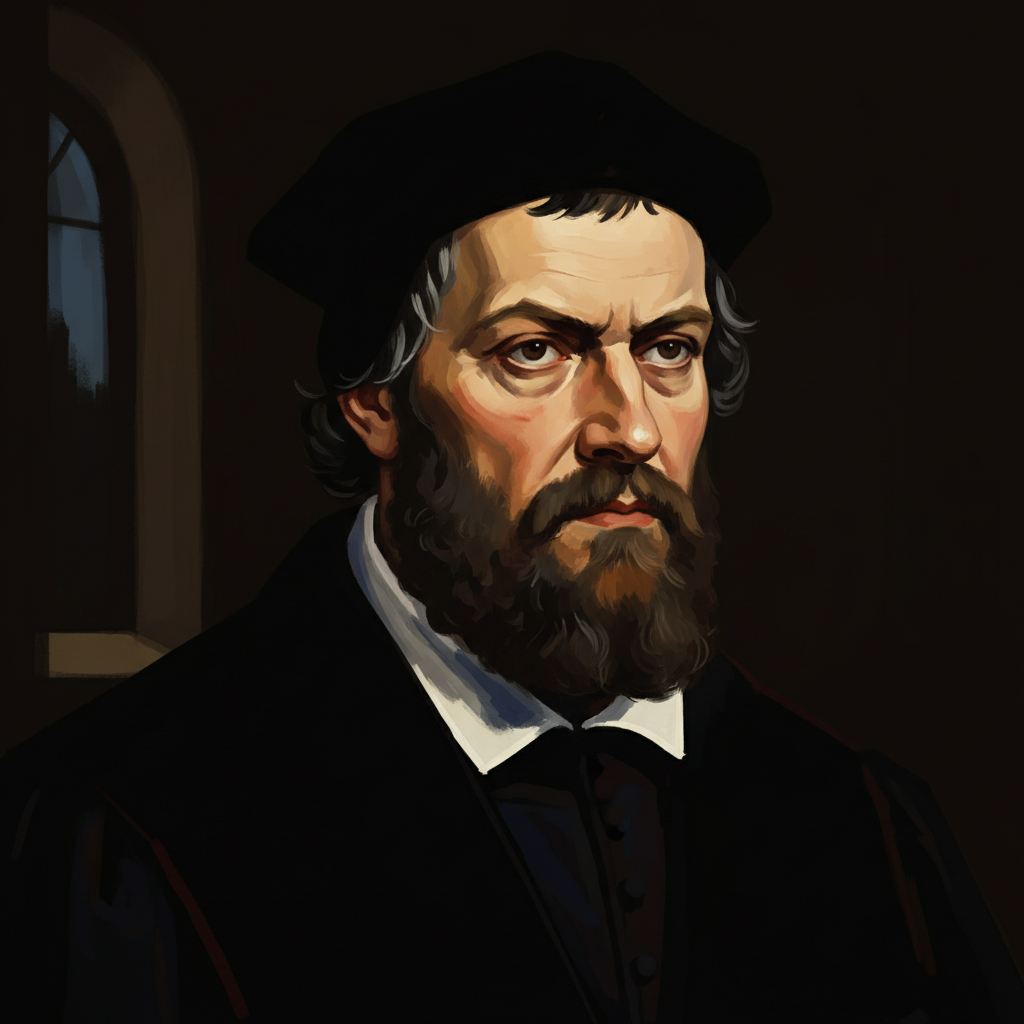
German theologian whose 95 Theses (1517) launched the Protestant Reformation and broke the Catholic Church's monopoly on Western Christianity. Closely associated with Philipp Melanchthon (Lutheran systematizer) and John Calvin (later Reformer who built on Luther's break). For an intellectual contrast, see Pope Leo X, Renaissance pope (1513-1521) — Leo X's indulgence sales triggered Luther's break and Leo excommunicated him in 1521 — Luther's entire Reformation is structured as a direct answer to the indulgence-funded Vatican Leo represented.
Found in 1 providers: deepseek
1 source checked
This chilling phrase justifies killing indiscriminately, trusting a higher power to sort the innocent from the guilty afterward. It captures the logic of collective punishment: when you cannot tell allies from enemies within a group, eliminate everyone and let divine judgment handle the moral sorting. It is a rationalization for mass violence that outsources conscience to God, removing personal responsibility for distinguishing between the targeted and the blameless.
This quote is widely misattributed to Martin Luther but actually comes from the 1209 Albigensian Crusade, spoken by papal legate Arnaud Amalric. Luther did, however, produce harsh polemical writings, including calls to burn synagogues in his 1543 tract against Jews, and urged violent suppression of the Peasants' Revolt in 1525. His rhetoric against perceived enemies of true faith made him a magnet for such apocryphal attributions blending religious zeal with brutality.
Luther lived 1483-1546 during the early modern religious upheaval he himself ignited in 1517. Europe was fracturing along confessional lines, with Catholics, Lutherans, and radical reformers trading accusations of heresy. The Peasants' War killed 100,000, and Ottoman armies pressed Vienna. In this climate, distinguishing true believers from heretics felt urgent, and collective-punishment rhetoric flourished as princes and preachers wrestled with how to purify Christendom through force.
AI-generated insights based on extensive research and information for context. Factual errors? Email [email protected].
Your cart is empty