What it means
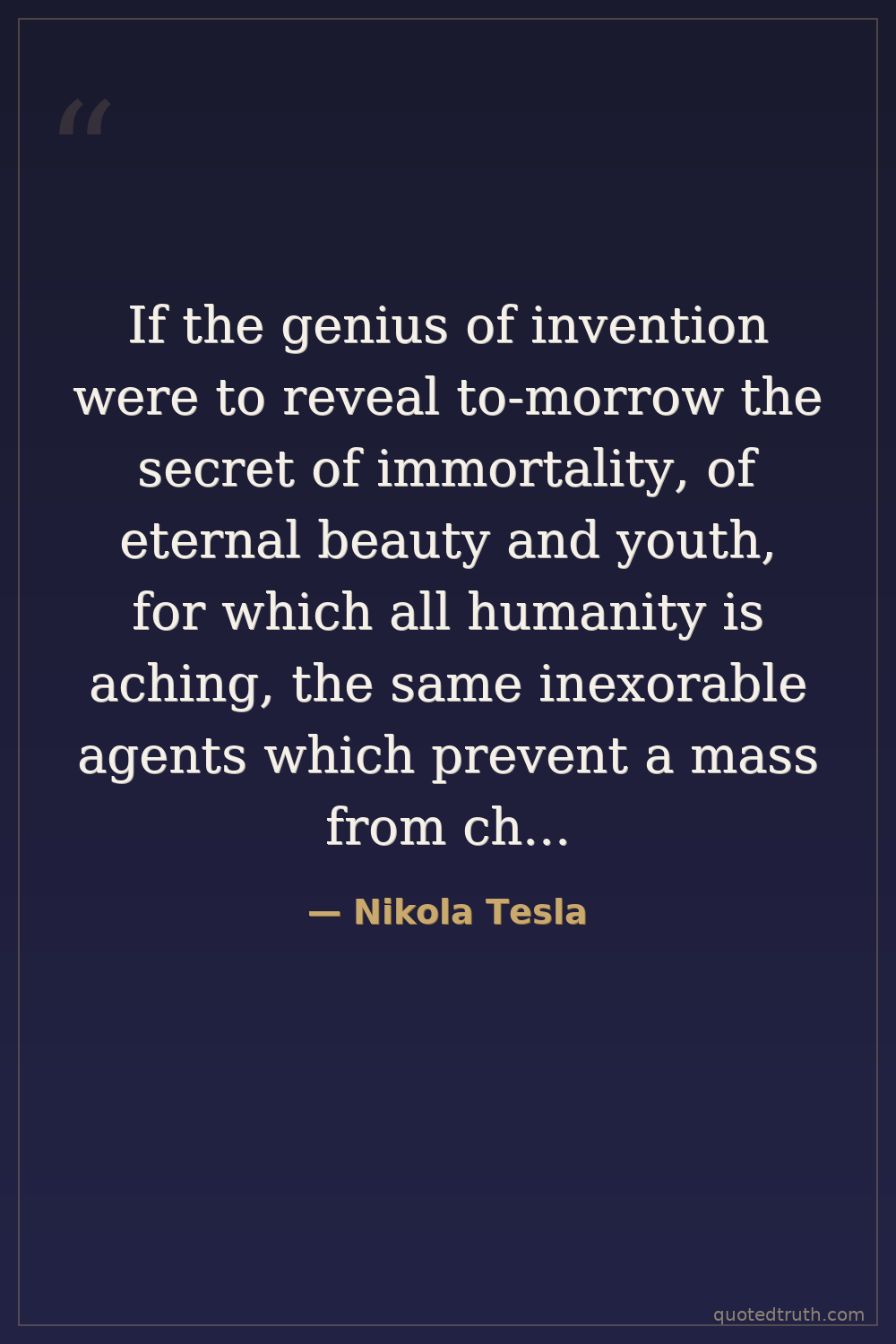
Even the most revolutionary discovery imaginable — immortality itself — would not instantly transform the world. Human society resists sudden change the same way a physical mass resists a sudden shift in velocity: through inertia. Entrenched beliefs, institutions, and habits of thought act as brakes. No matter how powerful the new knowledge, only the slow passage of time can gradually reshape collective human thinking enough to accept it.
Relevance to Nikola Tesla
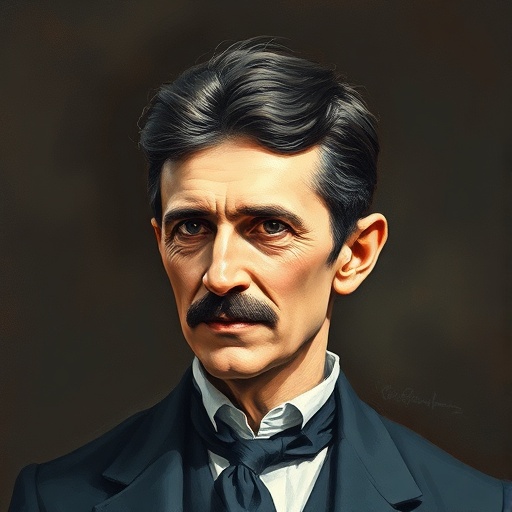
Tesla lived this frustration directly. His AC electrical system was technically superior to Edison's DC, yet faced a vicious propaganda campaign during the War of Currents before winning out. His Wardenclyffe Tower — designed for free global wireless transmission — was defunded when financiers couldn't grasp its potential. Tesla died in 1943 nearly broke, many of his most visionary ideas dismissed as fantasy, vindicated only decades after his death.
The era
Tesla wrote during the late 19th and early 20th century, when electricity, radio, flight, and the automobile arrived within a single generation. Society struggled violently to keep pace: religious institutions resisted Darwinism, labor movements fought industrial displacement, and business monopolies actively suppressed competing technologies. The gap between what inventors could create and what institutions were willing to absorb had never been more stark or consequential.
AI-generated insights based on extensive research and information for context. Factual errors? Email [email protected].