What it means
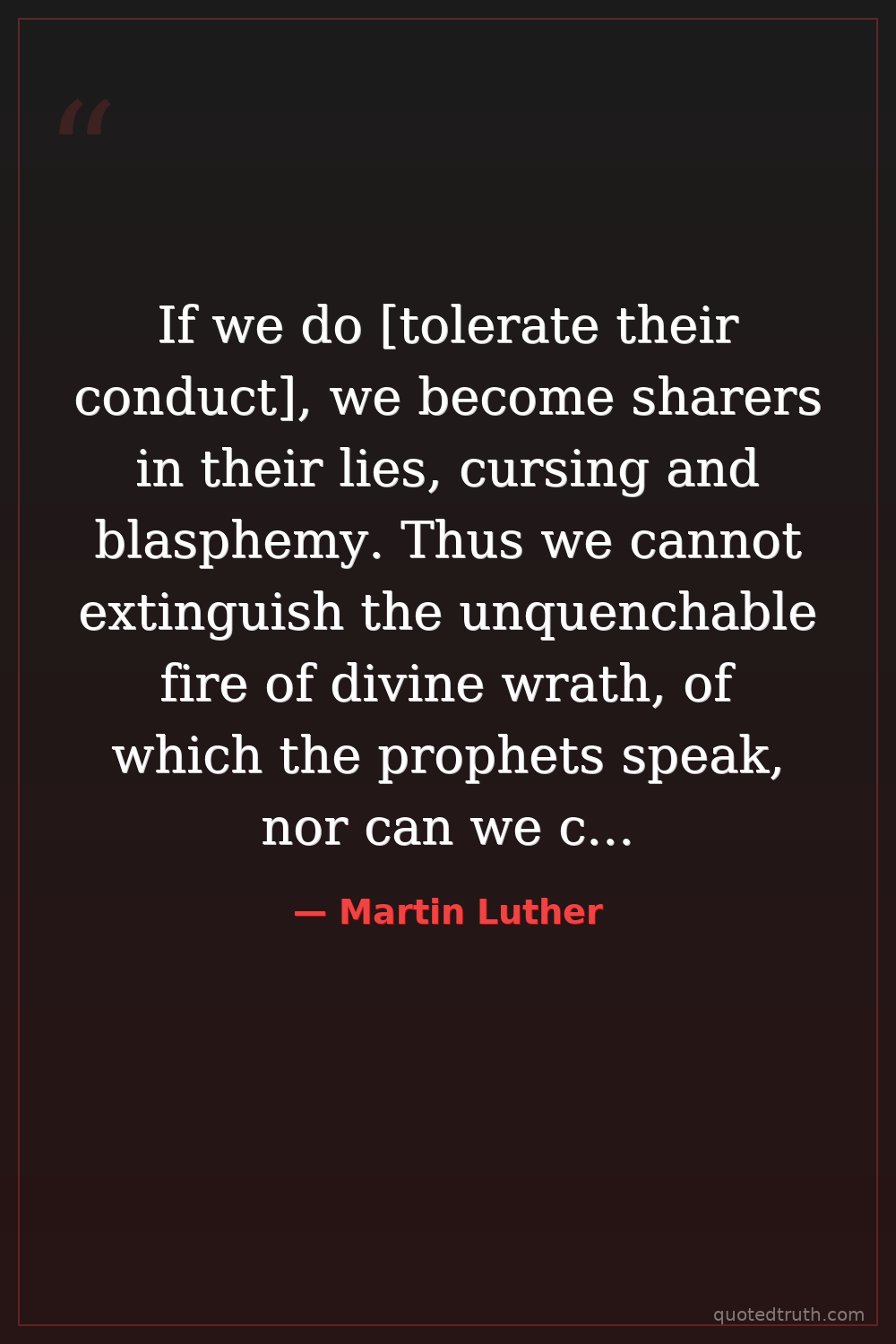
Luther argues that putting up with the Jewish community's beliefs and practices makes Christians complicit in what he calls their lies and blasphemy against God. He insists that tolerance won't stop divine punishment or bring about conversion. Instead, he calls for harsh treatment disguised as mercy, claiming this severity might rescue a handful of souls from damnation, framing cruelty as spiritual rescue work.
Relevance to Martin Luther
This comes from Luther's 1543 treatise On the Jews and Their Lies, written late in his life when his earlier hopes of converting Jews to his reformed Christianity had soured into bitter hostility. The passage reveals the darker side of the reformer who challenged papal authority: the same theological certainty that fueled his break with Rome hardened into vicious antisemitism, later cited by Nazi propagandists four centuries after his death.
The era
In early modern Europe, Jews faced expulsions, ghettos, and blood libel accusations across Christian territories. The Reformation intensified religious polarization, with both Catholics and Protestants competing for doctrinal purity. Luther wrote this amid apocalyptic anxieties about the end times, Ottoman military pressure on Christendom, and widespread belief that religious uniformity was essential to political stability. Tolerance was viewed as spiritual corruption, and rulers routinely used state power to enforce confessional boundaries.
AI-generated insights based on extensive research and information for context. Factual errors? Email [email protected].