Martin Luther — "Printing is the ultimate gift of God and the greatest one. Indeed, the invention…"
Printing is the ultimate gift of God and the greatest one. Indeed, the invention of printing is the work of God.
Printing is the ultimate gift of God and the greatest one. Indeed, the invention of printing is the work of God.
Click any product to generate a realistic preview. Up to 3 at a time.
* Initial load can take up to 90 seconds — revising the preview in another color is nearly instant.
"With threefold horrible sins against God and men have these peasants loaded themselves, for which they have deserved a manifold death of body and soul."
"If I could understand how a good Christian could be a usurer, I would eat him."
"The Pope is a mere tormentor of conscience."
"A man remains foolish until his 40th year, when he begins to recognize his foolishness; then life is soon over."
"Fourthly, their rabbis must be forbidden under threat of death to teach any more."
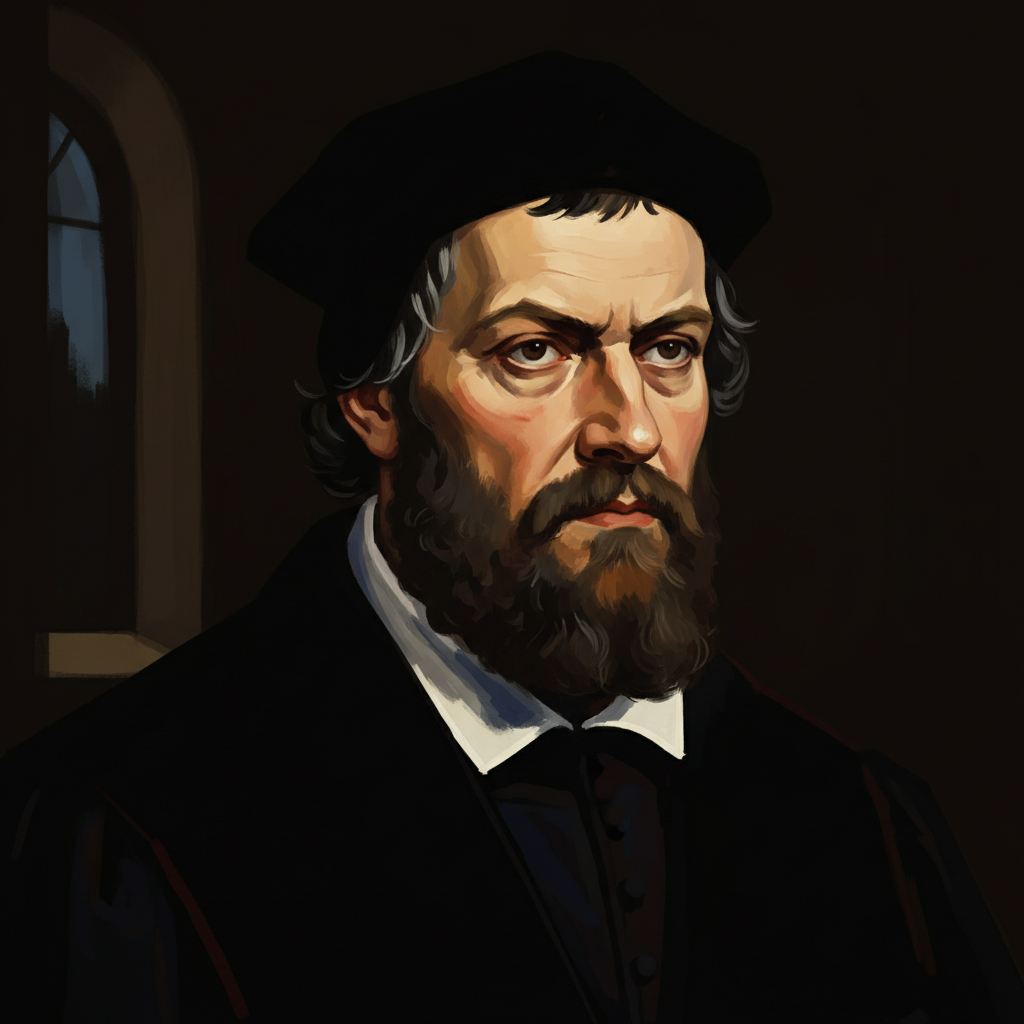
German theologian whose 95 Theses (1517) launched the Protestant Reformation and broke the Catholic Church's monopoly on Western Christianity. Closely associated with Philipp Melanchthon (Lutheran systematizer) and John Calvin (later Reformer who built on Luther's break). For an intellectual contrast, see Pope Leo X, Renaissance pope (1513-1521) — Leo X's indulgence sales triggered Luther's break and Leo excommunicated him in 1521 — Luther's entire Reformation is structured as a direct answer to the indulgence-funded Vatican Leo represented.
Found in 1 providers: grok
1 source checked
Luther calls the printing press the highest divine gift ever given to humanity. He sees mechanical reproduction of text not as a mere human invention but as something God specifically orchestrated. The ability to mass-produce written words is, in his view, sacred and providential, exceeding every other blessing bestowed on humankind.
Luther owed his entire movement to the press. His 95 Theses, German Bible translation, catechisms, and pamphlets spread across Europe within weeks because printers mass-reproduced them cheaply. Without Gutenberg's technology, his challenge to Rome would have died locally like earlier reformers. He personally worked closely with printers in Wittenberg and understood that ink and movable type, not just preaching, carried his theology to common people.
The early modern period saw Gutenberg's 1450s press reshape Europe. By Luther's time, presses in every major city produced affordable books, shattering the Catholic Church's monopoly on scripture and scholarly knowledge. Literacy rose, vernacular texts flourished, and ideas traveled faster than authorities could suppress them. The Reformation itself became the first mass-media revolution, with Luther's tracts selling hundreds of thousands of copies across German-speaking lands.
AI-generated insights based on extensive research and information for context. Factual errors? Email [email protected].
Your cart is empty