Laozi — "If you do not change direction, you may end up where you are heading."
If you do not change direction, you may end up where you are heading.
If you do not change direction, you may end up where you are heading.
Click any product to generate a realistic preview. Up to 3 at a time.
* Initial load can take up to 90 seconds — revising the preview in another color is nearly instant.
"When I let go of what I am, I become what I might be."
"The greatest good is like water. Water benefits all things and does not contend."
"The sage puts his person last and finds his person first. He treats his person as external and his person is preserved."
"The sage puts his own person last, and yet is found in the foremost place."
"When the government is muddle-headed, the people are simple and honest. When the government is clear-cut, the people are discontented."
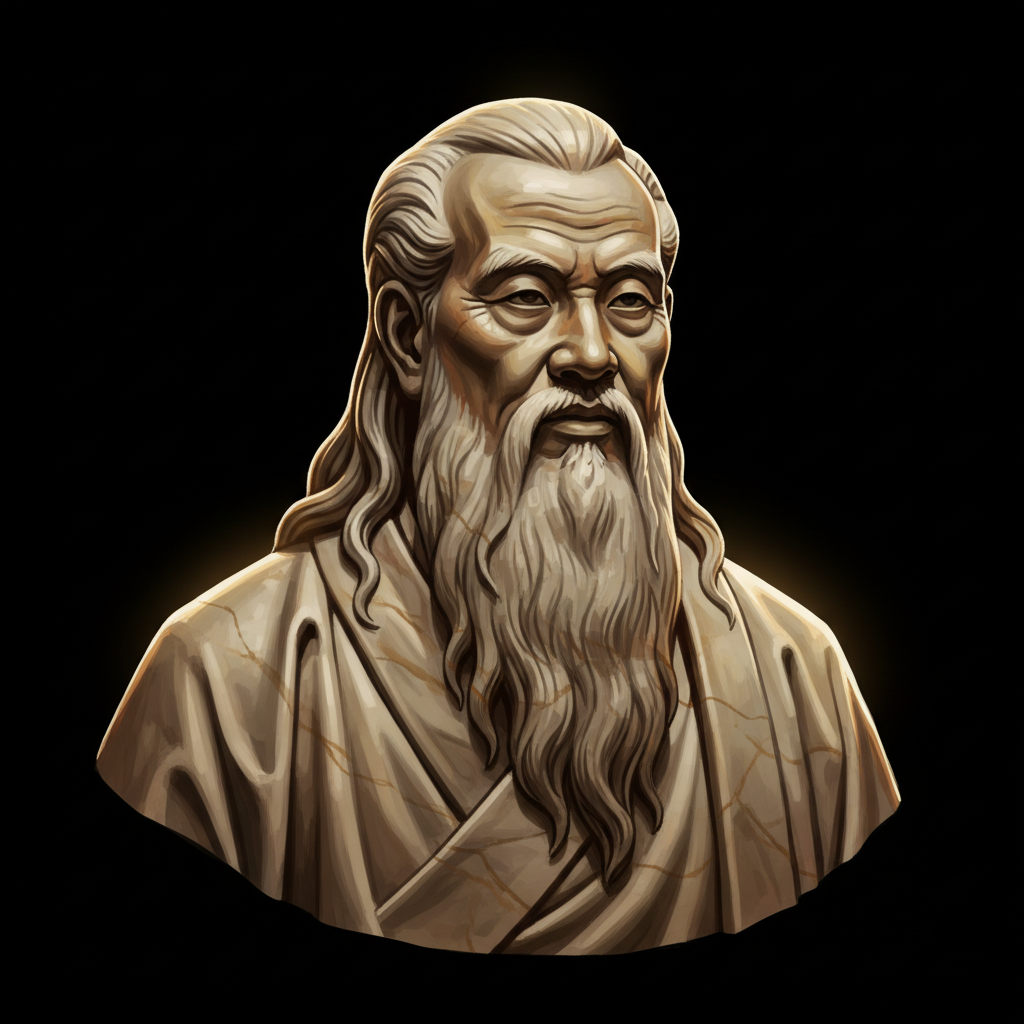
Reputed founder of Taoism and author of the Tao Te Ching, whose wu wei (effortless action) shaped East Asian philosophy. Closely associated with Zhuangzi (later Taoist who extended Laozi's framework). For an intellectual contrast, see Confucius, near-contemporary Chinese sage of social ritual and duty — Confucius systematized social order through ritual and hierarchy; Laozi argued that all such systems were the disease, not the cure — the two founding poles of Chinese moral philosophy.
Found in 1 providers: grok
1 source checked
The saying warns that the path you are currently on determines your destination. If your habits, choices, and priorities stay the same, the future will simply be the predictable extension of the present. Change is not automatic; drift carries you forward by default. To reach somewhere different, you must actively alter course through deliberate decisions. Otherwise, outcomes you dislike today will harden into the life you wake up to tomorrow.
Laozi taught that people suffer when they resist the natural flow of the Tao yet also stressed self-awareness and wu wei, effortless alignment with reality. As a reputed archivist of the Zhou court, he observed rulers whose rigid trajectories led to ruin. His Tao Te Ching urges stepping back, noticing one's direction, and yielding before momentum becomes fate, reflecting his conviction that wise living begins with honest recognition of where one is headed.
Laozi lived during the late Zhou dynasty, around the 6th century BCE, as centralized authority crumbled into the Spring and Autumn period's constant warfare. Rival states pursued power, ambition, and Confucian ritual reform, often accelerating their own collapse. Philosophers called the Hundred Schools debated how society should change course. Against this backdrop of rulers racing toward destruction without pausing to reconsider, Laozi's counsel to examine one's trajectory and redirect before catastrophe carried urgent, practical weight.
AI-generated insights based on extensive research and information for context. Factual errors? Email [email protected].
Your cart is empty