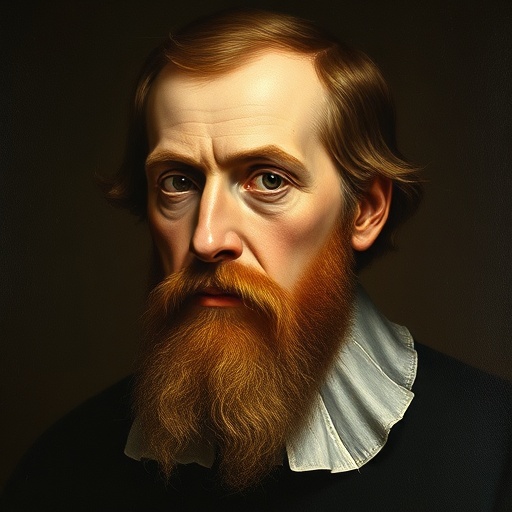
John Calvin — "It is not in our power to believe or not to believe."
It is not in our power to believe or not to believe.
It is not in our power to believe or not to believe.
Click any product to generate a realistic preview. Up to 3 at a time.
* Initial load can take up to 90 seconds — revising the preview in another color is nearly instant.
"Ignorance of predestination is a great evil, because it deprives us of the knowledge of God's glory."
"The reason why some are saved and others perish is not to be sought in their own will, but in the secret counsel of God."
"Prayer is the chief exercise of faith."
"We frankly confess that God has ordained to death those whom he has not deemed worthy of life."
"The reprobate are often endued with excellent gifts, but these are given them, not for their salvation, but for their condemnation."
French theologian whose Institutes of the Christian Religion (1536) systematized Protestant Reformed doctrine, including predestination. Closely associated with Martin Luther (Reformation founder, Calvin's predecessor). For an intellectual contrast, see Jacobus Arminius, Dutch Reformed theologian (1560-1609) — Arminius's rejection of strict double-predestination founded Arminianism — the theological tradition modern Methodism, most evangelicalism, and Pentecostalism descend from. The Calvinist-Arminian debate has divided Protestantism for 400 years.
Found in 1 providers: grok
1 source checked
This quote asserts that faith is not a voluntary act of human will. Belief cannot be chosen or rejected through personal effort or reason alone. An external force — divine grace — determines whether someone comes to faith. Human agency in spiritual matters is fundamentally constrained; salvation is not earned or initiated by the individual but granted from beyond ordinary human control, making faith a gift rather than a decision.
Calvin's doctrine of predestination held that God alone elects who is saved — humans cannot earn or choose salvation. This quote encapsulates his theological core: total human depravity means the will is incapable of turning to God without divine intervention. As Geneva's systematic theologian, he built Reformed Christianity on this premise, directly opposing free-will doctrines of Catholic Scholasticism and asserting God's absolute sovereignty over every aspect of salvation.
The Reformation erupted across 16th-century Europe as Luther, Zwingli, and Calvin challenged Rome's teaching that humans cooperate in salvation through works and sacraments. The Catholic Church maintained free will played a role; Calvin's radical position — that God alone determines belief — drew fierce opposition. The Council of Trent (1545–1563) directly condemned predestinarian views, making this statement a precise theological battleline defining Protestant identity against established Church authority.
AI-generated insights based on extensive research and information for context. Factual errors? Email [email protected].
Your cart is empty