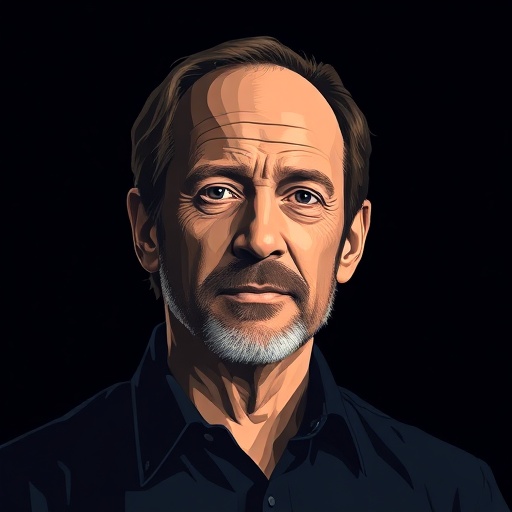
Tim Berners-Lee — "I'm not interested in making money from the web. I'm interested in making it wor…"
I'm not interested in making money from the web. I'm interested in making it work for everyone.
I'm not interested in making money from the web. I'm interested in making it work for everyone.
Click any product to generate a realistic preview. Up to 3 at a time.
* Initial load can take up to 90 seconds — revising the preview in another color is nearly instant.
"I'm still optimistic about the future of the web. I believe we can fix it."
"The original idea of the web was that it should be a collaborative space where you can communicate and collaborate. That's not what happened. It became a read-only medium, and then it became a read-wr…"
"The web should be a tool for empowerment, not control."
"I just had to take the hypertext idea and connect it to the TCP and DNS ideas and—ta-da!—the World Wide Web."
"I'm not a guru. I'm just a guy who invented a technology."
British computer scientist who invented the World Wide Web at CERN in 1989 and founded the W3C, championing open web standards. Closely associated with Vint Cerf (TCP/IP co-creator and 'father of the internet') and Marc Andreessen (Mosaic browser creator and Netscape co-founder). For an intellectual contrast, see Mark Zuckerberg, Facebook (Meta) founder — Zuckerberg's walled-garden Facebook is the canonical contemporary opposite of Berners-Lee's open-web vision; Berners-Lee's Solid project and 'recapture the web' essays are explicitly written as a rebuttal to the platform-monopoly model Facebook pioneered.
Found in 1 providers: grok
1 source checked
The speaker prioritizes universal access and functionality over financial gain. True success means a system that serves all people equally, not one that generates profit for a few. Wealth is irrelevant if the tool fails the people it was built for. Usefulness to everyone is the measure of value, not revenue generated.
Berners-Lee invented the World Wide Web in 1989 and deliberately chose not to patent it, forfeiting billions in potential wealth. He founded the World Wide Web Consortium to keep standards open and later championed the Web Foundation to extend access to developing nations. His entire career embodies choosing openness over profit.
The 1990s saw the dot-com boom transform the internet into a commercial gold rush, with companies racing to monetize online space. Against this tide of privatization and walled gardens, Berners-Lee's insistence on open standards and free access was a radical counterstatement that shaped the web's foundational architecture.
AI-generated insights based on extensive research and information for context. Factual errors? Email [email protected].
Your cart is empty