Pythagoras — "In anger we should refrain both from speech and action."
In anger we should refrain both from speech and action.
In anger we should refrain both from speech and action.
Click any product to generate a realistic preview. Up to 3 at a time.
* Initial load can take up to 90 seconds — revising the preview in another color is nearly instant.
"It is only necessary to make war with five things; with the maladies of the body, the ignorances of the mind, with the passions of the body, with the seditions of the city and the discords of families…"
"As long as Man continues to be the ruthless destroyer of lower living beings, he will never know health or peace. For as long as men massacre animals, they will kill each other."
"The soul of man is divided into three parts, intelligence, reason, and passion. Intelligence and passion are possessed by other animals, but reason by man alone."
"Time is the soul of this world."
"Abstain from flesh."
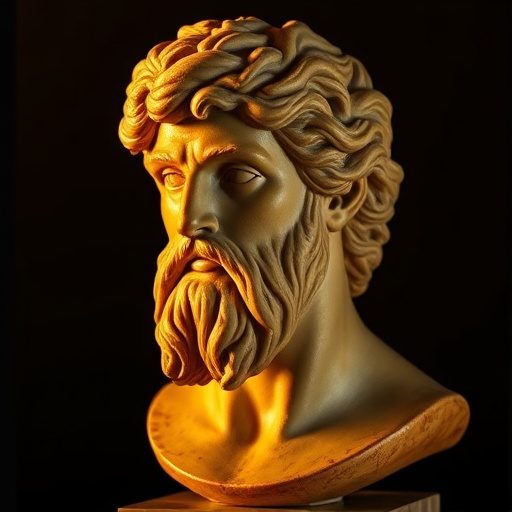
Greek philosopher and mathematician whose school in Croton combined geometry (the Pythagorean theorem), number-mysticism, and a religious-vegetarian way of life. Closely associated with Thales of Miletus (earlier pre-Socratic and the first philosopher). For an intellectual contrast, see Heraclitus, pre-Socratic Greek philosopher of flux — Heraclitus called Pythagoras 'the chief of swindlers' — among the founding insults of the philosophical-rivalry tradition. Their 'all is flux' vs 'all is number' poles still organize the philosophy of mathematics today (Platonist vs anti-realist).
Advice on self-control in emotional situations.
Date: c. 570-495 BCE (attributed later)
Nature & WorldFound in 1 providers: gemini
1 source checked
When you're angry, don't speak and don't act. Anger warps judgment, turning words into weapons and decisions into regrets. The advice is simple: go still until the feeling passes. A heated moment produces outcomes you cannot take back — harsh words that damage relationships, rash actions with lasting consequences. Silence and inaction aren't weakness here; they're the smartest moves available when your thinking is compromised by emotion.
Pythagoras founded a disciplined philosophical brotherhood in Croton with strict codes of conduct, including enforced silence — initiates called akousmatikoi were required to listen without speaking for up to five years before earning the right to respond. He believed reason must govern all things, just as numerical order governs the cosmos. Restraining speech and action under anger was a direct expression of that philosophy: impulse is chaos; self-mastery is the highest form of wisdom.
In 6th-century BCE Greece, disputes between individuals, factions, and city-states frequently escalated into blood feuds, political exile, or open warfare. A rash word spoken in anger before the wrong person could end a career or a life. Pythagorean communities deliberately positioned themselves as rational alternatives to this volatile culture. Preaching restraint in anger was both philosophical principle and practical survival strategy in a world where impulsive speech carried severe, often irreversible social and political consequences.
AI-generated insights based on extensive research and information for context. Factual errors? Email [email protected].
Your cart is empty