What it means
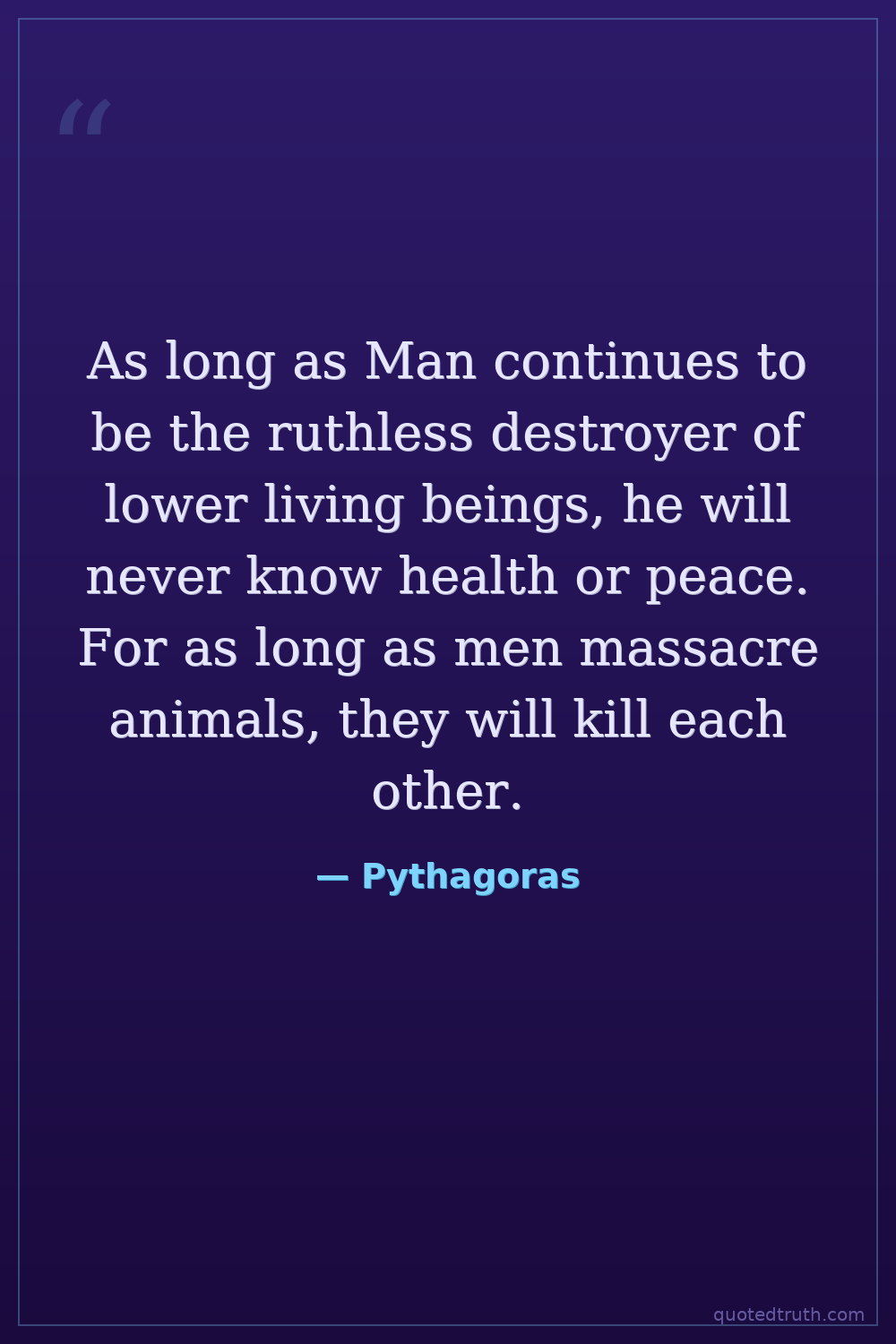
This quote argues that human brutality toward animals and human violence against each other are morally inseparable. Cruelty to living beings corrupts a person's character and erodes their capacity for peace. Those who normalize killing will extend that violence toward other humans. It is an early ethical case for nonviolence, asserting that inner peace and social harmony require extending compassion to all living creatures, not just fellow humans.
Relevance to Pythagoras
Pythagoras was one of antiquity's most famous vegetarians — his practice was called the Pythagorean diet for two millennia. He believed in metempsychosis: the soul's transmigration between humans and animals, making animal killing a potential offense against a human soul in another form. His school in Croton enforced strict dietary rules. This quote directly expresses his conviction that ethical treatment of animals was inseparable from philosophical integrity and spiritual health.
The era
In 6th-century BCE Greece, animal sacrifice was central to religious and civic life — temples depended on it, gods demanded it, and festivals featured mass slaughter as sacred duty. Pythagoras's vegetarianism was radically countercultural. This was also the Axial Age, when thinkers across Greece, India, and China were independently questioning inherited violence and developing ethics of compassion. His words reframed what most Greeks considered piety as a source of moral corruption.
AI-generated insights based on extensive research and information for context. Factual errors? Email [email protected].