What it means
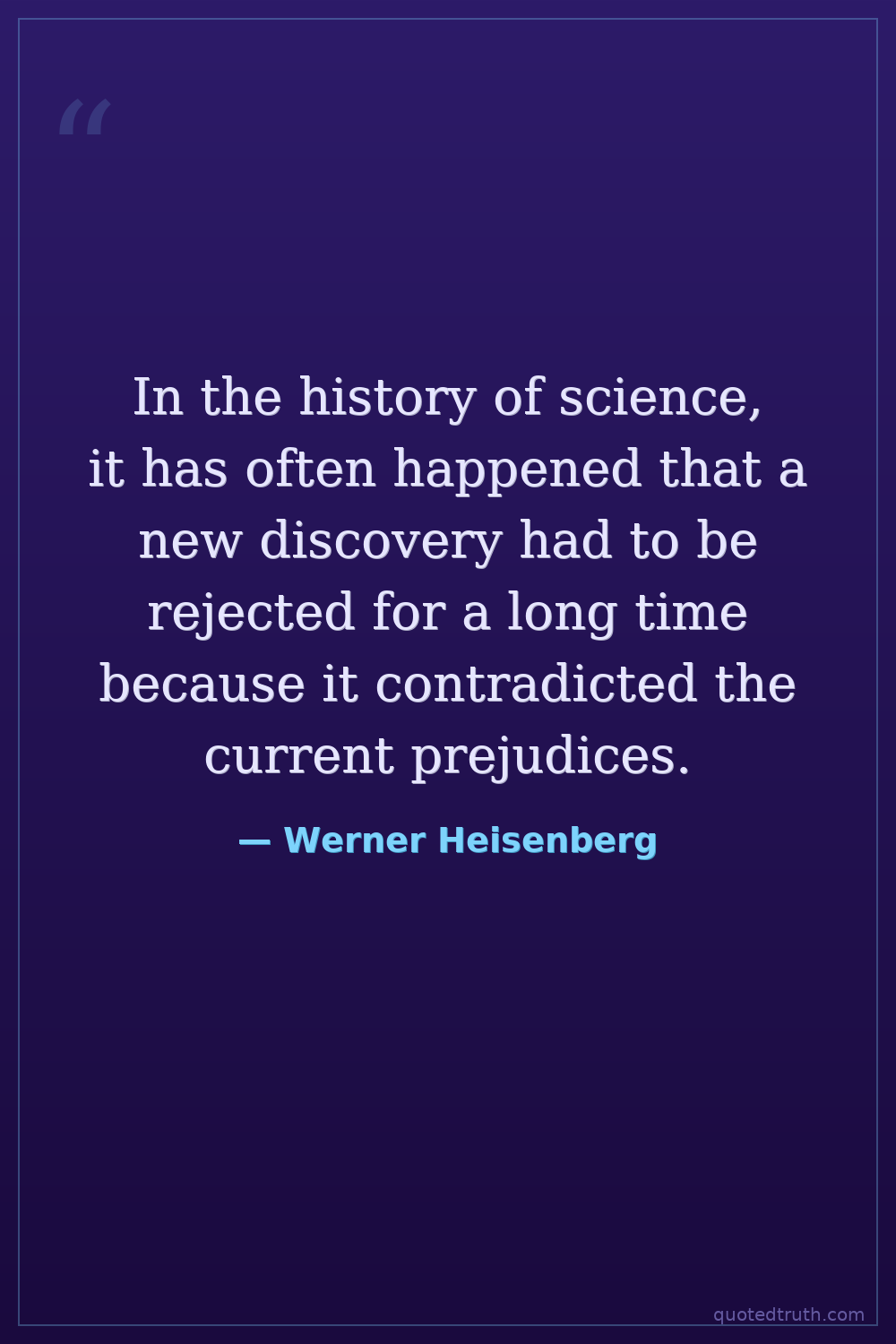
Groundbreaking ideas in science are frequently dismissed not because the evidence is weak, but because they clash with what experts already believe. Established assumptions act as filters, blocking observations that don't fit. Acceptance of a genuine breakthrough often takes years or decades, requiring the slow erosion of inherited orthodoxy before the new framework can be examined fairly on its own merits rather than measured against outdated expectations.
Relevance to Werner Heisenberg
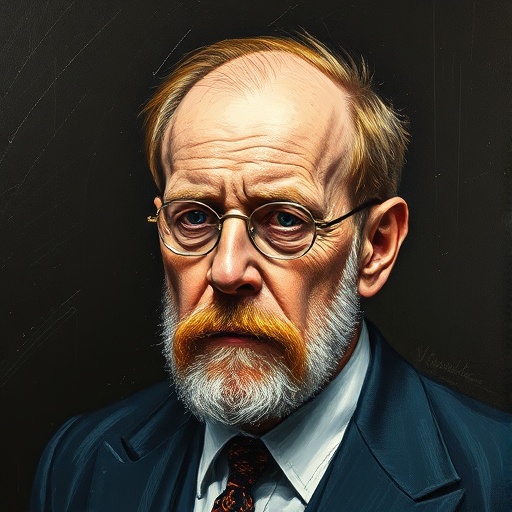
Heisenberg lived this firsthand. His 1925 matrix mechanics abandoned visualizable electron orbits, drawing fierce resistance from physicists clinging to classical intuition, including Einstein, who never accepted quantum indeterminacy. His uncertainty principle overturned the deterministic worldview that had defined physics since Newton. Having watched colleagues struggle to abandon cherished assumptions, and having been criticized himself for too radical a break with tradition, Heisenberg understood that scientific progress is as much a psychological battle as an empirical one.
The era
Heisenberg worked during the 1920s-30s quantum revolution, when physics was being torn from its classical foundations. The Bohr-Einstein debates publicly dramatized the resistance to probabilistic reality. Later, under Nazi Germany, 'Deutsche Physik' rejected relativity as 'Jewish science,' showing how ideology and prejudice could suppress valid theory. Postwar, Heisenberg watched Cold War science politics shape what research was funded and believed, reinforcing his view that prevailing biases, not evidence alone, determine which discoveries are heard.
AI-generated insights based on extensive research and information for context. Factual errors? Email [email protected].