What it means
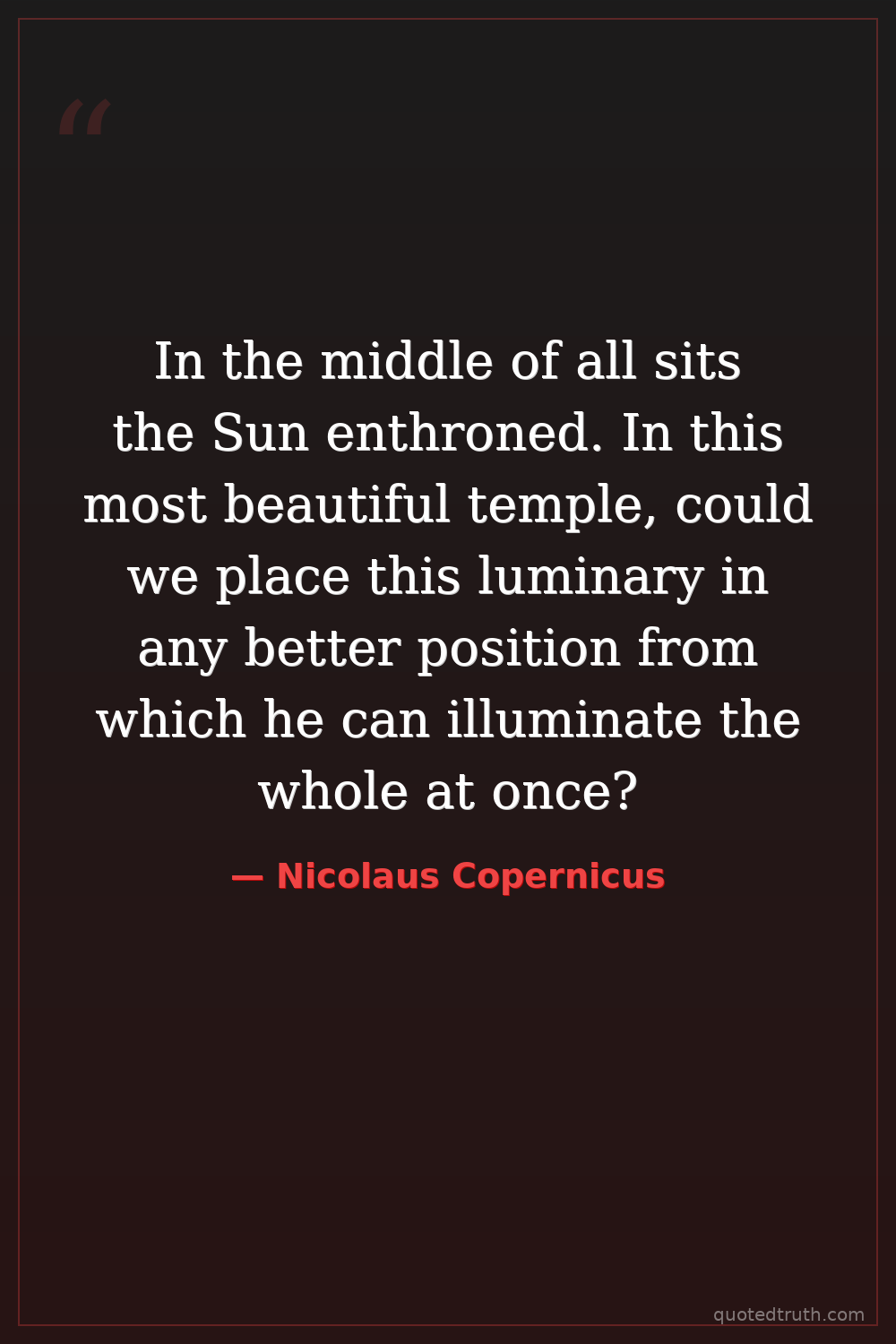
The Sun occupies the central position in our solar system, and no other placement would allow it to illuminate all surrounding planets simultaneously. This isn't mere poetry but a geometric and physical argument: centrality enables omnidirectional light distribution. The universe, conceived as an elegant temple, demands its most powerful element hold the commanding position where its function is maximized.
Relevance to Nicolaus Copernicus
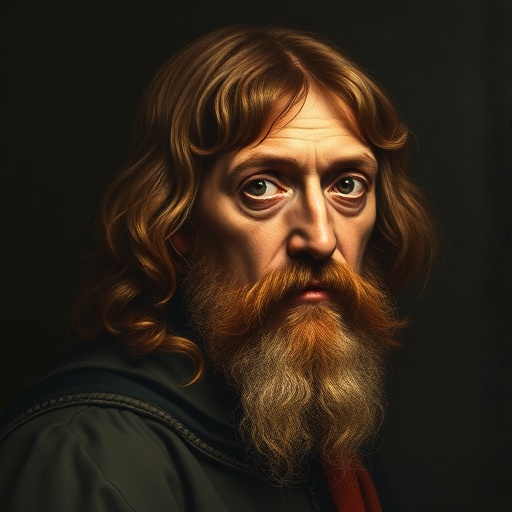
Copernicus spent decades developing his heliocentric model, published in De Revolutionibus Orbium Coelestium in 1543, the year he died. As a canon of the Catholic Church and trained mathematician, he framed his radical displacement of Earth from cosmic center in reverent, almost theological language—making heliocentrism palatable by casting the Sun as God's rightful luminary rather than attacking Church cosmology directly.
The era
In the early 16th century, Ptolemaic geocentrism—Earth at the universe's center—had dominated European thought for 1,400 years, endorsed by Church doctrine and Aristotelian philosophy. Challenging it risked accusations of heresy. Copernicus wrote during the Renaissance, when classical texts were being reexamined and humanist scholars questioned inherited authority, creating intellectual space for his revolutionary reordering of the heavens.
AI-generated insights based on extensive research and information for context. Factual errors? Email [email protected].