What it means
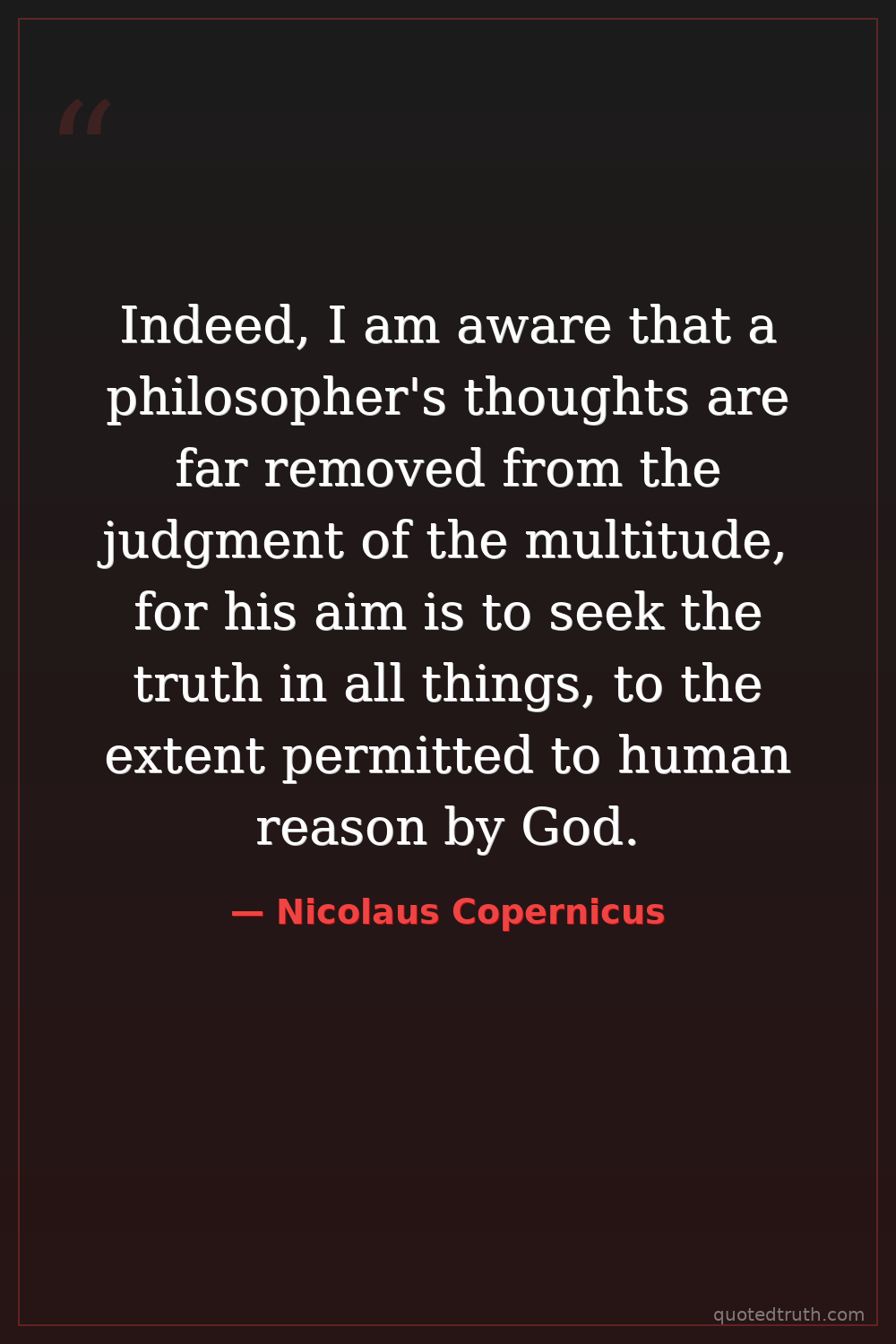
This quote argues that serious thinkers operate on a different plane than popular opinion. A philosopher's purpose is not to satisfy the crowd but to pursue truth as far as human reasoning allows—while acknowledging that some truths remain beyond us, bounded by what God permits us to know. It is a defense of intellectual independence: truth-seeking is a calling that requires separating oneself from what the majority believes or wants to hear.
Relevance to Nicolaus Copernicus
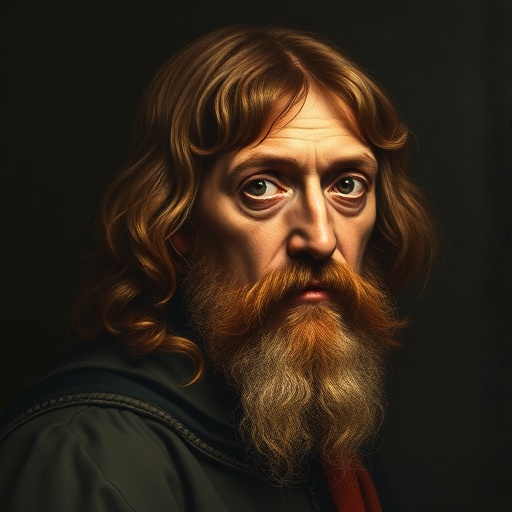
Copernicus knew his heliocentric theory would horrify ordinary people and challenge Church doctrine. He delayed publishing De Revolutionibus until near death in 1543, fearing ridicule and condemnation. His dual career as a Church canon and astronomer required reconciling rigorous mathematical observation with religious authority. This quote captures his lived tension: a man who discovered a truth the multitude was not prepared to accept, yet carefully framed his inquiry within the limits God permitted human reason to reach.
The era
The early modern period was shaped by the Renaissance's revival of classical learning alongside the Church's firm authority over cosmology—Ptolemy's Earth-centered universe was considered both scientifically and theologically correct. The printing press was spreading ideas rapidly, yet heresy could end careers or worse. Copernicus wrote at the cusp of the Scientific Revolution, when asserting a philosopher's right to think beyond popular consensus was itself a radical and potentially dangerous intellectual stance.
AI-generated insights based on extensive research and information for context. Factual errors? Email [email protected].