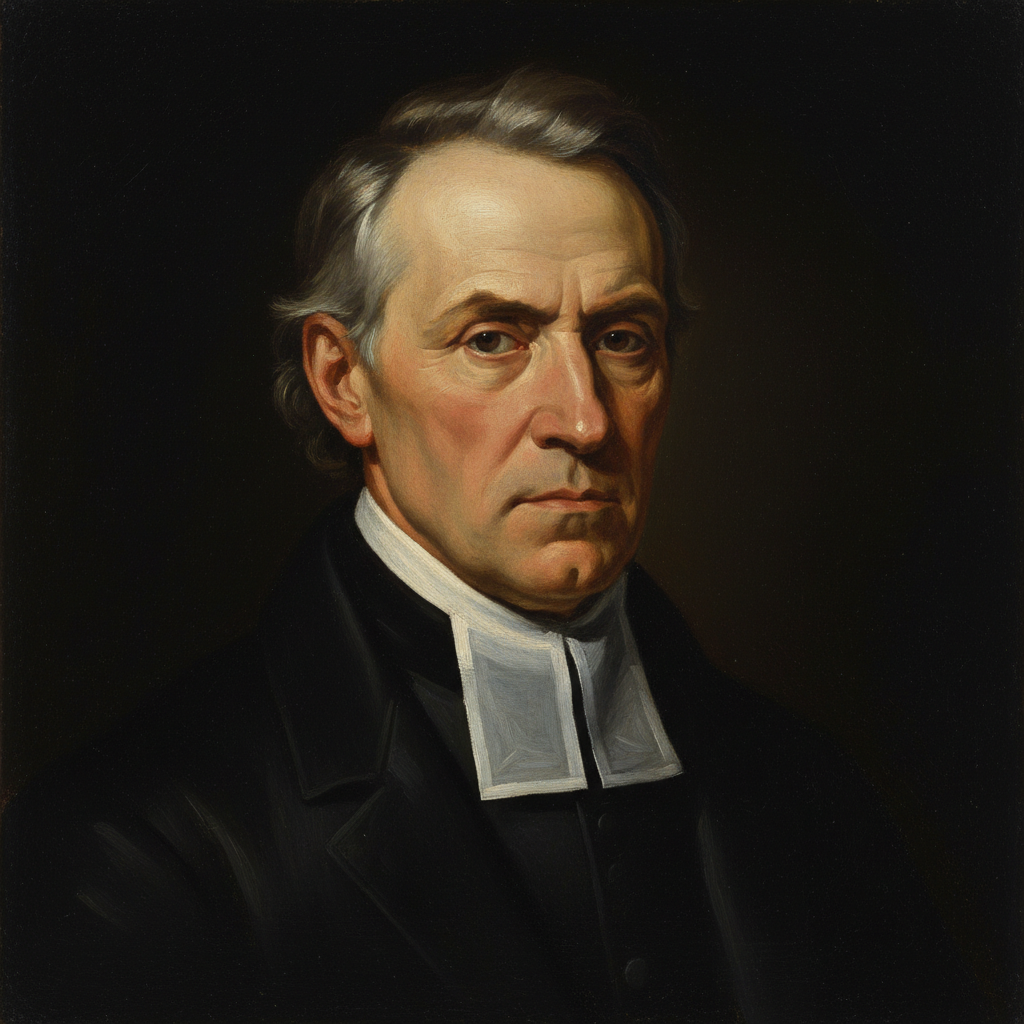
John Wesley — "Reading the Scripture, I find there no other way to heaven than the way of holin…"
Reading the Scripture, I find there no other way to heaven than the way of holiness.
Reading the Scripture, I find there no other way to heaven than the way of holiness.
Click any product to generate a realistic preview. Up to 3 at a time.
* Initial load can take up to 90 seconds — revising the preview in another color is nearly instant.
"I am not afraid of giving too much trouble to God. He is able to bear it."
"I am a man of one book."
"I am a debtor to all the world, to do all the good I can, in every place, to every soul."
"I have but one point in view, to promote, as far as I am able, vital, practical religion."
"As to my own comfort, I know not that I ever felt any, from the time I was born."
English Anglican cleric and founder of Methodism, whose open-air preaching and class-meeting structure created the largest 18th-century evangelical revival. Closely associated with Charles Wesley (his hymn-writing brother) and George Whitefield (early co-revivalist, later doctrinal opponent). For an intellectual contrast, see George Whitefield, Calvinist evangelical revivalist — Whitefield's predestinarian Calvinism vs Wesley's free-grace Arminian theology split the early Methodist movement permanently in the 1739-41 break. The founding evangelical Calvinist-Arminian schism — the two parallel evangelical traditions American Christianity descends from.
Found in 1 providers: grok
1 source checked
Salvation and reaching heaven require living a genuinely holy life — not merely believing correct doctrines or performing rituals. Scripture itself demands moral transformation, purity of heart, and active righteousness as the actual path to God, not a shortcut around it.
Wesley founded Methodism on the doctrine of sanctification — that believers could and must pursue perfection in love. His entire ministry centered on methodical Bible study, disciplined holy living, and social reform. This quote encapsulates his lifelong insistence that faith without holiness is spiritually worthless.
18th-century England saw nominal Christianity dominate — church attendance was routine but moral transformation rare. Wesley's revival movement challenged comfortable Anglicanism and Calvinist predestination alike, insisting ordinary people could achieve genuine holiness through grace, discipline, and Scripture, reshaping Protestant piety fundamentally.
AI-generated insights based on extensive research and information for context. Factual errors? Email [email protected].
Your cart is empty