Pythagoras — "It is difficult to walk at one and the same time on a single path and on many."
It is difficult to walk at one and the same time on a single path and on many.
It is difficult to walk at one and the same time on a single path and on many.
Click any product to generate a realistic preview. Up to 3 at a time.
* Initial load can take up to 90 seconds — revising the preview in another color is nearly instant.
"Lust weakens both body and mind."
"Choose always the way that seems the best, however rough it may be; custom will soon render it easy and agreeable."
"Number is the ruler of forms and ideas, and the cause of gods and daemons."
"Sacrifice an odd number to the celestial gods, and to the infernal an even."
"Choose rather to be strong of soul than strong of body."
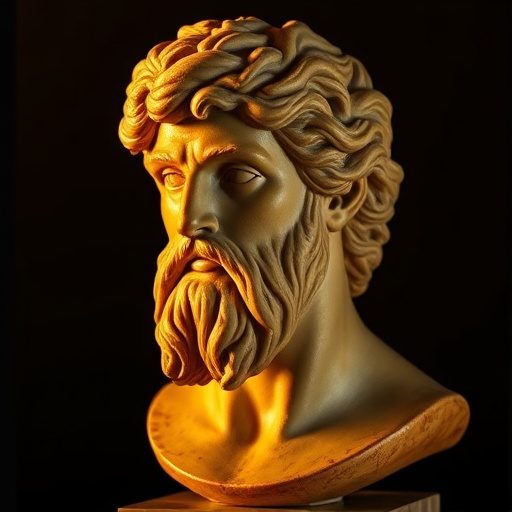
Greek philosopher and mathematician whose school in Croton combined geometry (the Pythagorean theorem), number-mysticism, and a religious-vegetarian way of life. Closely associated with Thales of Miletus (earlier pre-Socratic and the first philosopher). For an intellectual contrast, see Heraclitus, pre-Socratic Greek philosopher of flux — Heraclitus called Pythagoras 'the chief of swindlers' — among the founding insults of the philosophical-rivalry tradition. Their 'all is flux' vs 'all is number' poles still organize the philosophy of mathematics today (Platonist vs anti-realist).
Found in 1 providers: grok
1 source checked
You cannot fully commit to one direction while chasing many at the same time. Trying to pursue multiple paths splits your attention, energy, and progress, leaving you stretched thin and unable to master any single one. Real focus requires choosing a clear course and following it, rather than scattering yourself across competing goals. Dedication to one purpose produces depth; juggling too many produces shallow results and internal conflict.
Pythagoras demanded total commitment from his followers, who lived under a strict communal rule of silence, study, and disciplined routine. His school in Croton fused mathematics, music, and ethics into a single unified way of life. This saying mirrors that philosophy: truth, for him, came from singular devotion to a chosen path, not dabbling. His own life blended math, mysticism, and leadership through one coherent pursuit of harmony.
In sixth-century BCE Greece, philosophical schools were just emerging as rivals to myth and civic religion. Thinkers like Thales and Anaximander competed to explain reality, and disciples chose a master and a way of life. Pythagoras founded his brotherhood in Croton around 530 BCE, where members pledged loyalty, shared property, and followed rigid daily practice. In that world, picking one path literally meant choosing one teacher, one diet, one discipline, one worldview.
AI-generated insights based on extensive research and information for context. Factual errors? Email [email protected].
Your cart is empty