John Calvin — "It is not enough to believe that God is, unless we also believe that he is the r…"
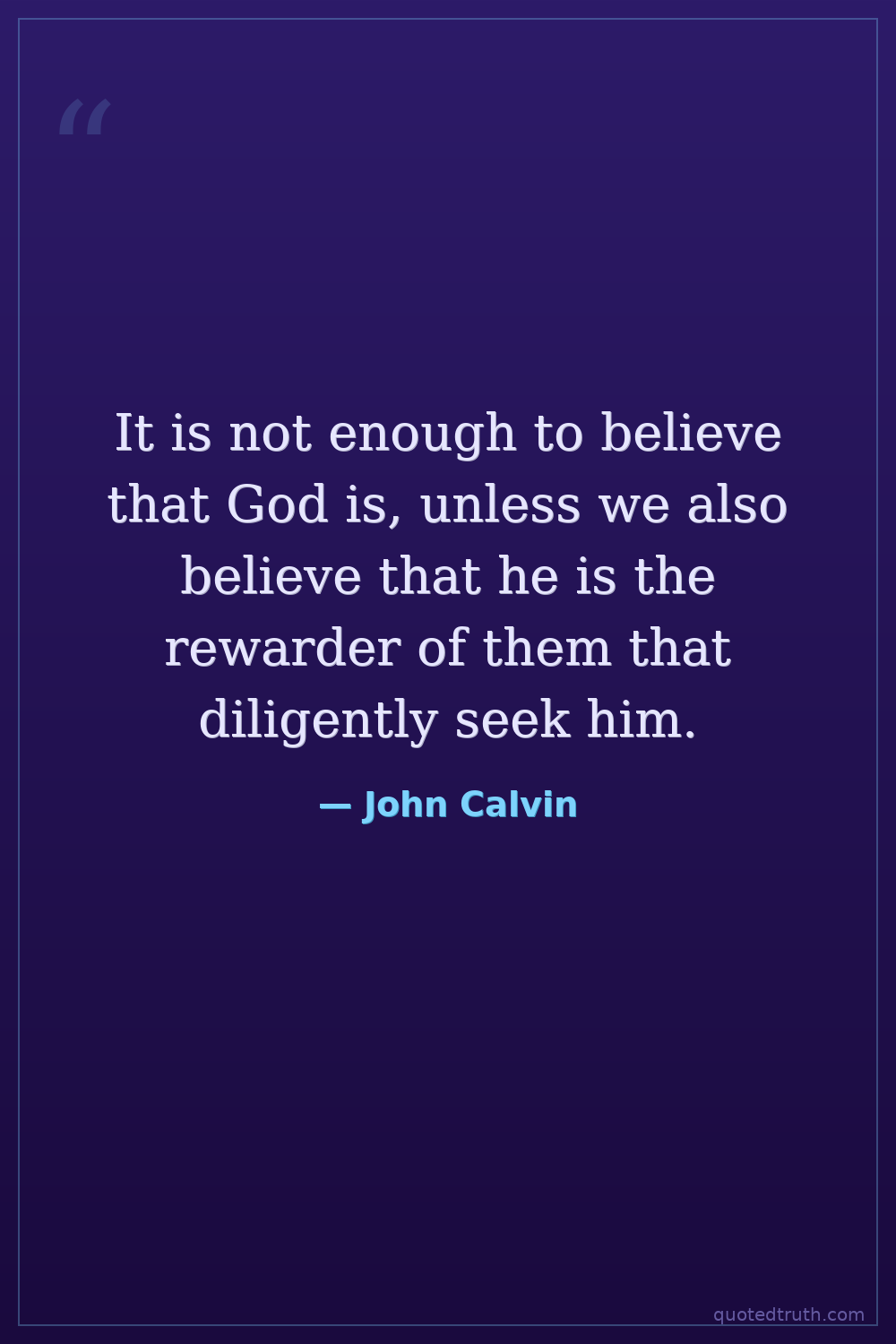
It is not enough to believe that God is, unless we also believe that he is the rewarder of them that diligently seek him.
It is not enough to believe that God is, unless we also believe that he is the rewarder of them that diligently seek him.
Click any product to generate a realistic preview. Up to 3 at a time.
* Initial load can take up to 90 seconds — revising the preview in another color is nearly instant.
"The reprobate are vessels of wrath fitted for destruction."
"Ignorance of predestination is a great evil, because it deprives us of the knowledge of God's glory."
"The Lord then would have all the godly to burn with so much zeal in the defense of lawful worship and true religion, that no connection, no relationship, nor any other consideration, connected with th…"
"The reprobate are not bound to believe, because God does not give them the grace to believe."
"Our hearts are so prone to idolatry that we cannot but be continually forging new gods for ourselves."
French theologian whose Institutes of the Christian Religion (1536) systematized Protestant Reformed doctrine, including predestination. Closely associated with Martin Luther (Reformation founder, Calvin's predecessor). For an intellectual contrast, see Jacobus Arminius, Dutch Reformed theologian (1560-1609) — Arminius's rejection of strict double-predestination founded Arminianism — the theological tradition modern Methodism, most evangelicalism, and Pentecostalism descend from. The Calvinist-Arminian debate has divided Protestantism for 400 years.
Found in 1 providers: grok
1 source checked
Acknowledging that God exists is not enough — real faith requires trusting that God is active, just, and responsive to those who genuinely pursue him. It separates cold intellectual theism from living, relational belief. If you think God exists but doesn't notice or reward sincere devotion, your faith has no motivating force. True belief changes behavior because it assumes God is paying attention and that earnest seeking actually matters.
Calvin built his entire theology around the distinction between dead intellectual religion and living, transformative faith. His Institutes of the Christian Religion argued that salvation flows from genuine trust in a sovereign, responsive God — not ritual observance. Having broken from Catholicism's sacramental system, Calvin insisted that God's elect are marked by earnest pursuit of him. This quote mirrors his core conviction that authentic faith is relational and expectant, not merely doctrinal.
In 16th-century Europe, most people were baptized Christians who attended Mass without deep personal conviction — religion was cultural inheritance, not examined belief. The Reformation shattered that assumption, demanding that individuals own their faith. Calvin's Geneva became an experiment in applied theology: a city where belief was meant to penetrate daily life. This quote challenged the nominal Christianity that reformers saw everywhere, insisting that genuine faith requires expecting God to act, not just conceding he exists.
AI-generated insights based on extensive research and information for context. Factual errors? Email [email protected].
Your cart is empty