What it means
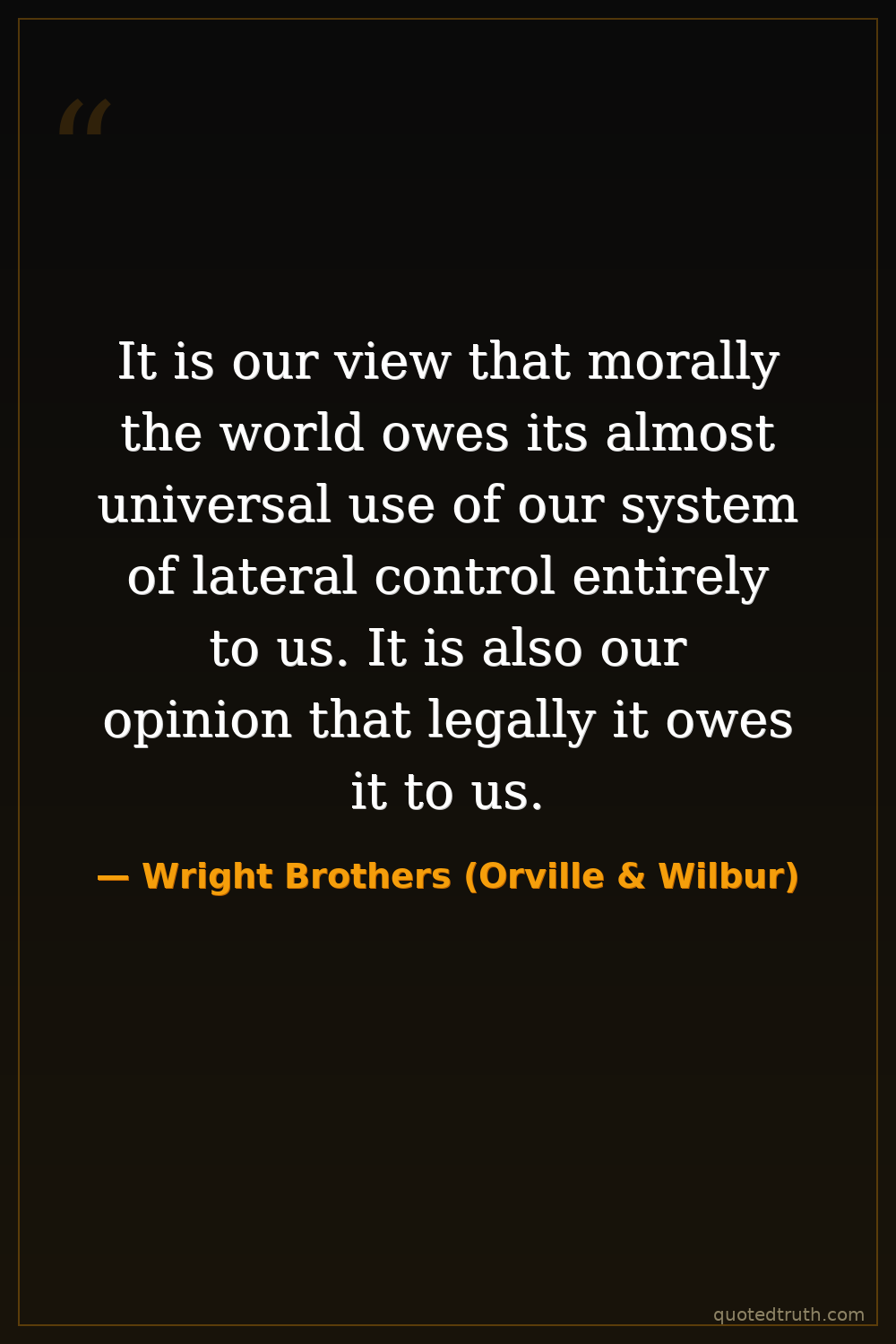
The speaker claims full credit for a widely adopted method of controlling side-to-side balance in flight. They argue that everyone using this technique owes them recognition on two levels: ethically, because they invented it, and legally, because their patent rights cover it. The statement is a firm assertion of ownership over an idea that had spread throughout an entire industry without proper compensation or acknowledgment.
Relevance to Wright Brothers (Orville & Wilbur)
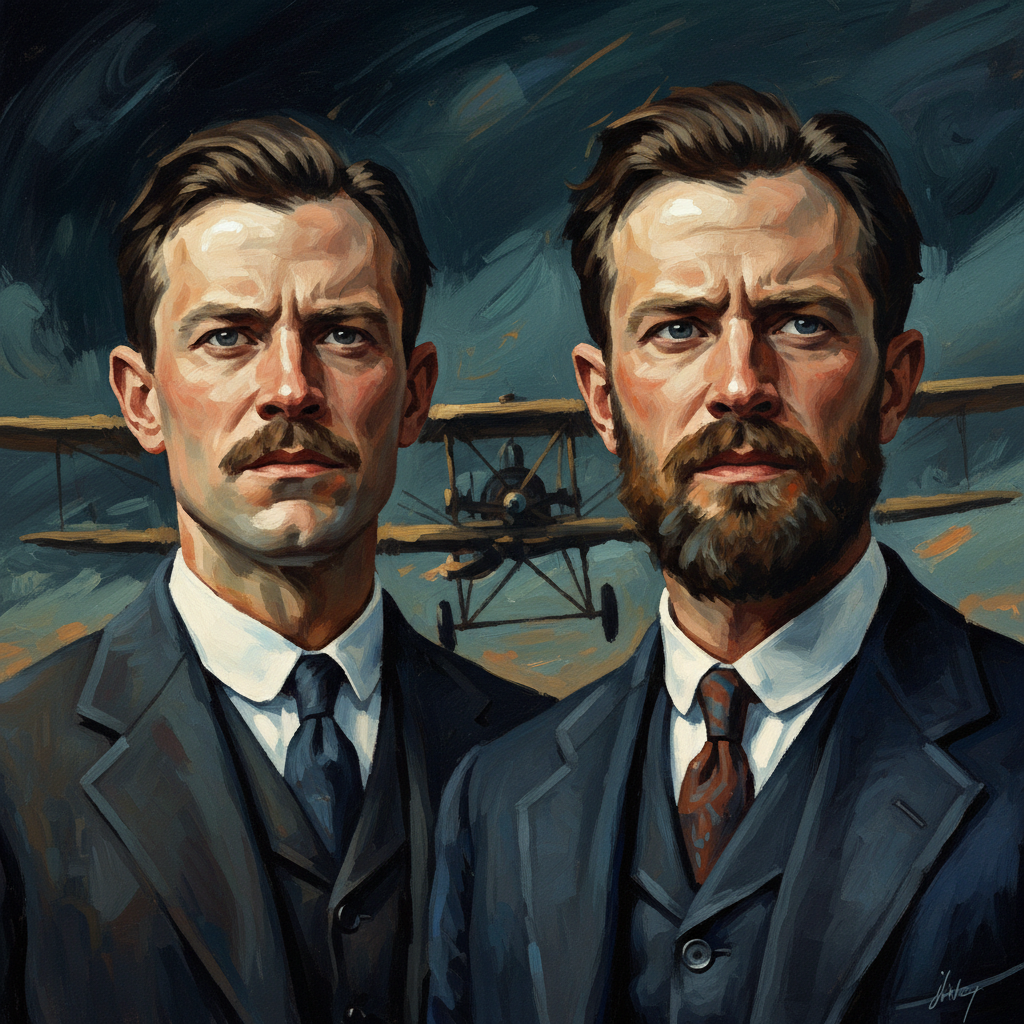
This reflects the Wrights' fierce defense of their 1906 patent on wing-warping lateral control, which they spent years litigating against Glenn Curtiss and European builders. Though celebrated for the 1903 Kitty Hawk flight, Orville and Wilbur became equally known for aggressive patent enforcement, believing their methodical bicycle-shop experimentation earned them exclusive rights. The quote captures their self-perception as rightful owners of controlled flight itself, not just one technical solution.
The era
In the early 1900s, aviation was exploding globally with competing inventors in France, Germany, and America racing to build practical aircraft. Patent law was the primary battleground for emerging technologies, and the Wrights' lawsuits stalled American aviation development for nearly a decade. This era prized individual inventor-heroes, yet simultaneously saw rapid copying across borders. Their legal crusade ultimately ended only when WWI forced a government-mandated patent pool in 1917.
AI-generated insights based on extensive research and information for context. Factual errors? Email [email protected].