What it means
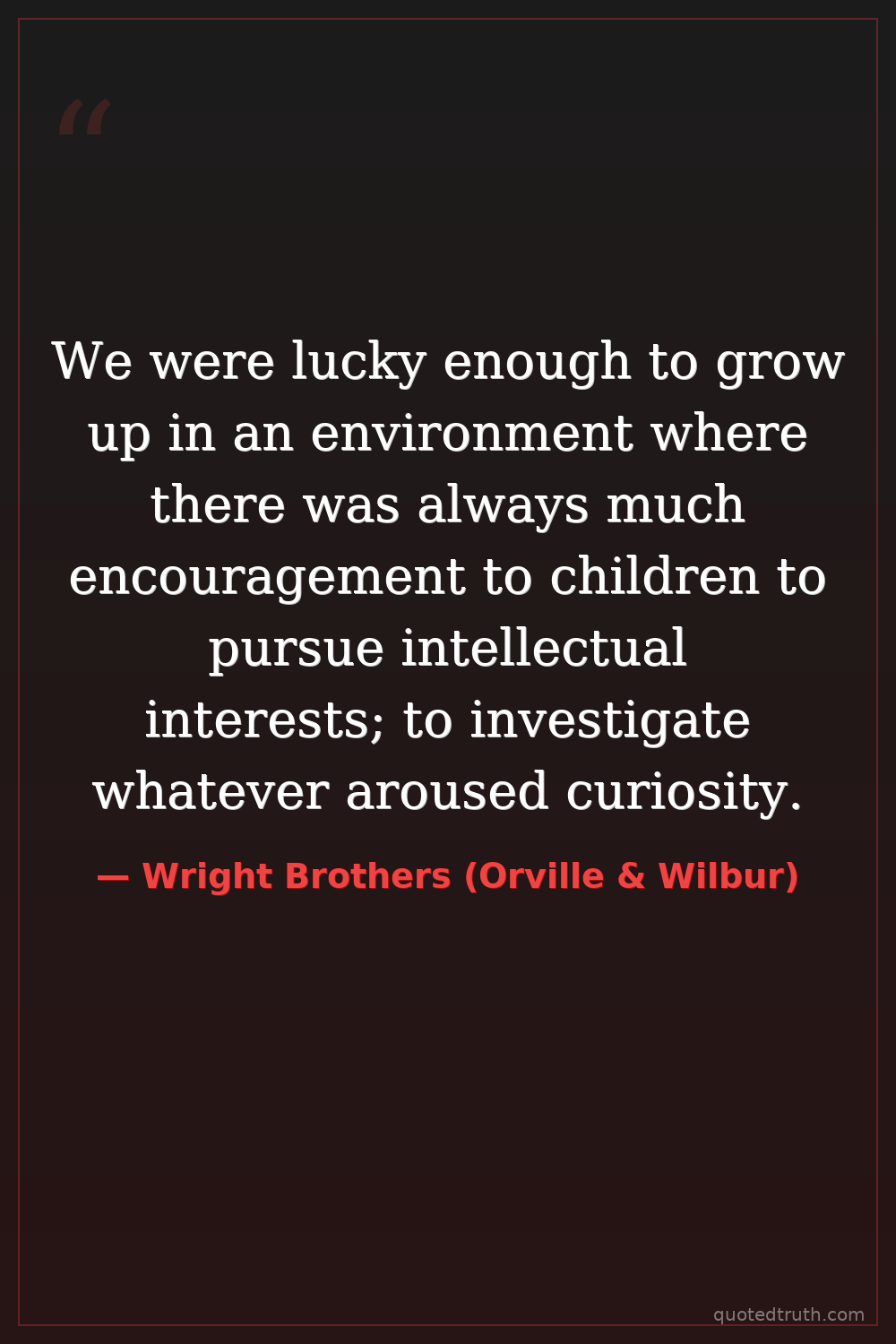
Being raised in a home where curiosity was welcomed and intellectual exploration was actively encouraged gave them the foundation for everything they achieved. It credits nurturing environment over formal schooling — the idea that children allowed to ask questions and chase their interests develop into independent thinkers. Curiosity itself is the engine of discovery, and the conditions set around a child determine whether that engine ever gets ignited.
Relevance to Wright Brothers (Orville & Wilbur)
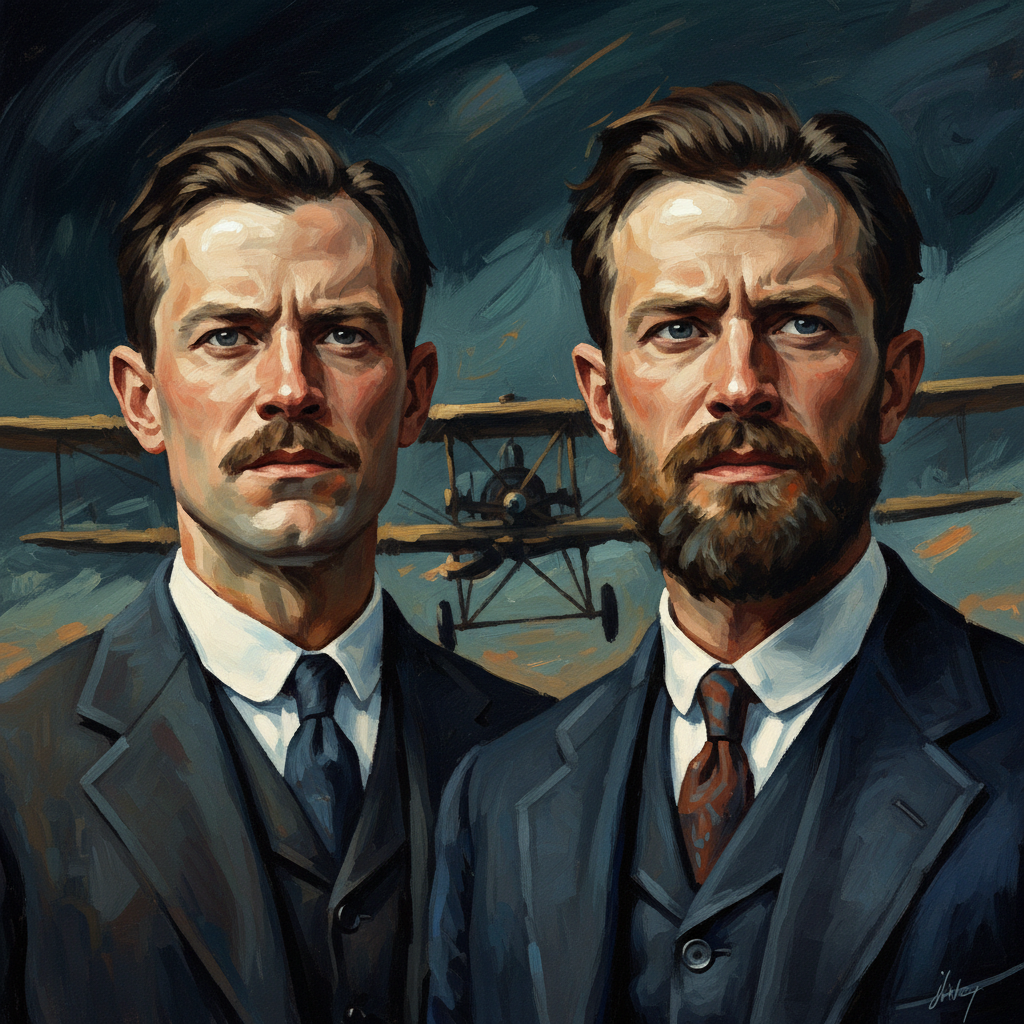
Their father Bishop Milton Wright kept shelves of books and urged his children to read and experiment freely. Their mother Susan had rare mechanical aptitude and built household tools herself. Neither Orville nor Wilbur finished college, yet they mastered aerodynamics, engine design, and structural engineering through self-directed inquiry. Their Dayton bicycle shop became a working laboratory. The quote is a direct explanation of how two self-taught men from Ohio built the world's first successful powered airplane.
The era
In the 1870s–1900s, formal higher education was inaccessible to most Americans, and compulsory schooling laws were still expanding state by state. The Industrial Revolution celebrated self-taught inventors — Edison, Tesla, Bell — as proof that ingenuity mattered more than credentials. Yet elite institutions still gatekept serious science. The Wright Brothers' flight in 1903 landed as a direct counter-argument: that a curious home, not a university diploma, was the true prerequisite for transforming the world.
AI-generated insights based on extensive research and information for context. Factual errors? Email [email protected].