Wright Brothers (Orville & Wilbur) — "We have found that the bird is a much more intelligent creature than we had supp…"
We have found that the bird is a much more intelligent creature than we had supposed.
We have found that the bird is a much more intelligent creature than we had supposed.
Click any product to generate a realistic preview. Up to 3 at a time.
* Initial load can take up to 90 seconds — revising the preview in another color is nearly instant.
"If birds can glide for long periods of time, then why can't we?"
"We do not intend to fly for money, but for the love of the art."
"We were not looking for a fortune, but we were looking for a solution."
"We are not content to walk upon the ground."
"The desire to fly is an idea handed down to us by our ancestors who, in their grueling travels across trackless lands in prehistoric times, looked enviously on the birds soaring freely through space, …"
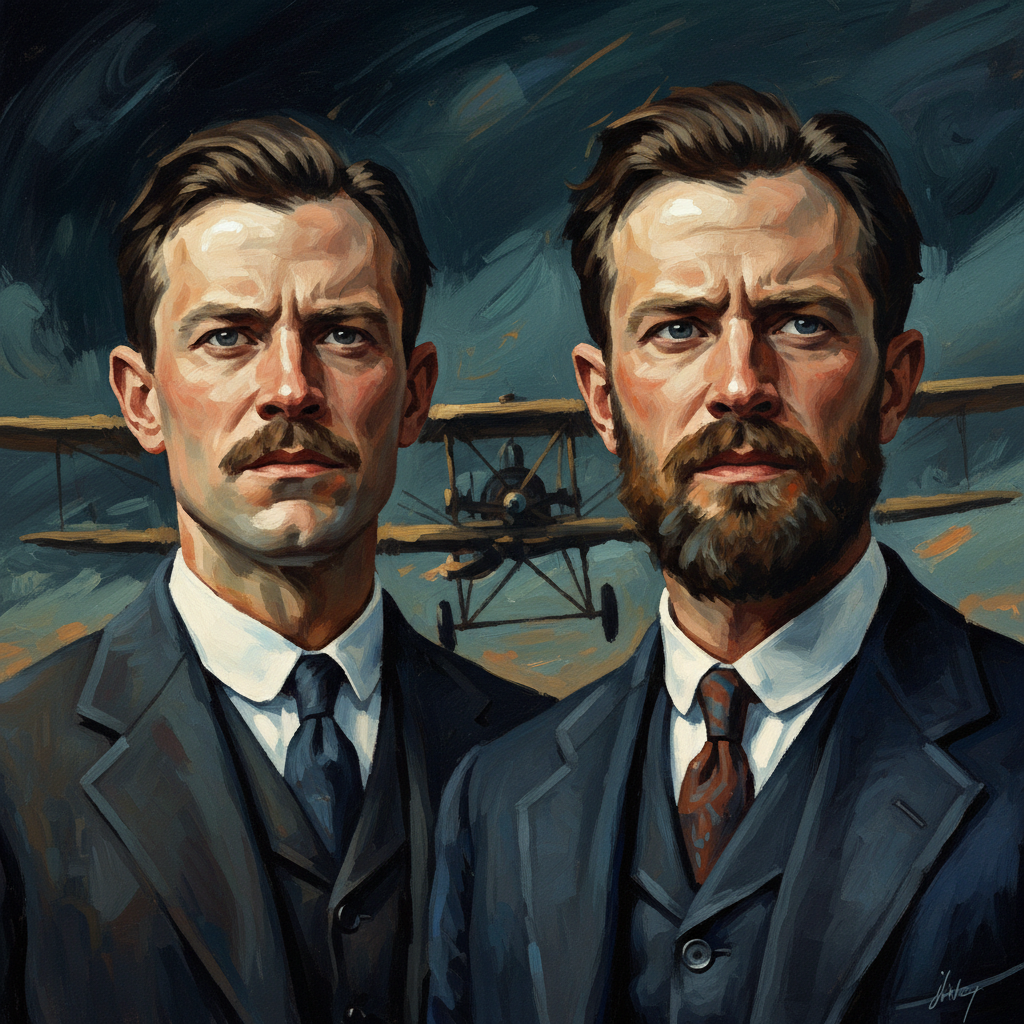
American aviation pioneers who achieved the first sustained powered controlled airplane flight at Kitty Hawk, NC, on December 17, 1903. Closely associated with Octave Chanute (their gliding mentor and aeronautical correspondent). For an intellectual contrast, see Samuel Pierpont Langley, Smithsonian Institution Secretary and government-funded aviation researcher — Langley's Aerodrome crashed twice into the Potomac in October-December 1903 with $50,000 of War Department funding; the Wright Brothers' bicycle-shop empiricism beat Langley's institutional Big Science by 9 days. The most-cited example in engineering history of empirical-tinkerer beating institution-funded credentialism.
Found in 1 providers: grok
1 source checked
Birds are far smarter and more skilled than humans initially gave them credit for. Watching how they navigate air currents, adjust their wings mid-flight, and balance themselves reveals a level of problem-solving and instinctive engineering that rivals or surpasses human attempts at similar feats. The speakers admit their prior assumptions underestimated the sophistication of natural flight, and studying birds taught them more than they expected.
The Wrights spent years observing buzzards, pigeons, and gulls before attempting powered flight. Wilbur especially studied how birds twisted their wingtips to maintain balance, a discovery that inspired their breakthrough wing-warping control system. Unlike competitors chasing brute-force engine power, the brothers treated flight as a control problem solved by nature. Their bicycle-shop patience and respect for empirical observation over theory made avian study central, not ornamental, to cracking heavier-than-air flight in 1903.
At the turn of the 20th century, aviation was dominated by well-funded figures like Samuel Langley who prioritized engines and lift over stability. Many assumed flight required raw power; birds were seen as curiosities, not teachers. Scientific naturalism was rising, but self-taught inventors from Ohio were outsiders. The Wrights' willingness to learn humbly from sparrows while Harvard-backed rivals crashed into the Potomac embodied a Progressive-Era faith that careful observation and tinkering could outmatch institutional prestige.
AI-generated insights based on extensive research and information for context. Factual errors? Email [email protected].
Your cart is empty