What it means
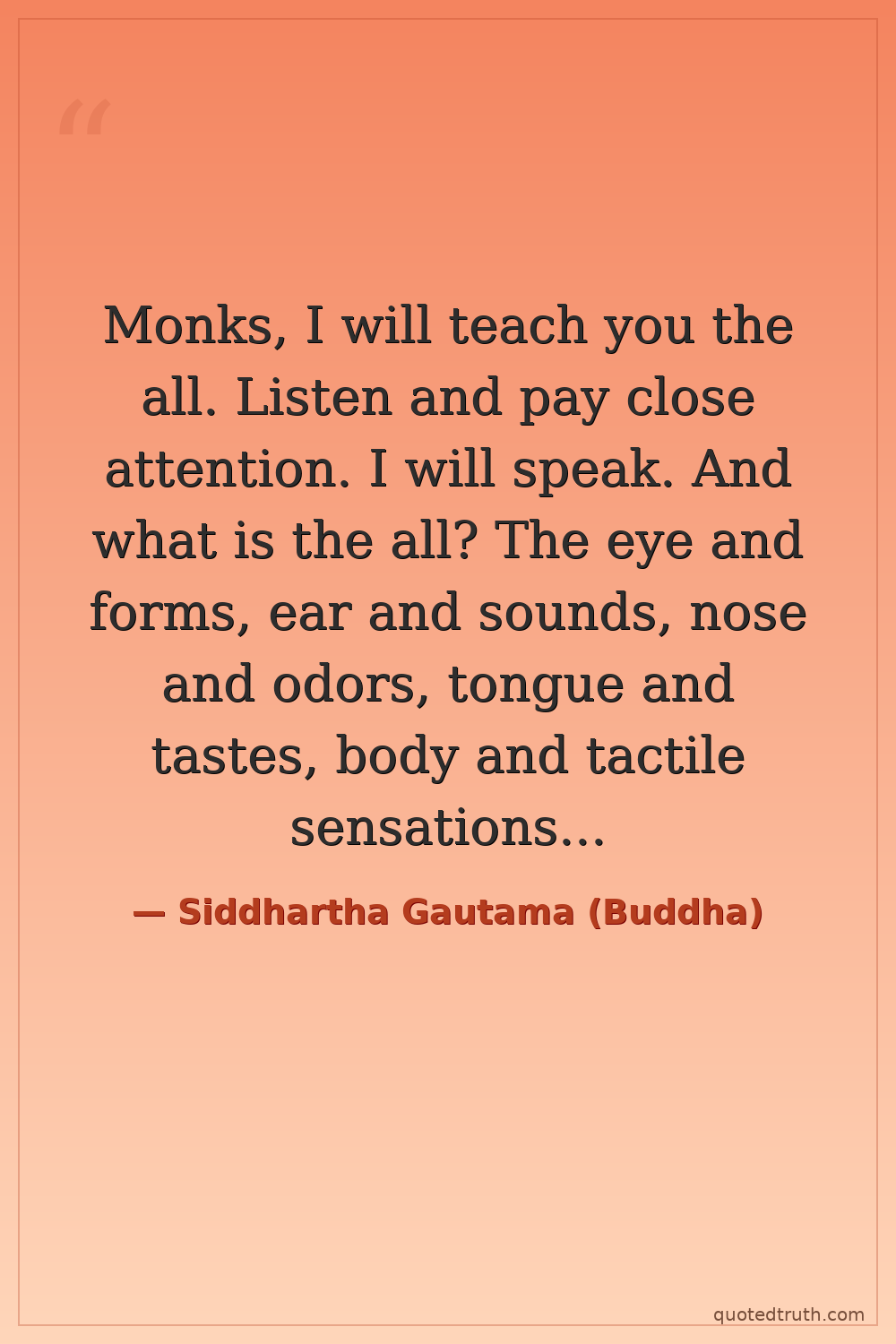
Everything you can know or experience comes through your six senses: sight, hearing, smell, taste, touch, and thought. Reality, for practical purposes, is not some hidden metaphysical realm beyond perception but exactly what your senses and mind contact. If something cannot be experienced through these channels, it falls outside what can meaningfully be discussed or investigated. Human existence is fully contained within this sensory and mental field.
Relevance to Siddhartha Gautama (Buddha)
Buddha rejected speculation about cosmic absolutes, souls, or gods, redirecting followers to examine direct experience. As a teacher who abandoned palace life and Brahmanical ritual theory, he insisted liberation comes from observing how perception generates suffering. This definition of 'the all' reflects his empirical bent: meditation trains attention on the six sense bases precisely because clinging to them fuels rebirth. Philosophy that ignored lived experience he considered a waste of the short human life.
The era
Around 500 BCE in northern India, Brahmin priests defended elaborate metaphysics about Brahman, Atman, and ritual-controlled cosmic order, while rival shramana ascetics debated eternalism, annihilationism, and fatalism. Buddha preached amid this crowded marketplace of speculative views. By confining reality to what the senses and mind actually encounter, he cut through competing cosmologies and offered a practical framework accessible to anyone, not just Sanskrit-literate priests guarding esoteric knowledge.
AI-generated insights based on extensive research and information for context. Factual errors? Email [email protected].