What it means
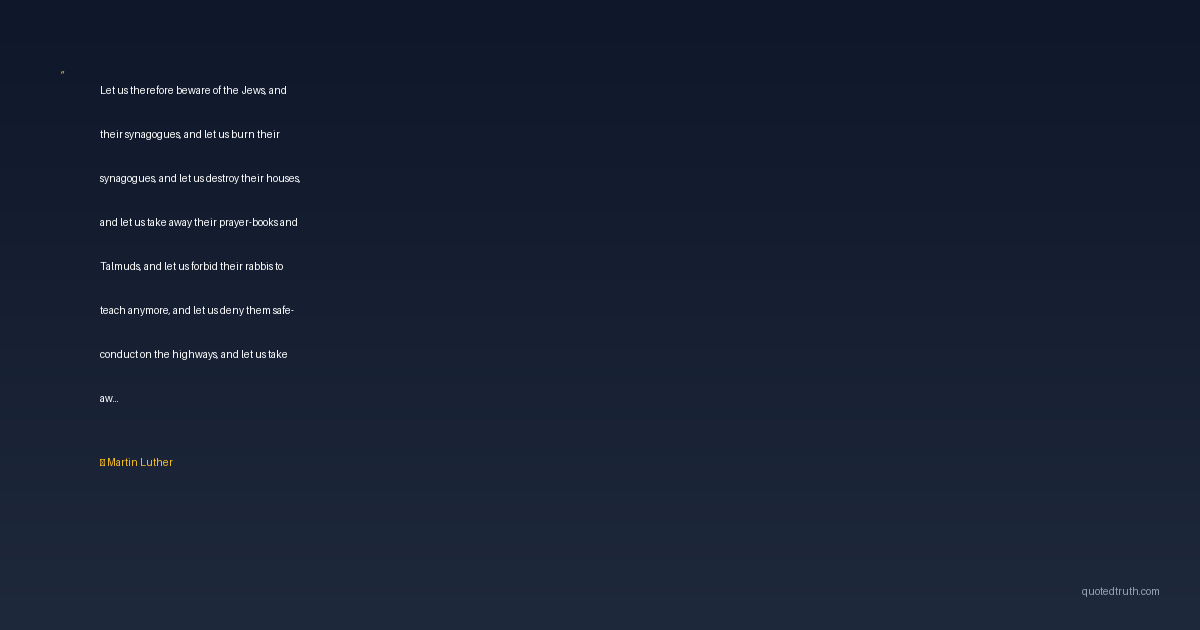
The speaker urges violent, coordinated persecution of Jewish people: burn their synagogues, demolish their homes, confiscate religious texts, silence rabbis, strip legal protections, seize wealth, force them into labor, and expel them from the country. It is a step-by-step program of religious cleansing that treats an entire people as enemies to be crushed rather than neighbors, framing state-sanctioned cruelty as a righteous duty.
Relevance to Martin Luther
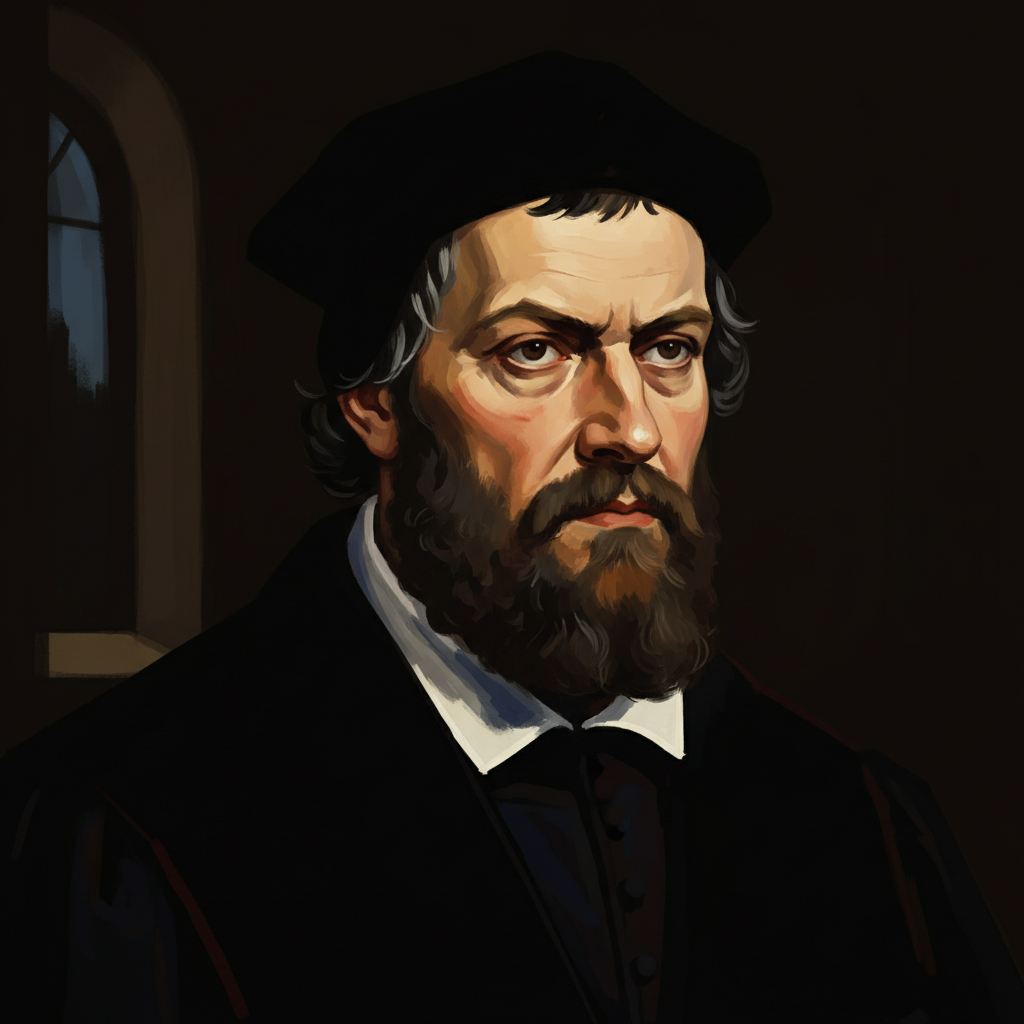
Luther wrote this in his 1543 tract On the Jews and Their Lies, late in a life increasingly consumed by polemic. Having failed to convert Jews to his reformed Christianity, the former Augustinian monk turned from earlier sympathy to vicious hostility. The passage reflects his combative pamphleteering style, his conviction that scripture authorized harsh civil measures, and a theological rigidity that shaped Lutheran territories and, centuries later, was cited by Nazi propagandists.
The era
Sixteenth-century Europe was convulsed by the Reformation Luther had ignited in 1517, splintering Western Christendom and entangling faith with princely politics. Jews lived precariously under expulsion edicts, ghettos, and blood-libel accusations across the Holy Roman Empire. Apocalyptic expectation ran high, print technology amplified inflammatory tracts, and rulers routinely enforced religious conformity by sword and decree. In that climate, calls to burn synagogues and expel minorities were not fringe rhetoric but proposals officials could, and sometimes did, act upon.
AI-generated insights based on extensive research and information for context. Factual errors? Email [email protected].