Mahavira — "One should not steal."
One should not steal.
One should not steal.
Click any product to generate a realistic preview. Up to 3 at a time.
* Initial load can take up to 90 seconds — revising the preview in another color is nearly instant.
"Purity of mind is the supreme dharma."
"The purpose of life is to realize one's true self."
"Patience is the highest form of virtue."
"The greatest wealth is health."
"One who is pure in thought, word, and deed is truly happy."
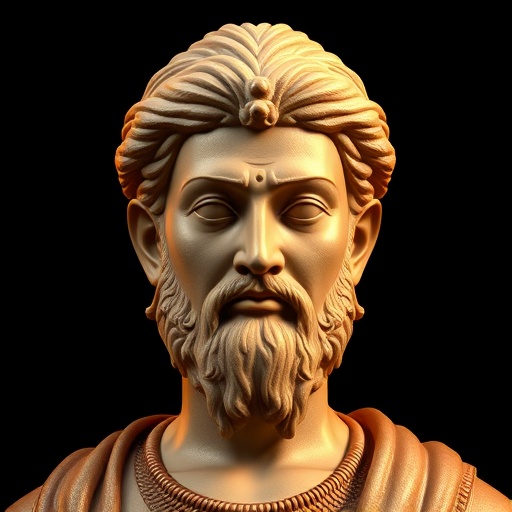
24th and last Tirthankara of Jainism, whose teachings of strict ahimsa (non-violence), aparigraha (non-attachment), and karma reshaped ancient Indian religion. Closely associated with The Buddha (near-contemporary moral revolutionary, also reacting against Vedic ritualism). For an intellectual contrast, see Vedic Brahmanical ritual sacrifice, the animal-sacrifice-centered Vedic religion of his era — Mahavira's ahimsa demanded total non-violence, including not eating root vegetables that kill the plant — a maximum-distance ethical move from the Vedic priestly tradition that ritually sacrificed cattle and horses. The two cleanest poles of ancient Indian religious ethics.
Found in 1 providers: grok
1 source checked
Taking what belongs to others—property, labor, credit, or resources—violates their autonomy and causes harm. This prohibition extends beyond obvious theft to any appropriation without consent: overcharging, exploiting labor, or taking unearned advantage. In modern terms, it calls for honest dealings in commerce, relationships, and daily life. Respecting what belongs to others sustains social trust and prevents the suffering that flows from unchecked greed and covetousness.
Asteya (non-stealing) is one of Mahavira's five Mahavratas, the core vows binding Jain monks and partly laypeople. At age 30, he renounced his princely wealth entirely, modeling the principle personally. He taught that stealing arises from attachment and craving, directly contradicting his doctrine of Aparigraha (non-possessiveness). For Mahavira, refusing to steal was inseparable from extinguishing the inner desire that drives it—conduct and inner state were one.
In 6th–5th century BCE India, rapid urbanization along the Gangetic plains sharpened class divisions and property disputes. Kingdoms imposed harsh punishments for theft, while Brahminical priests accumulated wealth through ritual fees and land grants. Mahavira challenged this order by insisting ethical conduct—not caste or sacrifice—determined spiritual worth, transforming non-stealing from a legal prohibition enforced by kings into a personal spiritual discipline required for liberation.
AI-generated insights based on extensive research and information for context. Factual errors? Email [email protected].
Your cart is empty