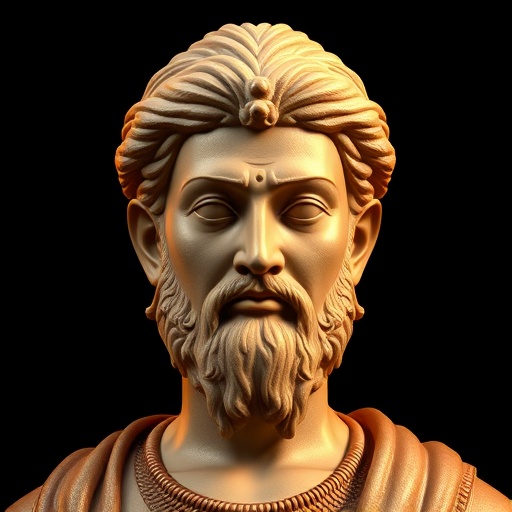
Mahavira — "The world is full of suffering. The cause of suffering is attachment. The cessat…"
The world is full of suffering. The cause of suffering is attachment. The cessation of suffering is detachment.
The world is full of suffering. The cause of suffering is attachment. The cessation of suffering is detachment.
Click any product to generate a realistic preview. Up to 3 at a time.
* Initial load can take up to 90 seconds — revising the preview in another color is nearly instant.
"Know thyself, and thou shalt know the universe and God."
"One should always speak the truth, but not utter an unpleasant truth."
"One who has conquered himself is truly a hero."
"Do not indulge in unnecessary talk."
"A wise man should abstain from killing any living being."
24th and last Tirthankara of Jainism, whose teachings of strict ahimsa (non-violence), aparigraha (non-attachment), and karma reshaped ancient Indian religion. Closely associated with The Buddha (near-contemporary moral revolutionary, also reacting against Vedic ritualism). For an intellectual contrast, see Vedic Brahmanical ritual sacrifice, the animal-sacrifice-centered Vedic religion of his era — Mahavira's ahimsa demanded total non-violence, including not eating root vegetables that kill the plant — a maximum-distance ethical move from the Vedic priestly tradition that ritually sacrificed cattle and horses. The two cleanest poles of ancient Indian religious ethics.
Unknown, attributed (similar to Buddhist teachings, but also a core Jain concept)
Date: 6th century BCE (approx)
ShockingFound in 1 providers: grok
1 source checked
Suffering is the baseline condition of human existence, generated by our emotional clinging to people, objects, outcomes, and identity. When we depend on things that change or vanish, we create pain. Detachment — not cold indifference, but freedom from compulsive craving — cuts suffering at its root. Releasing attachment produces equanimity, allowing the self to remain stable regardless of what the external world does or takes away.
Mahavira renounced his princely wealth, family, and even clothing at age 30, practicing twelve years of extreme asceticism to achieve liberation. Central to Jain philosophy is aparigraha — non-possessiveness — one of the five major vows. He taught that the soul accumulates karma through passionate attachments, binding it to rebirth. His entire life was a enacted argument for this teaching: every renunciation was deliberate practice of the detachment he prescribed for ending suffering.
6th–5th century BCE India was the Axial Age, when Vedic Brahminism dominated through ritual sacrifice, caste hierarchy, and priestly authority over liberation. Wealth, lineage, and material accumulation were markers of spiritual favor. Mahavira's assertion that attachment — including to caste status and possessions — was the mechanism of suffering was a direct challenge to this order. It democratized liberation, making moksha accessible through inner discipline rather than birth privilege or expensive ritual.
AI-generated insights based on extensive research and information for context. Factual errors? Email [email protected].
Your cart is empty