Mahavira — "The body is a temporary abode of the soul."
The body is a temporary abode of the soul.
The body is a temporary abode of the soul.
Click any product to generate a realistic preview. Up to 3 at a time.
* Initial load can take up to 90 seconds — revising the preview in another color is nearly instant.
"One should not accumulate wealth beyond one's needs."
"The purpose of life is to realize one's true self."
"One should always speak the truth, but not utter an unpleasant truth."
"A wise man should abstain from killing any living being."
"The highest spiritual state is to be free from all desires."
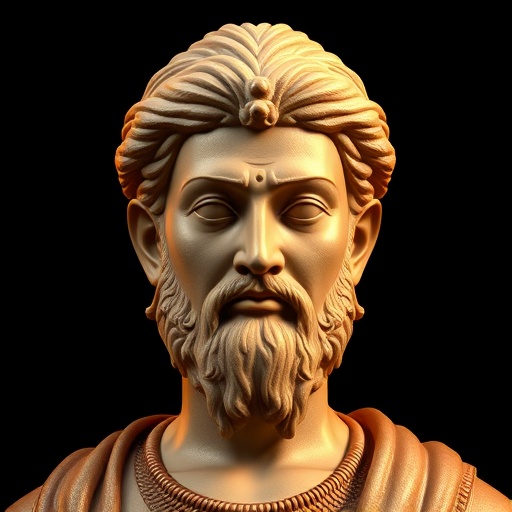
24th and last Tirthankara of Jainism, whose teachings of strict ahimsa (non-violence), aparigraha (non-attachment), and karma reshaped ancient Indian religion. Closely associated with The Buddha (near-contemporary moral revolutionary, also reacting against Vedic ritualism). For an intellectual contrast, see Vedic Brahmanical ritual sacrifice, the animal-sacrifice-centered Vedic religion of his era — Mahavira's ahimsa demanded total non-violence, including not eating root vegetables that kill the plant — a maximum-distance ethical move from the Vedic priestly tradition that ritually sacrificed cattle and horses. The two cleanest poles of ancient Indian religious ethics.
Found in 1 providers: grok
1 source checked
The physical body is not your true self — it's a temporary vessel housing the immortal soul. While the body ages, decays, and dies, the soul continues through multiple lifetimes. Pursuing bodily pleasures, wealth, or vanity is spiritually misguided. What truly matters is purifying the soul and reducing karmic burden. Identity, worth, and purpose belong to the soul, not the perishable flesh surrounding it.
At age 30, Mahavira abandoned his royal family, clothing, food preferences, and shelter to wander naked for 12 years in extreme asceticism — treating the body as an obstacle, not an asset. Jainism's central concept of the jiva, the eternal soul trapped in samsara through karma, made this his life's operating principle. He taught liberation requires starving karmic accumulation through non-violence and self-denial, not bodily comfort.
Mahavira lived in 6th-century BCE northeastern India during the Śramaṇa movement, when thinkers directly challenged the Vedic system's emphasis on priestly ritual and caste hierarchy. This same era produced the Buddha and the Upanishads' ātman philosophy. Amid widespread questions about what constitutes the true self, Mahavira's sharp body-soul dualism was radical — rejecting Vedic sacrifice's bodily focus and insisting only inner renunciation and ahimsa could free the eternal soul.
AI-generated insights based on extensive research and information for context. Factual errors? Email [email protected].
Your cart is empty