What it means
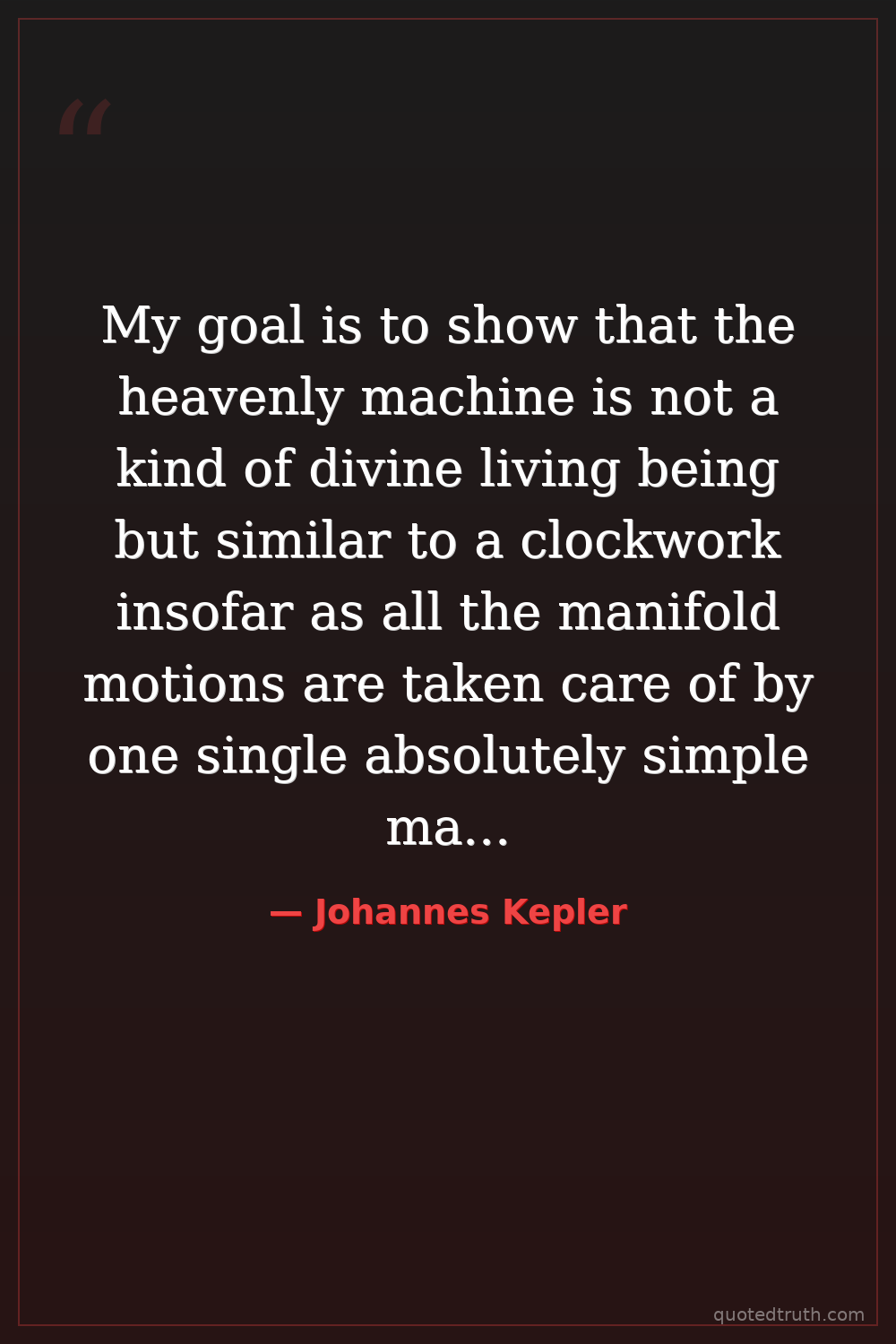
Kepler argues the universe isn't alive or guided by a soul, but works like a machine. Just as a clock runs from one simple weight pulling its gears, the planets move because of one basic physical force. He's replacing the ancient idea of heavenly spirits with a mechanical explanation where predictable natural forces, not divine intelligence, drive celestial motion.
Relevance to Johannes Kepler
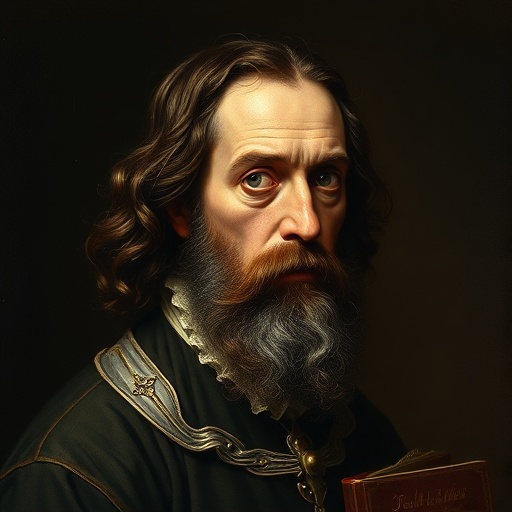
Kepler spent years calculating Mars's orbit and formulating his three laws of planetary motion. Though deeply religious, he insisted physical causes governed the heavens, proposing magnetism as the force moving planets around the sun. This clockwork metaphor captures his lifelong project: replacing Aristotle's animate cosmos with mathematical, mechanical laws, bridging medieval mysticism and Newton's later gravitational physics.
The era
In early 1600s Europe, the Scientific Revolution was dismantling the ancient view of a living, ensouled cosmos. Copernicus had moved Earth from center stage, Galileo's telescope revealed imperfect heavens, and William Gilbert had just published work on magnetism. The Church still enforced Aristotelian cosmology, making mechanical explanations controversial. Kepler wrote this amid the Thirty Years' War, when reimagining the universe as machinery rather than divine organism was genuinely revolutionary.
AI-generated insights based on extensive research and information for context. Factual errors? Email [email protected].