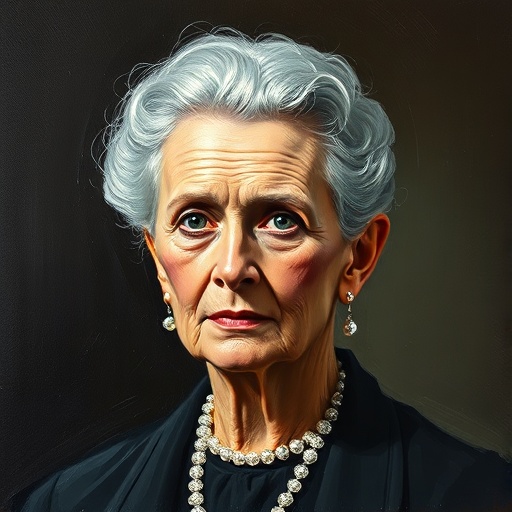
Marie Curie — "My mind is entirely absorbed by my studies, and I consider it a great privilege …"
My mind is entirely absorbed by my studies, and I consider it a great privilege to be able to devote myself to them.
My mind is entirely absorbed by my studies, and I consider it a great privilege to be able to devote myself to them.
Click any product to generate a realistic preview. Up to 3 at a time.
* Initial load can take up to 90 seconds — revising the preview in another color is nearly instant.
"I have always believed that science has the power to change the world for the better. I have always believed that science has the power to improve the lives of all people. And I am proud of it."
"First principle: never to let one's self be beaten down by persons or by events."
"I am not afraid of anything. I am only afraid of not being able to do my work."
"There are cruel, ignorant people who have tried to make my work appear bad. But it is not bad. It is good. It is for the good of humanity."
"In science, we must be interested in things, not in persons."
Found in 1 providers: grok
1 source checked
The speaker is so fully immersed in learning and research that there's little room for anything else, and they feel genuinely lucky to have the chance to pursue it. Rather than complaining about the demands of intense study, they frame deep focus as a gift. Work isn't a burden here; it's an opportunity most people never get. The tone is grateful, disciplined, and quietly passionate about intellectual life.
Curie lived this literally. She studied at the Sorbonne in near-poverty, sometimes fainting from hunger, yet described those years as among her happiest. She later spent years stirring tons of pitchblende by hand to isolate radium, winning two Nobel Prizes in different sciences. As a Polish woman barred from university at home, access to research genuinely was a privilege she never took for granted, even when it eventually killed her through radiation exposure.
In the late 1800s and early 1900s, higher education and scientific careers were largely closed to women across Europe. Poland, under Russian occupation, forbade women from attending university, which is why Curie emigrated to Paris in 1891. Even there, female scientists were rare and often unpaid. Framing study as a 'privilege' reflected a real barrier: most women of her generation had no legal or financial route into the laboratory at all.
AI-generated insights based on extensive research and information for context. Factual errors? Email [email protected].
Your cart is empty