Wright Brothers (Orville & Wilbur) — "No flights of any kind were made except those of our own machine, which, strange…"
No flights of any kind were made except those of our own machine, which, strange to say, did not become a public amusement.
No flights of any kind were made except those of our own machine, which, strange to say, did not become a public amusement.
Click any product to generate a realistic preview. Up to 3 at a time.
* Initial load can take up to 90 seconds — revising the preview in another color is nearly instant.
"The fact that the machine did not fall apart at the first gust of wind was a great encouragement."
"If its engine stops, it must fall with deathly violence, for it can neither glide like the aeroplane or float like the balloon. The helicopter is much easier to design than the aeroplane, but is worth…"
"The problem was not to build a machine that would fly, but to build a machine that would fly safely."
"The machine is a thing of life, and will respond to the touch of the hand."
"The desire to fly is an idea handed down to us by our ancestors who, in their monotonous lives, looked enviously on the birds soaring freely through space, at full speed, on the wings of the wind."
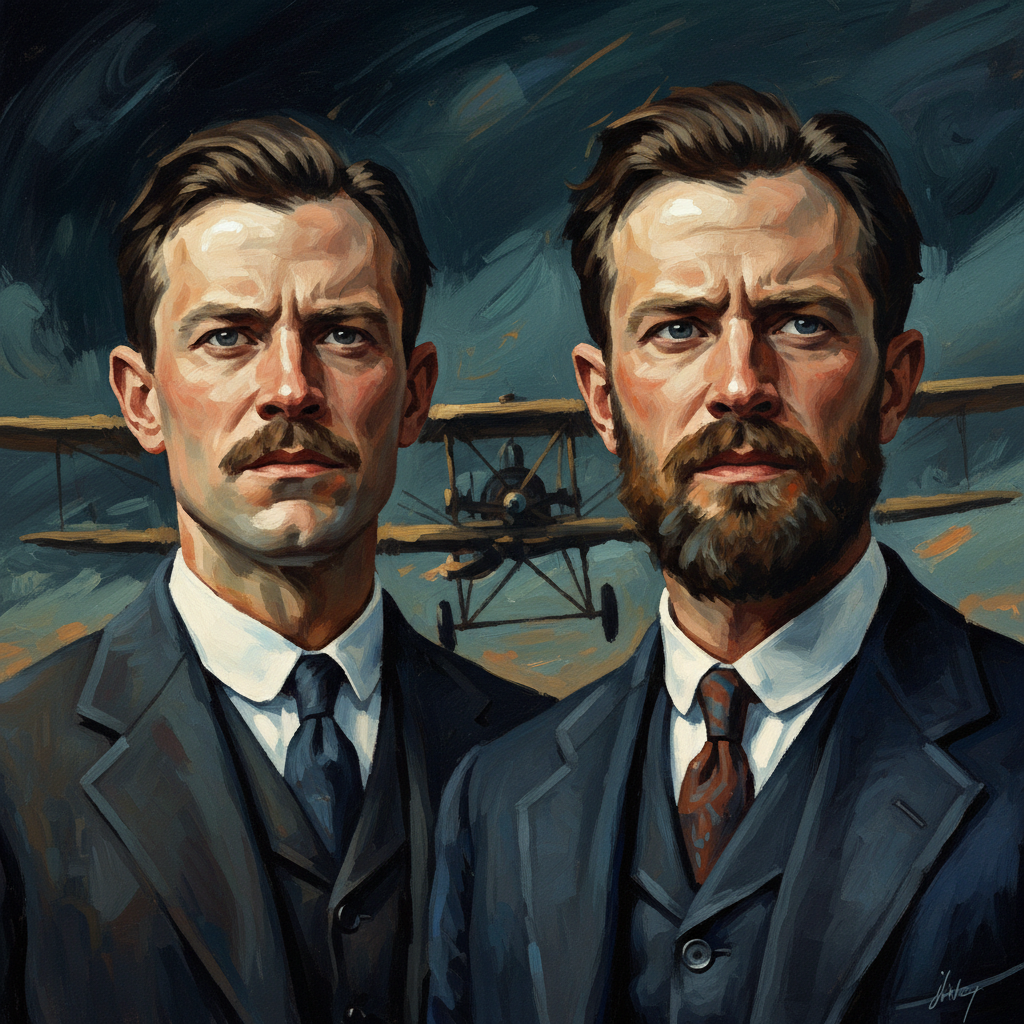
American aviation pioneers who achieved the first sustained powered controlled airplane flight at Kitty Hawk, NC, on December 17, 1903. Closely associated with Octave Chanute (their gliding mentor and aeronautical correspondent). For an intellectual contrast, see Samuel Pierpont Langley, Smithsonian Institution Secretary and government-funded aviation researcher — Langley's Aerodrome crashed twice into the Potomac in October-December 1903 with $50,000 of War Department funding; the Wright Brothers' bicycle-shop empiricism beat Langley's institutional Big Science by 9 days. The most-cited example in engineering history of empirical-tinkerer beating institution-funded credentialism.
Found in 1 providers: grok
1 source checked
Despite accomplishing something extraordinary, no spectators arrived and no one treated it as entertainment. The speaker notes with dry irony that an event they knew was historic passed completely unnoticed. The public simply didn't show up, didn't watch, and didn't care — which the speaker finds oddly remarkable given what had just occurred.
The Wright Brothers flew at Kitty Hawk on December 17, 1903, witnessed by only five people. They were secretive, methodical engineers who actively avoided publicity during development. Yet even they expected curiosity. Their letters and diaries show genuine bewilderment that newspapers ignored the achievement. This quote captures their understated personalities — recording fact without drama, but the word 'strange' reveals real surprise.
In 1903, powered flight was widely considered impossible. The U.S. War Department had just publicly dismissed flying machines months earlier. Newspapers had ridiculed previous attempts. With no cultural framework to understand what sustained powered flight meant, locals near Kitty Hawk saw no reason to gather. The invisibility of the moment explains why it took years for the world to accept that two bicycle mechanics had changed everything.
AI-generated insights based on extensive research and information for context. Factual errors? Email [email protected].
Your cart is empty