What it means
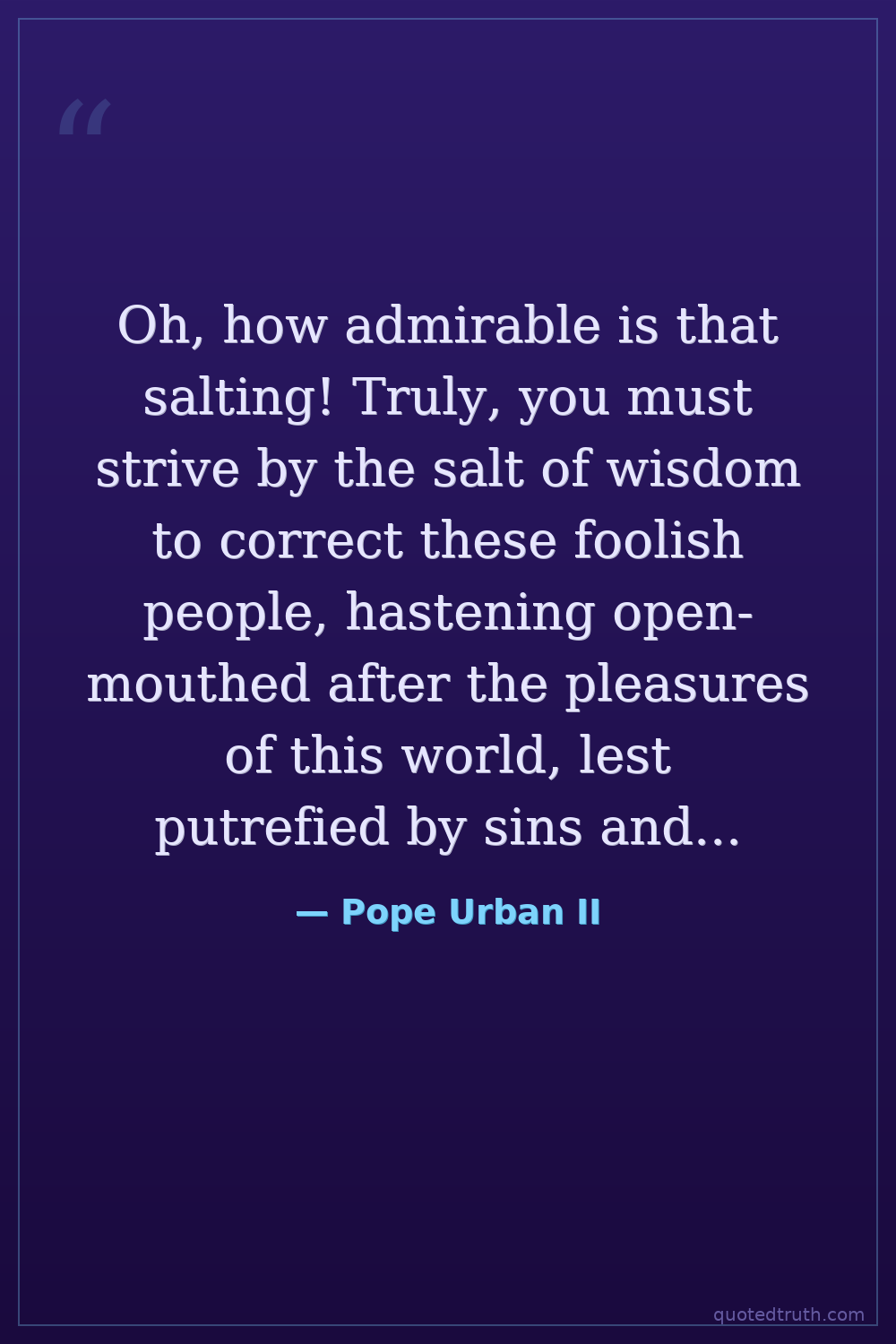
Wisdom must work like salt — preserving people from moral rot, not just seasoning them pleasantly. The quote urges religious leaders to actively correct those blindly chasing worldly pleasures before those people spiritually putrefy and become offensive to God at the final judgment. It frames pastoral correction as urgent and practical: without applied wisdom, sinners decay from the inside, and no amount of last-minute repentance undoes that stench before the Lord.
Relevance to Pope Urban II
Urban II was a Cluniac monk before becoming pope, shaped by a monastic tradition that prized spiritual discipline over worldly comfort. His entire papacy drove the Gregorian Reform — fighting simony, lay investiture, and clerical corruption. He saw himself as a correcting shepherd of a wayward Christendom. Even the First Crusade was framed as spiritual redirection, turning knights' violent, pleasure-seeking energy toward sacred purpose. This quote is quintessentially Urban: reformer-pastor alarmed by moral drift.
The era
The late 11th century Church was in crisis — the 1054 Great Schism had split Christendom, the Investiture Controversy pitted popes against emperors, and widespread clerical corruption scandalized the faithful. The Gregorian Reform preached that worldly pleasure-seeking was destroying both clergy and laity. Salt carried double weight then: liturgically placed on catechumens' tongues at baptism to symbolize wisdom, and practically indispensable for preserving meat. Urban's audience grasped the decay metaphor viscerally — putrefaction was a daily, unavoidable reality.
AI-generated insights based on extensive research and information for context. Factual errors? Email [email protected].