What it means
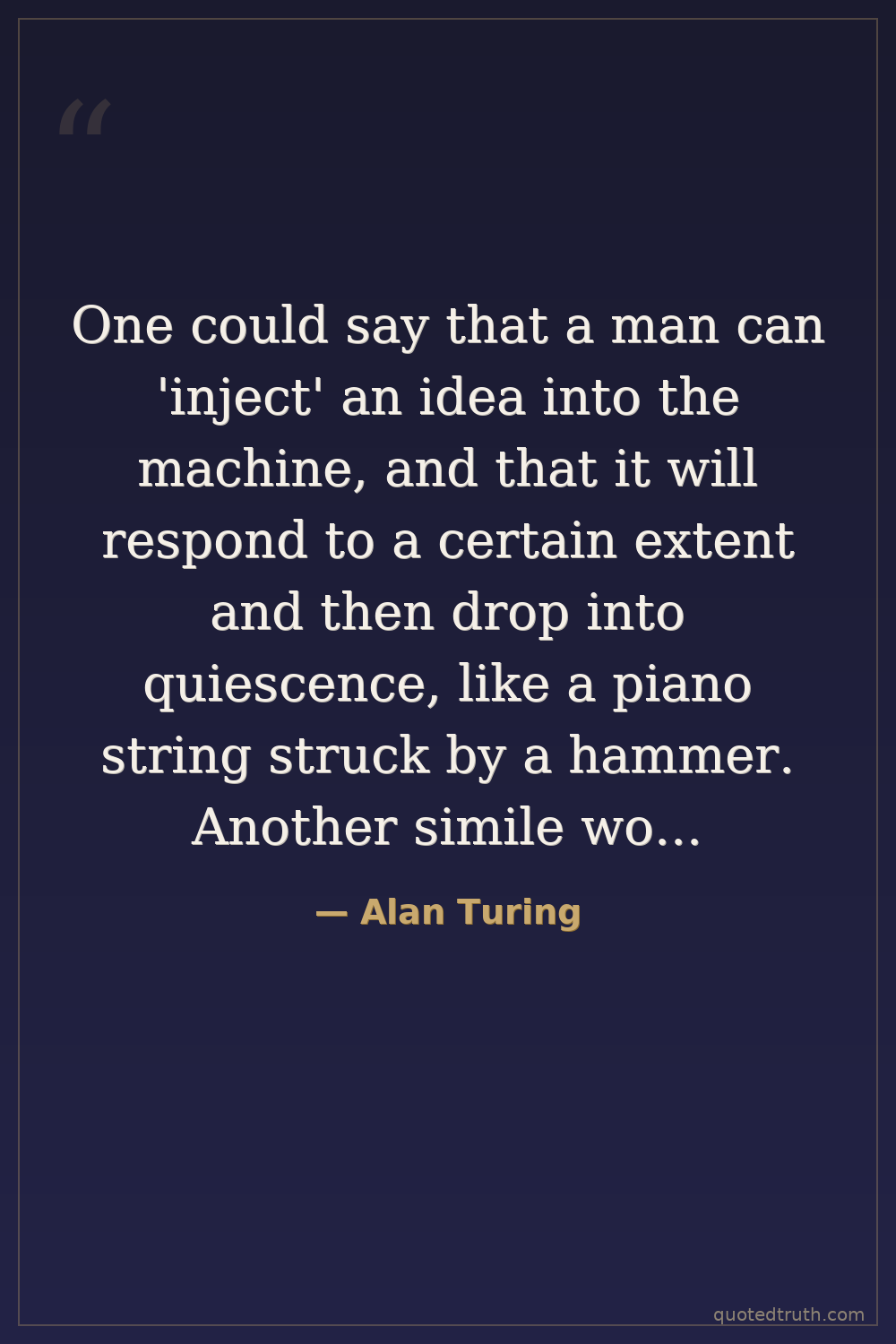
A machine responds to an injected idea — it reacts, generates a chain of internal activity, then settles back to stillness unless given another input. Two analogies illustrate this: a piano string struck by a hammer vibrates then goes silent, and a nuclear pile below critical mass where an entering neutron creates ripples that eventually fade. The machine is reactive but not self-sustaining without continuous external stimulus.
Relevance to Alan Turing
Turing wrote this in his landmark 1950 paper 'Computing Machinery and Intelligence,' which introduced the Turing Test. Having cracked the Enigma cipher at Bletchley Park using the electromechanical Bombe, he understood deterministic mechanical limits firsthand. His lifelong obsession was whether machines could genuinely think — this passage reflects his careful distinction between reactive processing and true autonomous cognition, a question that defined his entire career.
The era
Written in 1950, the atomic pile analogy was immediately resonant — the Manhattan Project had just redefined science and nuclear metaphors permeated public discourse. Early computers like the Manchester Mark 1 had barely come online, raising urgent questions about machine autonomy. The Cold War was accelerating, and the prospect of machines that could think independently carried both profound scientific excitement and deep existential anxiety about human uniqueness.
AI-generated insights based on extensive research and information for context. Factual errors? Email [email protected].