What it means
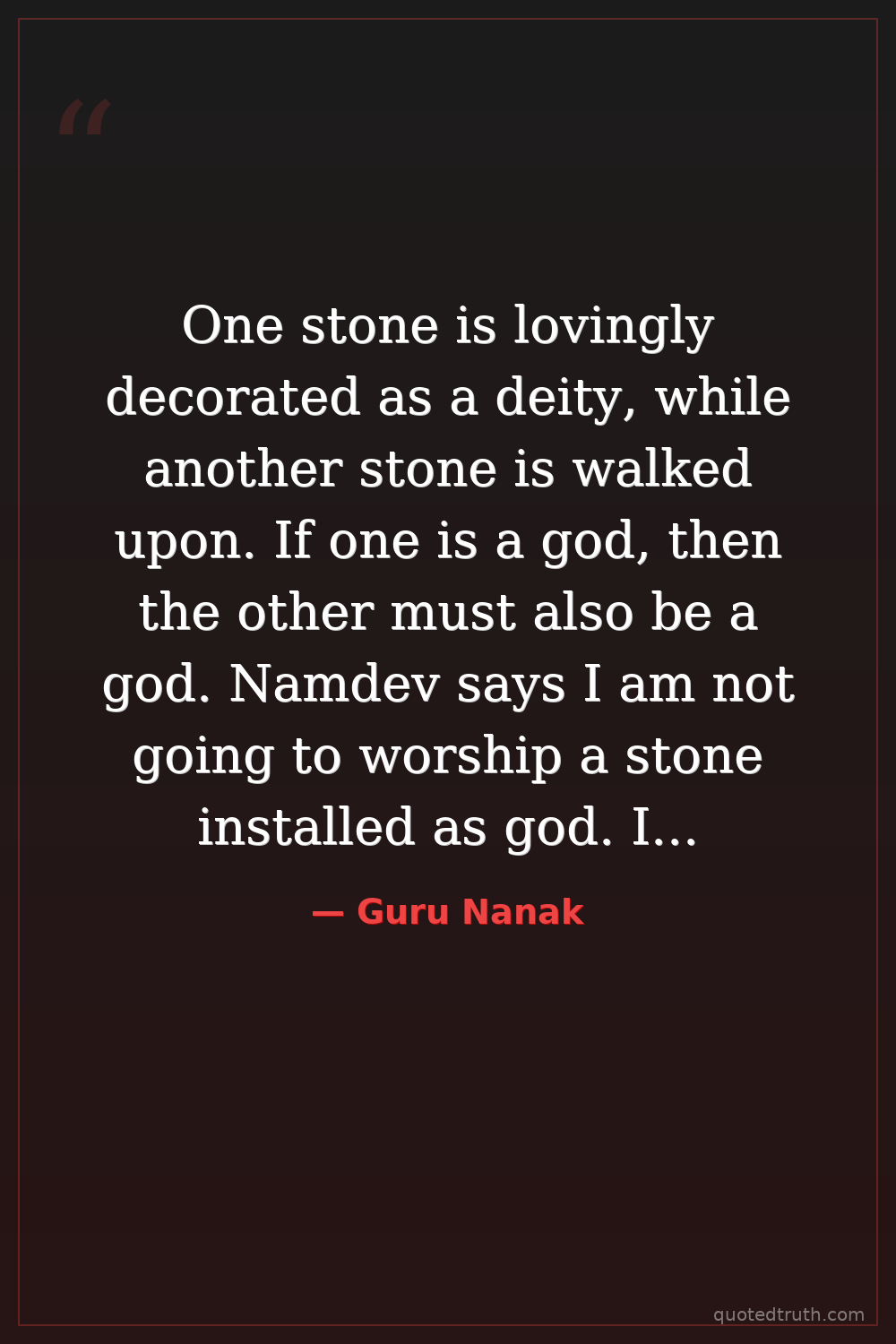
The quote challenges the logic of idol worship by pointing out a contradiction: people treat one stone as sacred while stepping on identical stones every day. If divinity lives in one stone, it must live in all of them. Rather than worship a physical object that can be placed, moved, or carved, the speaker honors a single God who cannot be contained in any statue but exists inside everything at once.
Relevance to Guru Nanak
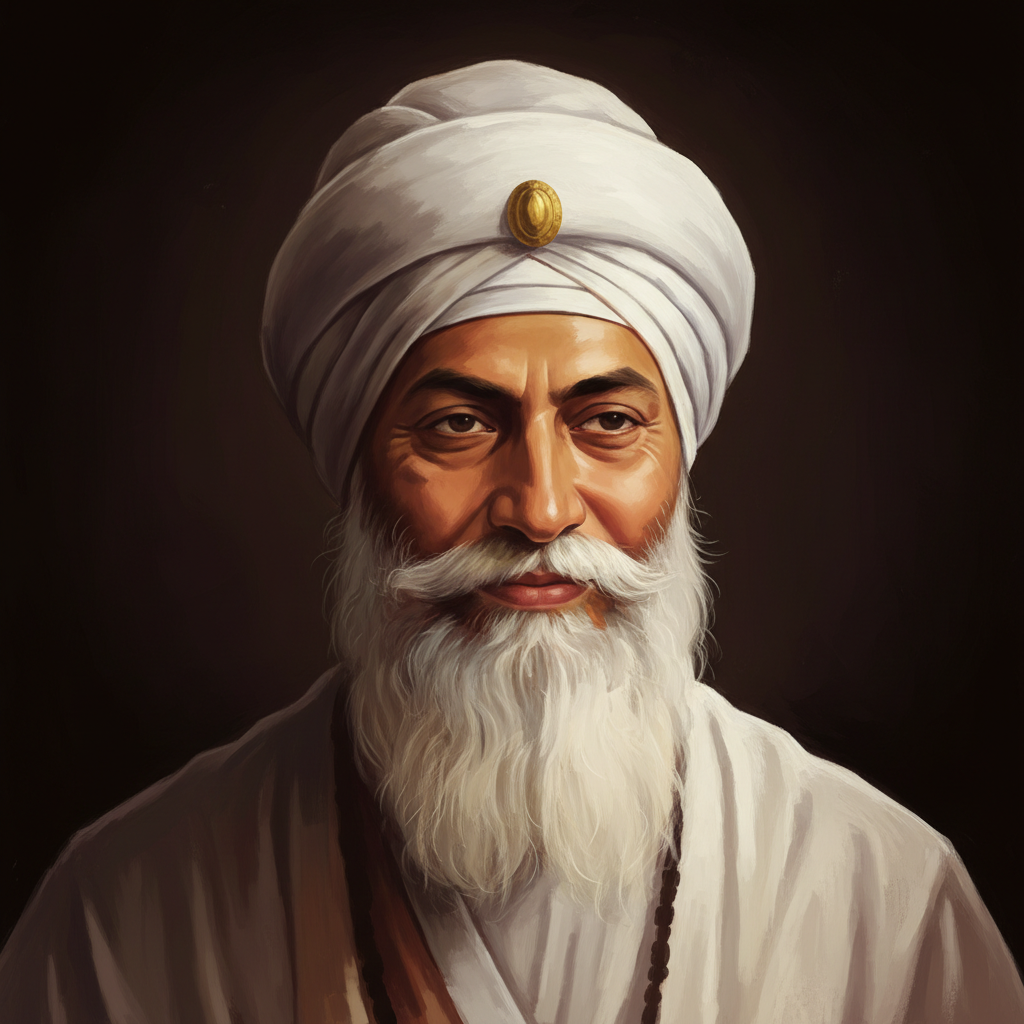
Guru Nanak founded Sikhism on strict monotheism and rejection of ritualism, idol worship, and caste. He traveled across India, Tibet, and the Middle East teaching that God is formless (Nirankar) and present in all creation. Though this verse is attributed to the bhakti poet Namdev, it was preserved in the Guru Granth Sahib precisely because it matched Nanak's conviction that a God who permeates everything cannot be reduced to a carved stone.
The era
In early-modern northern India (late 1400s to 1500s), Nanak lived amid sharp Hindu-Muslim tension, rigid Brahminical ritual, temple idol worship, pilgrimage economies, and Mughal political expansion under Babur. The Bhakti and Sufi movements were already pushing back with devotional, caste-blind, and formless conceptions of God. Nanak absorbed this current and hardened it into a new path that openly rejected idols, priestly intermediaries, and sectarian boundaries between Hindu and Muslim worship.
AI-generated insights based on extensive research and information for context. Factual errors? Email [email protected].