What it means
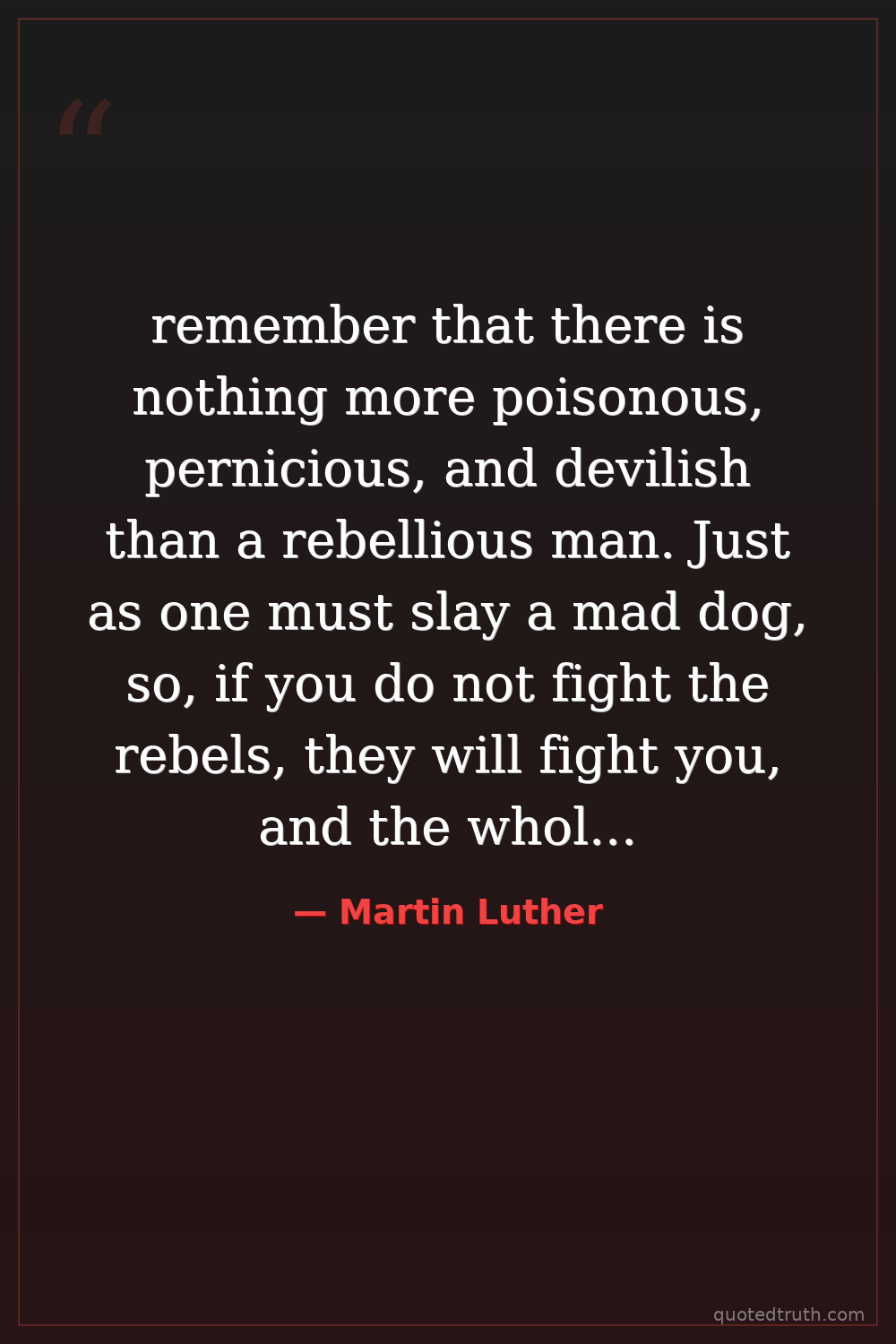
Rebellion is the worst possible threat to society, worse than any other evil. A person who incites revolt must be stopped immediately and without mercy, just as you would kill a rabid dog before it spreads disease. If you hesitate or try to reason with rebels, they will destroy you and everyone around you. Self-defense through decisive violence is the only response to uprising.
Relevance to Martin Luther
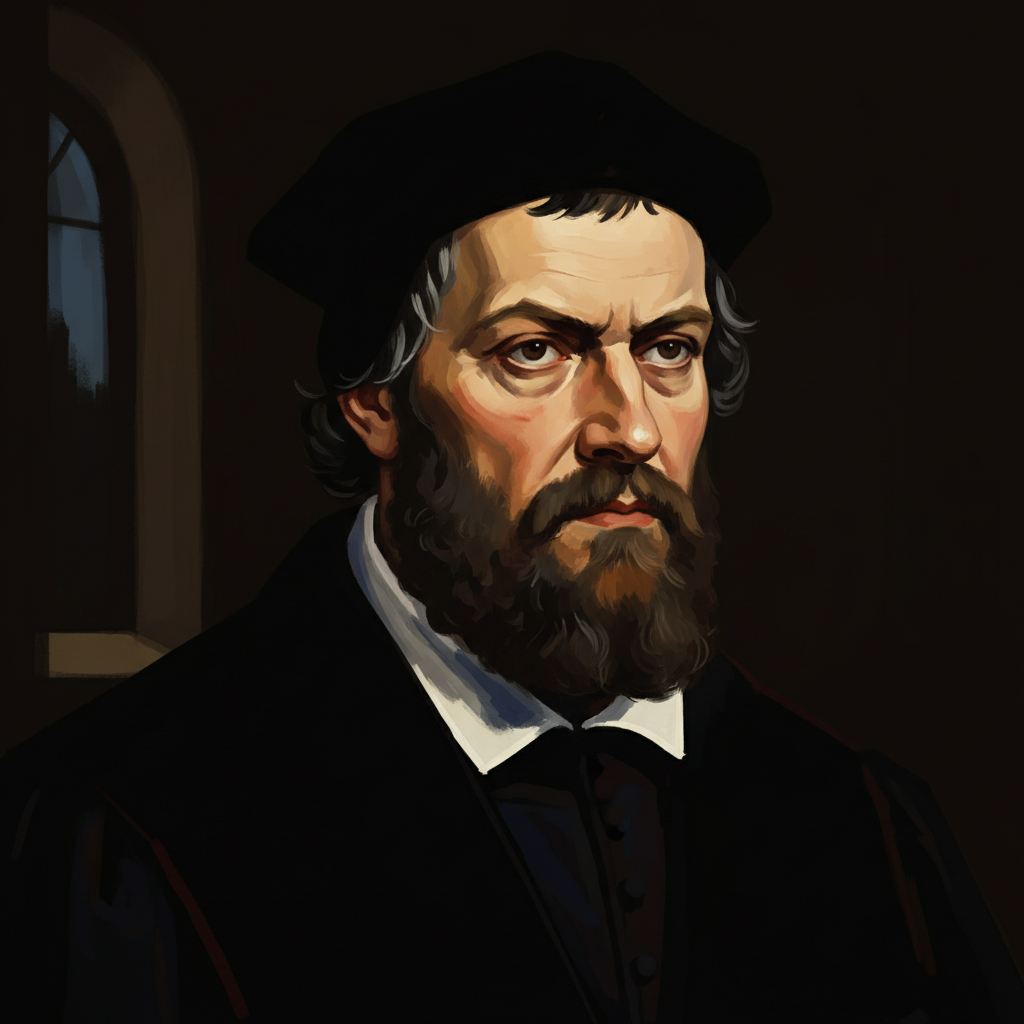
Luther wrote this during the German Peasants' War of 1524-1525, when peasants cited his reform teachings to justify revolt. Horrified that his theological rebellion against Rome was being used to fuel social uprising, he penned 'Against the Murderous, Thieving Hordes of Peasants,' urging princes to slaughter rebels. This reveals Luther's sharp distinction between spiritual liberty and political order, and his alliance with German nobility who protected him.
The era
The early 1500s saw massive social upheaval as Luther's 1517 Reformation shattered Catholic authority across Europe. Roughly 100,000 peasants died in the 1525 revolt, inspired partly by Protestant ideas of Christian freedom. Princes faced genuine fear of societal collapse, while reformers scrambled to prove their movement wasn't anarchism. Luther's brutal stance secured noble patronage essential for Protestantism's survival against both Rome and radical factions like the Anabaptists.
AI-generated insights based on extensive research and information for context. Factual errors? Email [email protected].