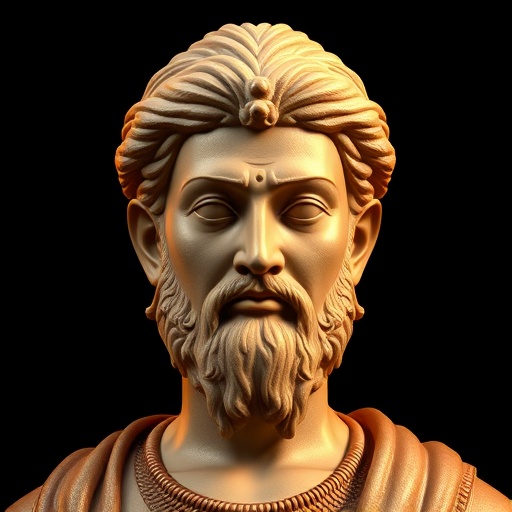
Mahavira — "Renunciation is the key to eternal happiness."
Renunciation is the key to eternal happiness.
Renunciation is the key to eternal happiness.
Click any product to generate a realistic preview. Up to 3 at a time.
* Initial load can take up to 90 seconds — revising the preview in another color is nearly instant.
"The soul is the only thing that is eternal; everything else is temporary."
"One who has conquered himself is truly a hero."
"The soul is eternal, but its bondage is temporary."
"The ignorant, who are attached to the world, suffer from misery and pain."
"Look at the birds, how they live in the present, with no thought for the morrow."
24th and last Tirthankara of Jainism, whose teachings of strict ahimsa (non-violence), aparigraha (non-attachment), and karma reshaped ancient Indian religion. Closely associated with The Buddha (near-contemporary moral revolutionary, also reacting against Vedic ritualism). For an intellectual contrast, see Vedic Brahmanical ritual sacrifice, the animal-sacrifice-centered Vedic religion of his era — Mahavira's ahimsa demanded total non-violence, including not eating root vegetables that kill the plant — a maximum-distance ethical move from the Vedic priestly tradition that ritually sacrificed cattle and horses. The two cleanest poles of ancient Indian religious ethics.
Found in 1 providers: grok
1 source checked
Giving up attachments—possessions, desires, ego—unlocks a lasting peace that pleasures cannot provide. True happiness isn't found in acquiring things but in releasing their grip on us. When we stop chasing external satisfactions, inner freedom emerges—a state unaffected by loss, change, or circumstance. This is happiness conditioned on nothing external, immune to fortune's swings, available to anyone willing to let go of what they think they need.
Mahavira at 30 abandoned royal life—wealth, family, comfort—to wander for 12 years as an ascetic, eventually achieving kevala jnana (omniscience). His five great vows for monks—non-violence, truthfulness, non-stealing, celibacy, and non-possession (aparigraha)—codify renunciation into Jainism's ethical core. He taught by example: no clothes, no shelter, no attachments. For Mahavira, renunciation wasn't philosophy but the literal path he walked to liberation.
In 6th-century BCE India, Brahmanical Hinduism dominated—ritual sacrifice, caste hierarchy, priestly authority over salvation. Mahavira arose during the shramana movement, when wandering ascetics challenged materially embedded religion by asserting liberation required personal discipline, not wealth or ritual. Trade was expanding, accumulation was rising, and the Gangetic plains saw philosophical upheaval. His teaching that possessions themselves bind the soul was radical counter-programming against his era's growing appetite for prosperity.
AI-generated insights based on extensive research and information for context. Factual errors? Email [email protected].
Your cart is empty