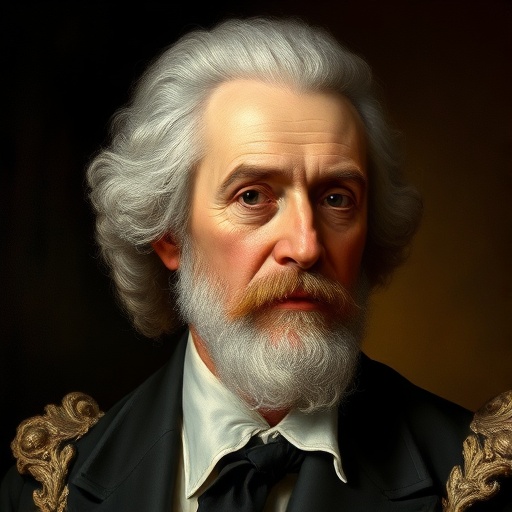
Antoine Lavoisier — "Science advances by correcting its errors."
Science advances by correcting its errors.
Science advances by correcting its errors.
Click any product to generate a realistic preview. Up to 3 at a time.
* Initial load can take up to 90 seconds — revising the preview in another color is nearly instant.
"It took them only an instant to cut off that head, but France may not produce another like it in a century."
"Nothing is created, either in the operations of art, or in those of nature; and it may be considered as a general principle that in every operation there exists an equal quantity of matter before and …"
"The more exact the science, the more difficult it is to make progress."
"We must trust to nothing but facts: these are presented to us by nature and cannot deceive."
"Languages are true analytical methods; algebra, which is adapted to its purpose in every species of expression, in the most simple, most exact, and best manner possible, is at the same time a language…"
Found in 1 providers: grok
1 source checked
Knowledge doesn't grow by accumulating right answers — it grows by identifying and replacing wrong ones. Every false assumption corrected opens the door to a more accurate model of reality. Progress isn't linear revelation; it's a continuous cycle of testing, failing, and revising. The honest admission of error is the engine of discovery, not weakness. Science earns trust not by claiming certainty but by willingness to be proven wrong and updated.
Lavoisier embodied this principle by dismantling phlogiston theory — the centuries-old explanation for combustion — and replacing it with the oxygen-based model through rigorous quantitative experiments. He didn't merely refine existing chemistry; he corrected its foundational error. By insisting on precise measurement and repeatable results, he built modern chemistry on the acknowledgment that inherited assumptions must be tested and overturned when evidence demands it.
The late 18th-century Enlightenment prized reason and empirical inquiry over inherited authority. Natural philosophy was shedding centuries of alchemical and Aristotelian assumptions. Phlogiston theory had dominated chemical understanding for nearly a century when Lavoisier challenged it. The era's spirit — questioning crown, church, and established doctrine — extended into science. Revolutionary France executed Lavoisier in 1794, yet his corrections to chemical theory survived and became the discipline's permanent foundation.
AI-generated insights based on extensive research and information for context. Factual errors? Email [email protected].
Your cart is empty