Guru Nanak — "Serve the true Guru, and attain the fruit of liberation."
Serve the true Guru, and attain the fruit of liberation.
Serve the true Guru, and attain the fruit of liberation.
Click any product to generate a realistic preview. Up to 3 at a time.
* Initial load can take up to 90 seconds — revising the preview in another color is nearly instant.
"The world is a garden, O Nanak, and the Gardener is God."
"Required prayers alone would be ineffective if those who offered them had their minds on worldly problems, instead of on God."
"Even if you have a hundred thousand friends, you are alone if you don't have a good cup of tea."
"The Lord is within us, but we search for Him outside."
"Your Mercy is my social status."
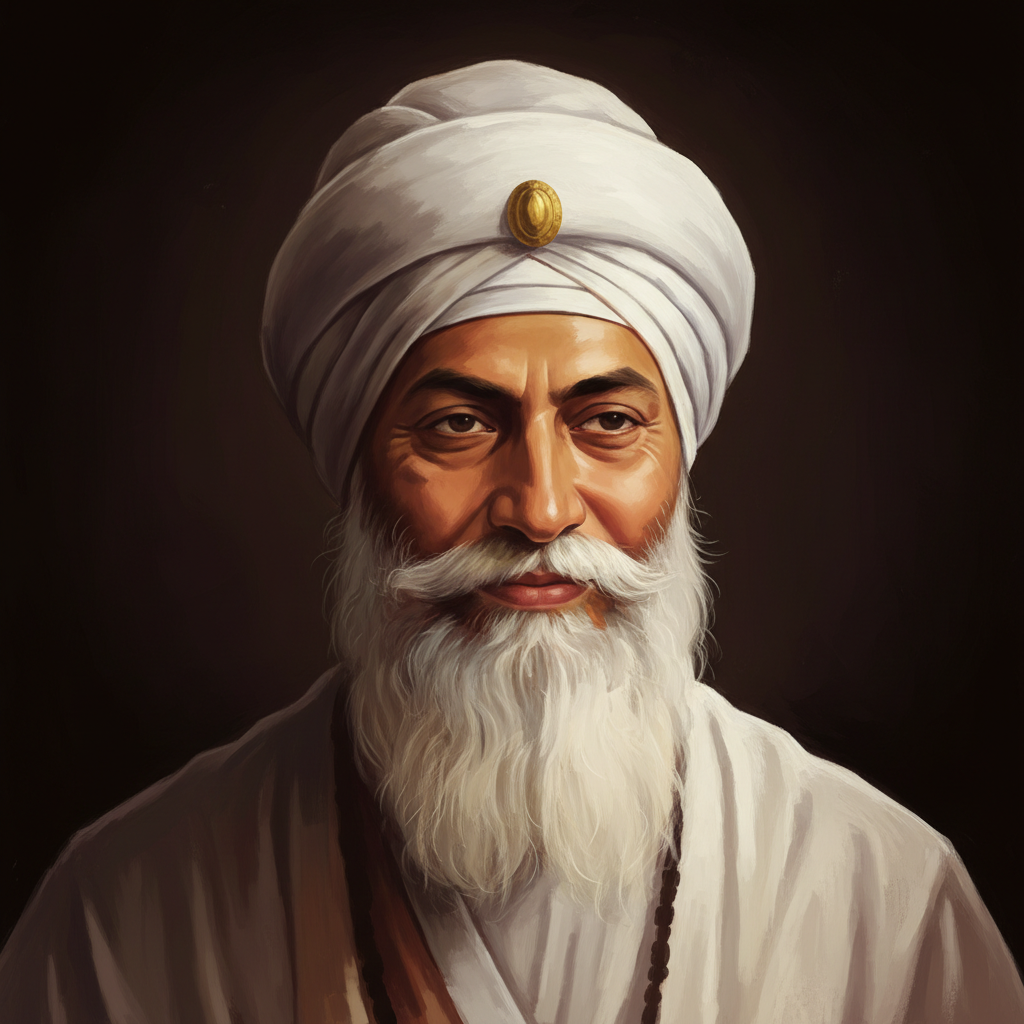
Founder of Sikhism and the first of the Ten Sikh Gurus, whose teachings of one universal God and rejection of caste shaped Punjab. Closely associated with Kabir (mystical poet whose verses appear in the Sikh Guru Granth Sahib). For an intellectual contrast, see Brahmanical orthodoxy, the Hindu caste-and-ritual establishment of his era — Sikhism was founded as a deliberate alternative to both Hindu ritual hierarchy and Islamic exclusivism — Nanak's universalism was a structural rejection of caste and priestly mediation.
Found in 1 providers: gemini
1 source checked
Devoted service to a genuine spiritual teacher is the path to liberation. The 'true Guru' means an authentic guide who channels divine wisdom—not a ceremonial authority or fraud. Liberation is freedom from ego, suffering, and the cycle of rebirth, earned not through ritual but through humble, sincere service. The quote cuts through religious complexity: find a real teacher, serve faithfully, and the soul is freed.
Guru Nanak (1469–1539) founded Sikhism after a divine revelation and spent decades traveling across India, Tibet, Mecca, and Baghdad teaching through direct encounter. He became the first in the Sikh Guru lineage—himself the embodiment of the 'true Guru.' His core beliefs rejected caste, priestly hierarchy, and empty ritual in favor of seva (selfless service) and Nam Simran, devotional meditation. This quote distills his life's mission: authentic service as the direct route to liberation.
Guru Nanak lived during fierce conflict between Hinduism and Islam in India, compounded by Mughal conquest and rigid caste structures. Both Brahmin priests and Islamic clerics wielded religious authority as social control, exploiting commoners through ritual gatekeeping. The Bhakti movement was simultaneously challenging hierarchy through devotional poetry. Guru Nanak's call to serve the 'true Guru'—bypassing caste clergy and empty ceremony—was a radical, democratizing challenge to that entrenched religious establishment.
AI-generated insights based on extensive research and information for context. Factual errors? Email [email protected].
Your cart is empty