What it means
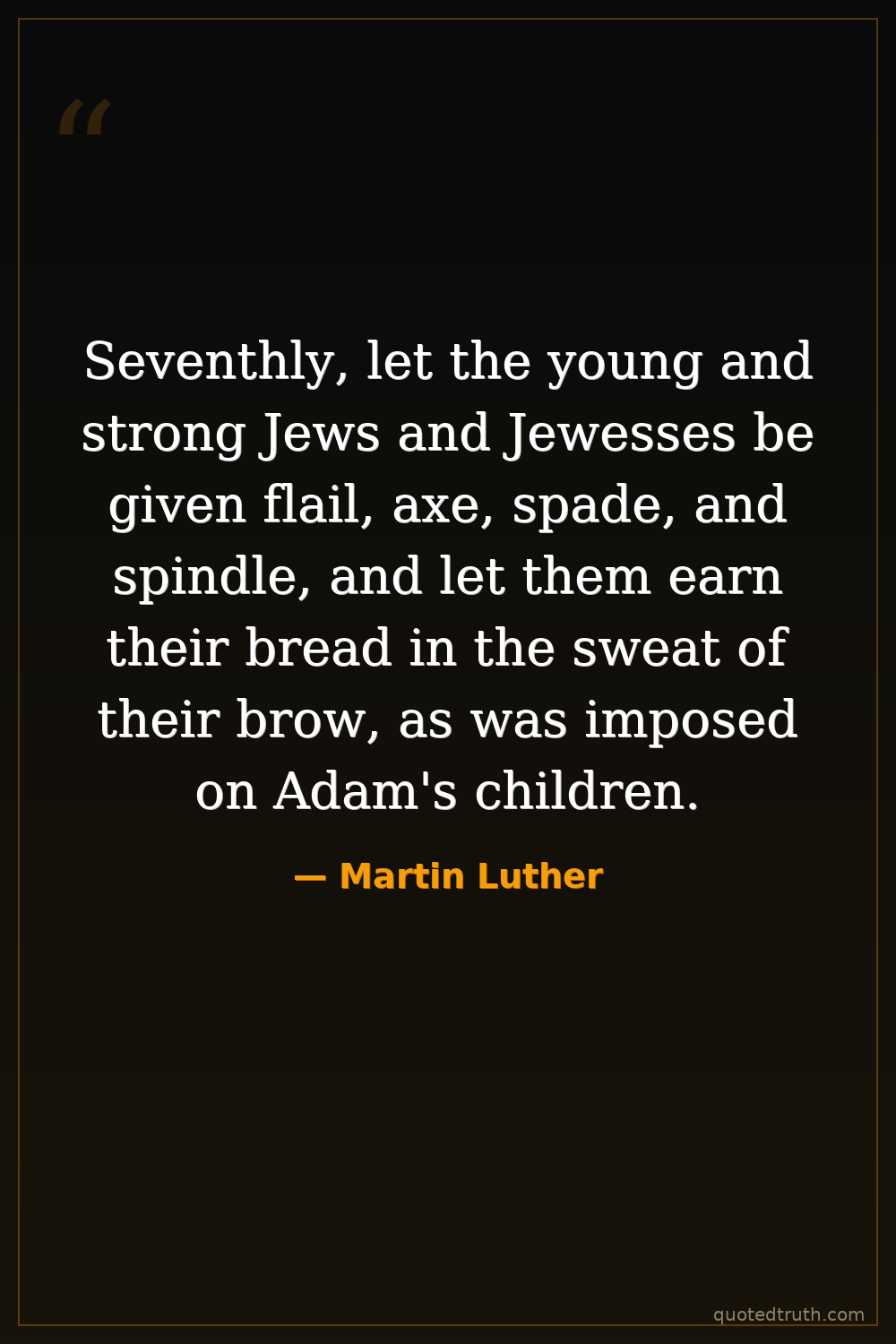
The speaker demands that able-bodied Jewish men and women be forced into hard manual labor—wielding tools like flails, axes, spades, and spindles—to earn their food through physical toil. It frames this forced labor as a fitting punishment rooted in the biblical curse on Adam, stripping them of any other livelihood and reducing them to compulsory workers performing society's most grueling tasks.
Relevance to Martin Luther
This comes from Luther's 1543 tract On the Jews and Their Lies, where he outlined harsh measures against Jewish communities. Though he began his career hoping Jews would convert to his reformed Christianity, their refusal hardened him into writing violently antisemitic proposals late in life. The passage reflects his authoritarian streak, his literalist reading of Genesis, and the darker legacy that shadowed his theological achievements as Reformation leader.
The era
In early modern Europe, Jews were confined to restricted trades like moneylending because guilds barred them from crafts and landownership. The 1540s brought rising religious polemic as the Reformation fractured Christendom, and rulers sought scapegoats amid plague, inflation, and war. Luther's words fed centuries of expulsions, ghettoization, and forced-labor decrees, and were later weaponized by 20th-century Nazi propagandists who cited him directly.
AI-generated insights based on extensive research and information for context. Factual errors? Email [email protected].