What it means
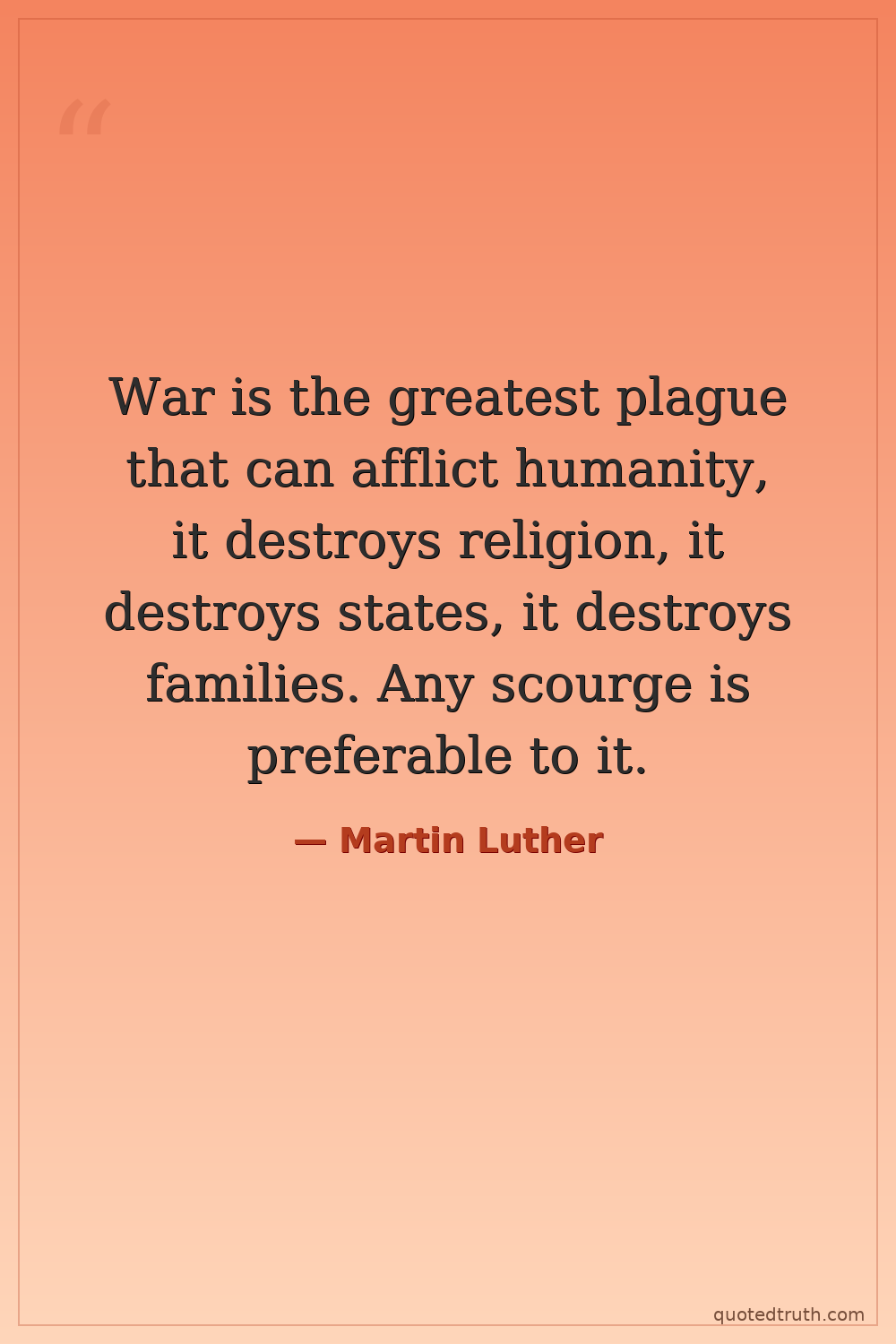
War is the worst disaster people can face. It wrecks everything that holds society together: faith communities, governments, and households. Plagues, famines, or any other calamity would be easier to endure, because those hardships do not poison human relationships the way armed conflict does. Luther is saying that any suffering, no matter how severe, is better than the total collapse war brings to every layer of ordinary life.
Relevance to Martin Luther
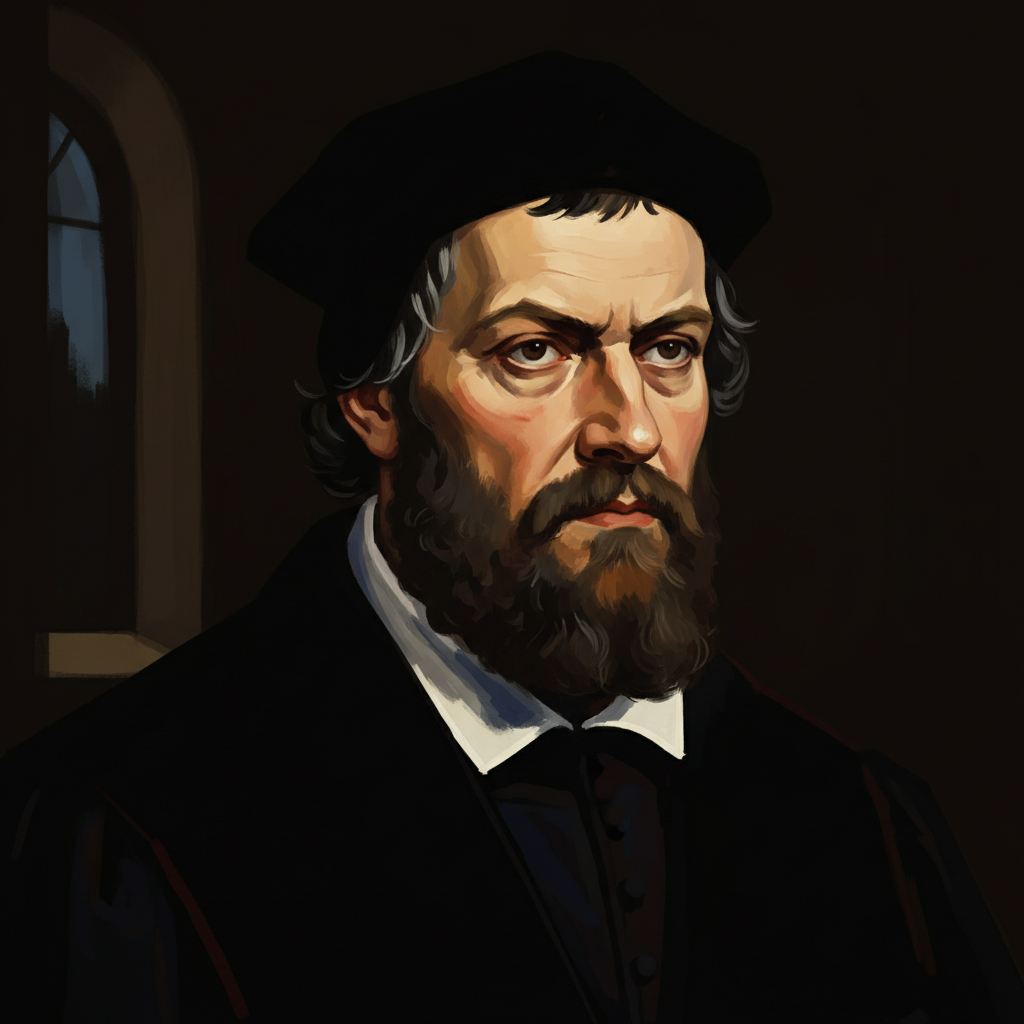
Luther watched German lands convulse with religious and political violence after his 1517 theses cracked Western Christendom. The Peasants' War of 1524-25 killed roughly 100,000 people, many invoking his name, which horrified him. As a former Augustinian friar who valued settled congregations, stable princes, and family life, he saw firsthand how fighting ruined parishes, shattered households like his own with Katharina, and weaponized his theology.
The era
Early-modern Europe was drenched in war: the Ottoman siege of Vienna in 1529, Habsburg-Valois campaigns, and constant confessional skirmishes foreshadowing the Thirty Years' War. Mercenary armies ravaged civilians, plague followed troop movements, and the Holy Roman Empire fractured along Catholic-Protestant lines. Against this backdrop, Luther's warning carried urgent weight, because readers had personally seen villages burned, churches looted, and families displaced by roving soldiers.
AI-generated insights based on extensive research and information for context. Factual errors? Email [email protected].