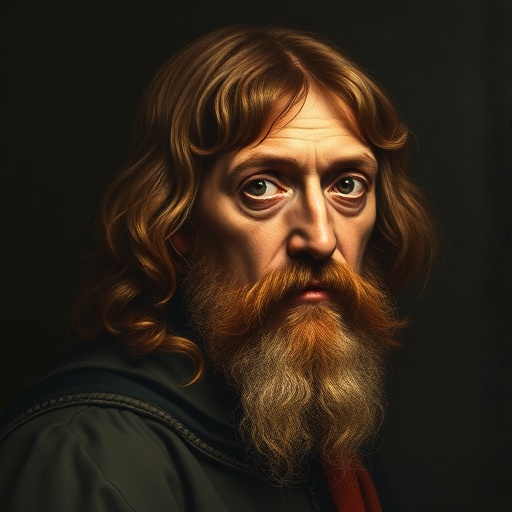
Nicolaus Copernicus — "So that we may not err, we should always follow the footsteps of the ancients."
So that we may not err, we should always follow the footsteps of the ancients.
So that we may not err, we should always follow the footsteps of the ancients.
Click any product to generate a realistic preview. Up to 3 at a time.
* Initial load can take up to 90 seconds — revising the preview in another color is nearly instant.
"Therefore, let us not be afraid to follow truth wherever it may lead us, even if it contradicts our preconceived notions."
"Having thus assumed the motions which I ascribe to the earth, I have, after long and careful investigation, finally discovered that, if the motions of the other planets be related to the revolution of…"
"In the middle of all sits the Sun enthroned. In this most beautiful temple, could we place this luminary in any better position from which he can illuminate the whole at once?"
"Thus, the sun, although it is the center of the world, is not the center of the universe."
"The Sun is the center of the universe, and all the planets revolve around it."
While Copernicus built on ancient knowledge, this specific quote is not readily found in his major works and might be a misattribution or oversimplification of his methodology.
Date: Unknown
GeneralFound in 1 providers: grok
1 source checked
We should look to those who came before us as guides, using their accumulated wisdom and proven methods as a foundation for our own understanding. Rather than striking out blindly on untested paths, honoring established knowledge keeps us from making avoidable mistakes. Tradition and prior learning serve as reliable anchors when navigating uncertain territory.
This quote reveals Copernicus's deep grounding in classical scholarship—he spent years studying Ptolemy, Pythagoras, and ancient astronomers before developing heliocentrism. Paradoxically, the man who overturned geocentrism justified his revolutionary idea partly by invoking ancient Greek thinkers who had proposed Earth's motion. He saw himself as restoring corrupted ancient astronomy, not demolishing it.
The Renaissance was defined by reverence for classical antiquity. Humanist scholars across Europe recovered Greek and Roman texts, treating ancient wisdom as supreme authority. Church orthodoxy similarly demanded deference to established interpretations. In this climate, framing any intellectual innovation as a return to ancient precedent was both rhetorically safer and culturally expected—radicalism required an ancient alibi.
AI-generated insights based on extensive research and information for context. Factual errors? Email [email protected].
Your cart is empty