What it means
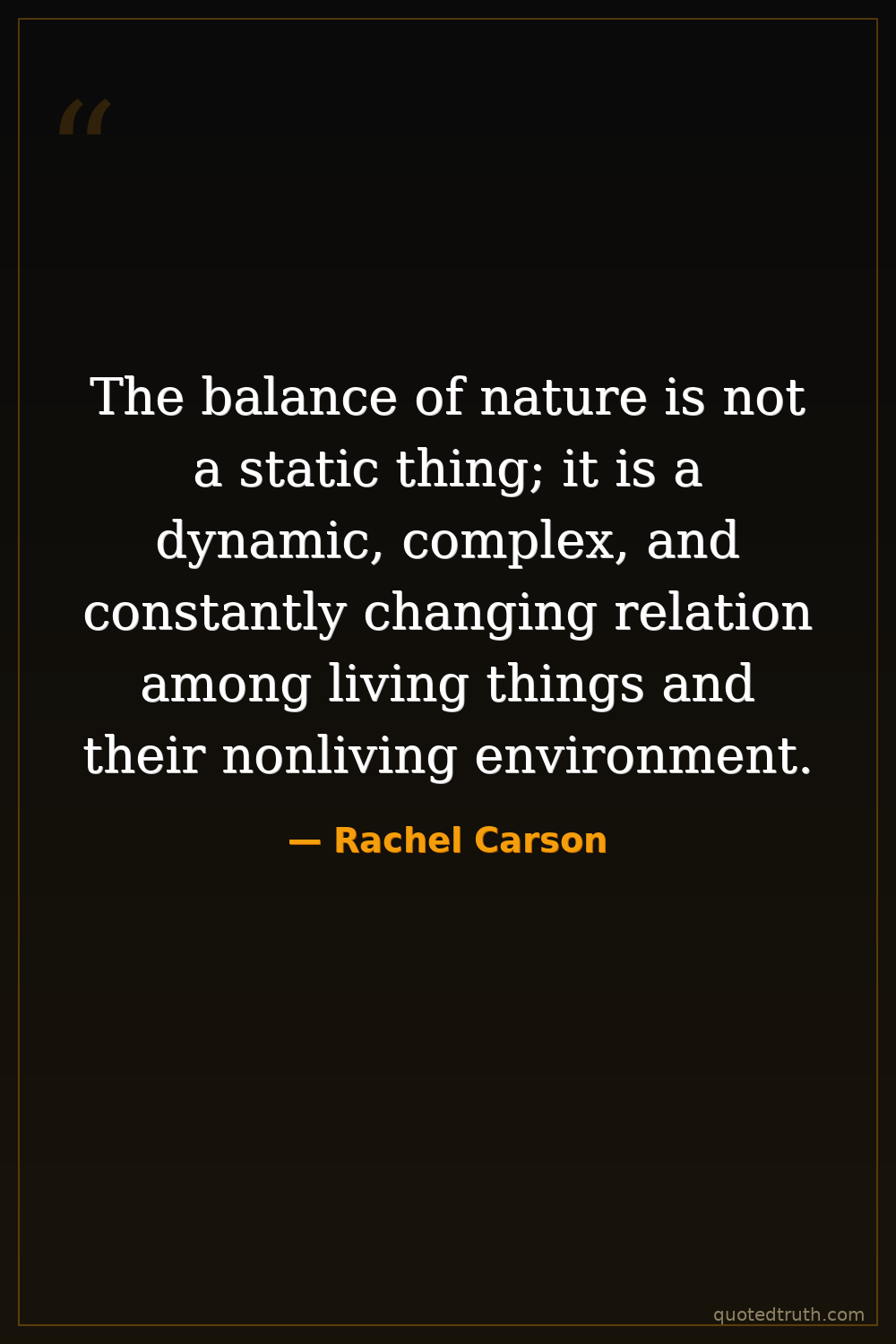
Nature isn't a fixed, stable system that holds itself in permanent equilibrium. It's an ongoing, intricate web of interactions—predators and prey, soil and water, climate and organisms—constantly shifting and responding to each other. Disrupting one part ripples through the whole. Humans who assume nature will simply bounce back misread how it actually works; stability is earned through continuous, interdependent adjustment, not guaranteed by default.
Relevance to Rachel Carson
Carson spent decades as a marine biologist with the U.S. Fish and Wildlife Service studying coastal ecosystems before writing. Her 1962 book Silent Spring documented how DDT moved through food chains, decimating bird populations—proof that chemical intervention destabilized nature's web. This quote captures her core scientific conviction: ecosystems are living processes, not scenery, and human interference triggers cascading, often irreversible consequences she witnessed firsthand.
The era
Carson wrote during the post-WWII chemical boom, when DDT was celebrated as a miracle pesticide and industrial agriculture expanded aggressively. Cold War thinking prized technological dominance over nature, and corporations widely believed ecosystems could absorb unlimited chemical inputs without lasting harm. Her dynamic view of nature challenged that confidence, arriving as the environmental movement was just forming but before regulatory bodies like the EPA existed to enforce accountability.
AI-generated insights based on extensive research and information for context. Factual errors? Email [email protected].