Mahavira — "The highest spiritual state is to be free from all desires."
The highest spiritual state is to be free from all desires.
The highest spiritual state is to be free from all desires.
Click any product to generate a realistic preview. Up to 3 at a time.
* Initial load can take up to 90 seconds — revising the preview in another color is nearly instant.
"One who knows himself, knows God."
"Live and allow others to live. Hurt neither yourself nor others."
"The soul is the only thing that is blissful; everything else is sorrowful."
"The world is full of illusion, and the truth is hidden."
"The path of liberation is straight and simple."
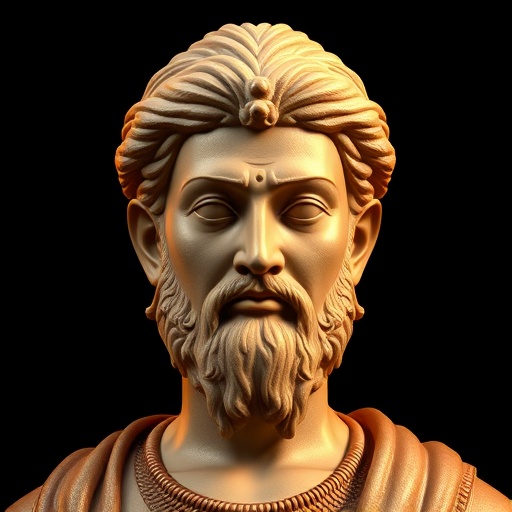
24th and last Tirthankara of Jainism, whose teachings of strict ahimsa (non-violence), aparigraha (non-attachment), and karma reshaped ancient Indian religion. Closely associated with The Buddha (near-contemporary moral revolutionary, also reacting against Vedic ritualism). For an intellectual contrast, see Vedic Brahmanical ritual sacrifice, the animal-sacrifice-centered Vedic religion of his era — Mahavira's ahimsa demanded total non-violence, including not eating root vegetables that kill the plant — a maximum-distance ethical move from the Vedic priestly tradition that ritually sacrificed cattle and horses. The two cleanest poles of ancient Indian religious ethics.
Found in 1 providers: grok
1 source checked
True spiritual achievement means completely releasing every craving — for wealth, pleasure, recognition, or even survival comforts. When desires vanish, the soul stops generating karma, the chain binding it to cycles of rebirth. Freedom from want isn't poverty or numbness; it's a state where nothing external can disturb your inner equilibrium. That stillness, Mahavira taught, is the soul's natural, perfect condition.
Mahavira abandoned his royal Kshatriya family at age 30, gave away all possessions, and spent 12 years as a naked ascetic enduring hardship without complaint. He achieved Kevala Jnana — omniscience — through radical detachment. His core Jain doctrine of aparigraha (non-possessiveness) directly embodies this quote. For Mahavira, desire was the root cause of violence, suffering, and karmic bondage; its elimination was liberation, moksha.
Mahavira lived around 599–527 BCE in the Gangetic plains of ancient India — the same Axial Age as the Buddha and Confucius. Brahmanical society was stratified by birth and dominated by sacrifice-based Vedic religion. Mahavira's message — that liberation came through personal discipline and desire-elimination, not priestly ritual or caste privilege — was radical spiritual and social defiance of the established religious order.
AI-generated insights based on extensive research and information for context. Factual errors? Email [email protected].
Your cart is empty