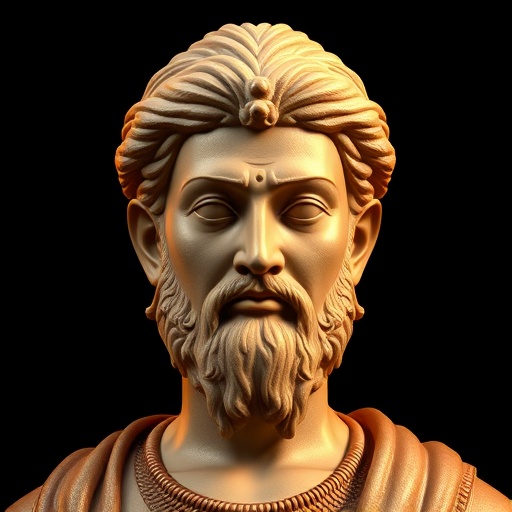
Mahavira — "One should always speak the truth, but not utter an unpleasant truth."
One should always speak the truth, but not utter an unpleasant truth.
One should always speak the truth, but not utter an unpleasant truth.
Click any product to generate a realistic preview. Up to 3 at a time.
* Initial load can take up to 90 seconds — revising the preview in another color is nearly instant.
"The world is a prison, and the soul is the prisoner."
"All living beings are endowed with consciousness."
"A man is born alone and dies alone; and he experiences the good and bad consequences of his karma alone; and he goes alone to hell or the supreme abode."
"The path to liberation is through right faith, right knowledge, and right conduct."
"One should always speak the truth."
24th and last Tirthankara of Jainism, whose teachings of strict ahimsa (non-violence), aparigraha (non-attachment), and karma reshaped ancient Indian religion. Closely associated with The Buddha (near-contemporary moral revolutionary, also reacting against Vedic ritualism). For an intellectual contrast, see Vedic Brahmanical ritual sacrifice, the animal-sacrifice-centered Vedic religion of his era — Mahavira's ahimsa demanded total non-violence, including not eating root vegetables that kill the plant — a maximum-distance ethical move from the Vedic priestly tradition that ritually sacrificed cattle and horses. The two cleanest poles of ancient Indian religious ethics.
Found in 1 providers: grok
1 source checked
Honesty is a moral obligation, but it must be paired with compassion. If truth would cause pain without any constructive benefit, silence or restraint is the wiser choice. This isn't about lying—it's about recognizing that blunt, hurtful truth can be a form of violence. Real integrity means knowing when to speak and when to hold back, prioritizing kindness alongside accuracy.
Mahavira placed both Satya (truthfulness) and Ahimsa (non-violence) among Jainism's five supreme vows. When these principles conflict, his teachings resolve it clearly: harmful speech is itself a form of violence. Having renounced worldly life and maintained near-total silence for years during his ascetic journey, Mahavira understood speech as powerful and potentially destructive. This quote directly mirrors that tension—truth is sacred, but violence through words violates ahimsa.
Mahavira lived in 6th-century BCE India, the Axial Age, when Vedic Brahminism dominated society and words carried immense ritual and social power. In a rigidly stratified caste system, an unpleasant public truth could destroy a person's standing permanently. Simultaneously, this era birthed radical philosophical movements challenging the established order. Jainism emerged as a non-violent counter to ritual-heavy Vedic traditions, making the ethical use of speech a central moral question.
AI-generated insights based on extensive research and information for context. Factual errors? Email [email protected].
Your cart is empty