William Harvey — "The body is the instrument of the soul."
The body is the instrument of the soul.
The body is the instrument of the soul.
Click any product to generate a realistic preview. Up to 3 at a time.
* Initial load can take up to 90 seconds — revising the preview in another color is nearly instant.
"The motion of the blood is in a circle, and is in truth perpetual."
"The study of anatomy is the study of God's handiwork."
"The blood in the arteries is of a more florid colour than that in the veins."
"There is no science which does not spring from pre-existing knowledge, and no certain and definite idea which has not derived its origin from the senses."
"The most important thing in life is to be useful."
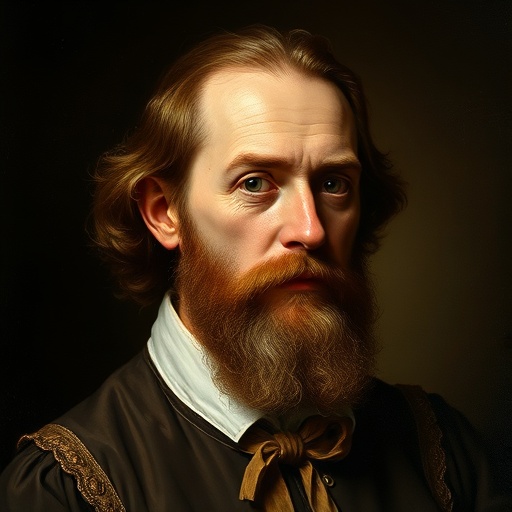
English physician whose On the Motion of the Heart and Blood in Animals (1628) demonstrated blood circulation, overturning 1,400 years of Galenic medicine. Closely associated with Francis Bacon (his contemporary in the new English empiricism). For an intellectual contrast, see Galenic medicine, the 2nd-century Greek medical tradition (humors, blood-as-consumed-fuel) — Harvey calculated that the heart pumps more blood per hour than the body could possibly produce as fuel — a single quantitative observation that demolished the entire Galenic-Aristotelian medical worldview. The cleanest example in medical history of arithmetic disproving 14 centuries of authority.
A philosophical statement on the relationship between the physical and spiritual.
Date: Uncertain (attributed)
BiblicalFound in 1 providers: gemini
1 source checked
The body functions as a vehicle or tool through which the soul acts, experiences, and expresses itself in the physical world. Physical health and function aren't separate from purpose—they enable it. The body isn't merely matter but a purposeful system designed to serve something greater than its mechanical parts. Understanding how the body works is therefore understanding how life itself operates at its deepest level.
Harvey's discovery of blood circulation revealed the body as an elegantly coordinated system—not random flesh, but purposeful machinery. Trained in Padua under Fabricius, Harvey was deeply influenced by Aristotle, who placed the soul in the heart. Harvey saw the heart's rhythmic pumping as the body's animating engine, the physical seat of vital spirit. His empirical work thus reinforced rather than contradicted the Aristotelian soul-body relationship he deeply revered.
In the early 17th century, Descartes's mechanistic philosophy was emerging, portraying bodies as mere clockwork. Yet Aristotelian natural philosophy—which held that the soul gives form and purpose to living matter—still dominated medicine. Harvey published De Motu Cordis in 1628 during fierce debate over what animates life. His circulation discovery forced rethinking of where the animating principle resided, making the soul-body relationship an urgent scientific and theological question.
AI-generated insights based on extensive research and information for context. Factual errors? Email [email protected].
Your cart is empty