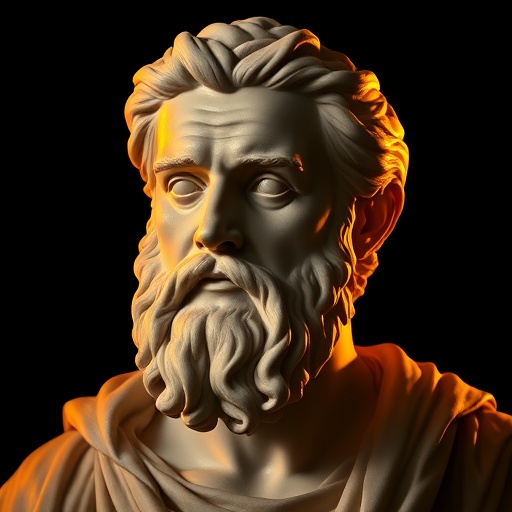
Hippocrates — "The brain is the seat of the soul."
The brain is the seat of the soul.
The brain is the seat of the soul.
Click any product to generate a realistic preview. Up to 3 at a time.
* Initial load can take up to 90 seconds — revising the preview in another color is nearly instant.
"The greatest remedy for anger is delay."
"Before you heal someone, ask him if he's willing to give up the things that make him sick."
"The body is a temple, and the soul is its inhabitant."
"Healing is a matter of time, but it is sometimes also a matter of opportunity."
"It is more important to know what sort of person has a disease than to know what sort of disease a person has."
Found in 1 providers: grok
1 source checked
The quote asserts that the brain, not the heart, is the true center of consciousness, thought, emotion, and identity — what ancient people called the soul. It claims that what makes us who we are — our reasoning, feelings, and awareness — originates in the brain. This is a materialist claim about human consciousness rooted in observable anatomy rather than myth or divine explanation.
Hippocrates built medicine on naturalistic observation, rejecting supernatural causes of illness. In his treatise On the Sacred Disease, he argued epilepsy was a brain disorder, not divine punishment — a radical position for his era. As the physician who insisted diseases had physical causes, his claim that the brain houses the soul is consistent: the organ governing thought and sensation must anchor human identity itself.
In fifth-century BCE Greece, most thinkers believed the heart housed the soul and intellect — a view Aristotle would later formalize. Epilepsy was called the sacred disease, blamed on gods. Pre-Socratic philosophers debated mind and matter, but religion dominated. Hippocrates' insistence that the brain controlled consciousness challenged both popular religion and competing philosophical schools, positioning him at the frontier of empirical inquiry into human nature.
AI-generated insights based on extensive research and information for context. Factual errors? Email [email protected].
Your cart is empty