What it means
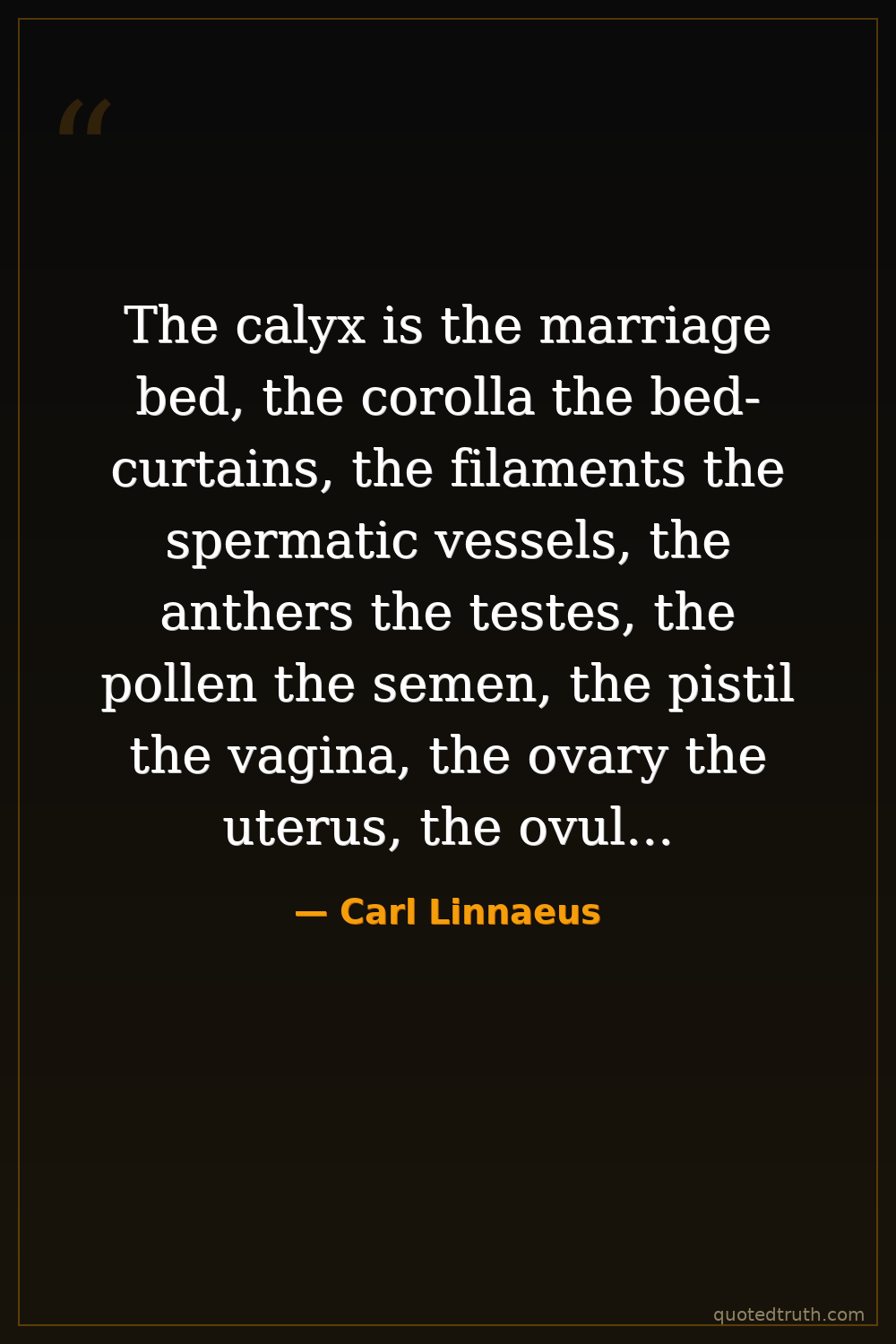
This quote maps flower anatomy directly onto human reproductive anatomy, asserting that plants reproduce sexually just as animals do. Each floral structure has a counterpart in animal reproduction — stamens are testes, pollen is semen, pistils are vaginas. Linnaeus argues fertilization in plants follows the same biological logic as in animals, using the familiar to explain the unfamiliar and establishing plant sexuality as observable scientific fact.
Relevance to Carl Linnaeus
Linnaeus built his entire classification system — the Sexual System in Systema Naturae (1735) — on flower reproductive parts, categorizing all plants by stamen count and arrangement. This explicit anatomical parallel reflects Linnaeus at full conviction: plant sex was real, observable, and nature's most reliable organizing principle. His willingness to use frank sexual language showed scientific courage even as critics called his botanical writings scandalous erotica.
The era
In early modern Europe, plant sexuality was contested — Aristotle's legacy held plants as passive and sexless. By the early 1700s, Rudolf Camerarius had experimentally confirmed plant reproduction, but the idea remained radical. Linnaeus published this amid religious conservatism and Enlightenment curiosity colliding; critics like Johann Siegesbeck called his sexual system loathsome harlotry. Yet it became the dominant botanical classification framework for over a century.
AI-generated insights based on extensive research and information for context. Factual errors? Email [email protected].