Wright Brothers (Orville & Wilbur) — "The course of the experiment was not always smooth. The machine would start all …"

The course of the experiment was not always smooth. The machine would start all right, but the propelling power was not sufficient to overcome the resistance of the air.
Wright Brothers (Orville & Wilbur) — Wright Brothers (Orville & Wilbur) Modern · First powered flight

Get This Quote & Author's Image Illustrated On:

Click any product to generate a realistic preview. Up to 3 at a time.
* Initial load can take up to 90 seconds — revising the preview in another color is nearly instant.

Kitchen

Apparel

Other

About Wright Brothers (Orville & Wilbur) (Wilbur 1867-1912; Orville 1871-1948)

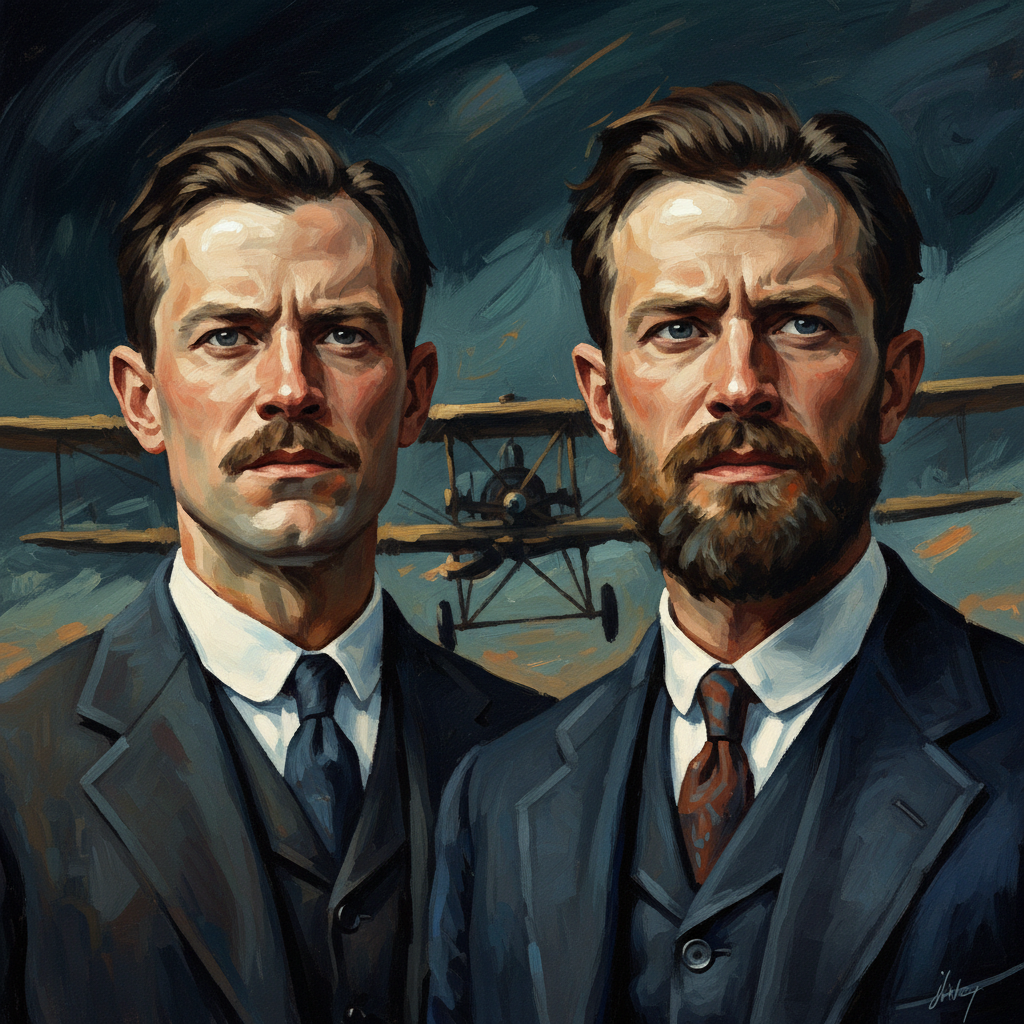
American aviation pioneers who achieved the first sustained powered controlled airplane flight at Kitty Hawk, NC, on December 17, 1903. Closely associated with Octave Chanute (their gliding mentor and aeronautical correspondent). For an intellectual contrast, see Samuel Pierpont Langley, Smithsonian Institution Secretary and government-funded aviation researcher — Langley's Aerodrome crashed twice into the Potomac in October-December 1903 with $50,000 of War Department funding; the Wright Brothers' bicycle-shop empiricism beat Langley's institutional Big Science by 9 days. The most-cited example in engineering history of empirical-tinkerer beating institution-funded credentialism.

Details

Orville Wright, describing early experiments

Date: 1903

Shocking

Verification

Unverifiable

Found in 1 providers: grok

1 source checked

Understanding this quote

What it means

Things did not always go according to plan during testing. The device could launch and begin moving, but it lacked enough thrust to push through air resistance and sustain real flight. In plain terms: getting started is easy, but generating sufficient power to overcome real-world drag is the hard part. Initial motion means nothing without the force to keep going against opposition.

Relevance to Wright Brothers (Orville & Wilbur)

The Wright Brothers spent years at Kitty Hawk building gliders and engines, failing repeatedly before their 1903 success. They machined their own lightweight gasoline engine when no manufacturer could meet their power-to-weight needs, and designed custom propellers after realizing existing marine-propeller theory was useless. This quote captures their empirical, iterative bicycle-shop engineering approach: observe the failure, diagnose the physics, rebuild.

The era

At the turn of the 20th century, powered flight was widely ridiculed as impossible, with Samuel Langley's government-funded attempts crashing into the Potomac weeks before Kitty Hawk. Internal combustion engines were heavy and crude, aerodynamics barely a science. The Wrights competed against well-funded European and American rivals during an era obsessed with mechanical progress, steam giving way to gasoline, and humans finally conquering the sky.

AI-generated insights based on extensive research and information for context. Factual errors? Email [email protected].
Your Cart

Your cart is empty